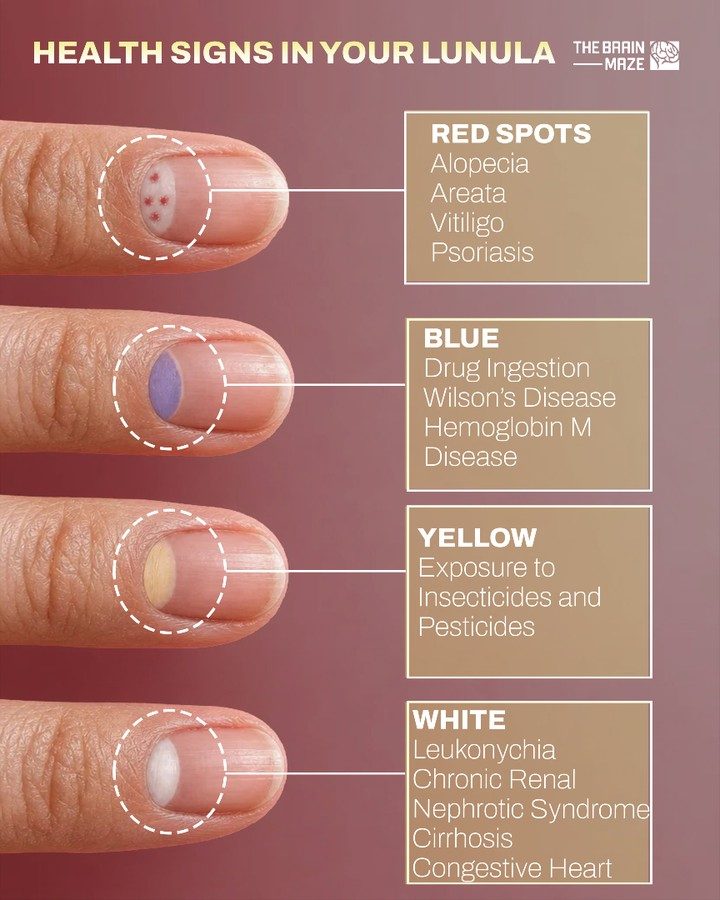
Your Lunula: A Window into Nail and Overall Health
The lunula, the pale, crescent-shaped area at the base of the nail, can offer subtle insights into your nail and overall health. While variations in lunula color are often normal and may not indicate any medical issue, certain changes might warrant closer attention. Red spots, blue, yellow, or unusually white lunula can be linked to various conditions or exposures, but it’s crucial to note that these changes should not be used as a sole basis for a diagnosis. Understanding these signs and consulting with a medical professional when necessary can provide valuable information about your health status.
Why Lunula Changes Matter
The lunula, often overlooked, is the small white area at the base of the nail. This seemingly insignificant part of the nail can provide clues about your overall health. Changes in the lunula's color can indicate various health conditions, from nutritional deficiencies to more serious diseases. Recognizing these signs can prompt timely medical intervention and potentially prevent more severe health issues.
The Brain Maze: Decoding Lunula Colors
Red Spots
Red spots in the lunula, also known as red lunula, can be associated with several conditions:
- Alopecia: This condition can cause hair loss and is sometimes linked to red lunula spots.
- Alopecia Areata: A specific type of alopecia that results in patchy hair loss, it may also be connected to red spots in the lunula.
- Vitiligo: This condition affects the skin’s pigmentation and can sometimes manifest as red spots in the lunula.
- Psoriasis: A chronic autoimmune condition that causes rapid skin cell turnover, leading to thick, scaly patches, can also be indicated by red spots in the lunula.
Blue Lunula
A blue lunula can be a sign of:
- Drug Ingestion: Certain medications or drug reactions can cause the lunula to turn blue.
- Wilson's Disease: This genetic disorder affects copper metabolism and can be indicated by a blue lunula.
- Hemoglobin M Disease: A rare blood disorder, it can also cause the lunula to appear blue.
Yellow Lunula
A yellow lunula might be a result of:
- Exposure to Insecticides and Pesticides: Prolonged exposure to these chemicals can lead to a yellow discoloration of the lunula.
White Lunula
A white lunula can be associated with several conditions:
- Chronic Renal Failure: Long-term kidney problems can cause the lunula to turn white.
- Nephrotic Syndrome: A kidney disorder that can lead to a white lunula.
- Cirrhosis: A late-stage liver disease that can cause significant changes in the body, including a white lunula.
- Congestive Heart Failure: This condition, where the heart cannot pump enough blood, can also affect the lunula's color.
Practical Tips for Monitoring Lunula Changes
Recognizing changes in your lunula is the first step toward understanding potential health issues. Here are some practical tips for monitoring and addressing any concerns:
Regular Self-Examinations
Periodically check your nails, paying special attention to the lunula. Look for any changes in color, shape, or size. Document these changes and consult a healthcare professional if you notice anything unusual.
Consult a Dermatologist
If you observe any significant or persistent changes in your lunula, it’s a good idea to consult a dermatologist. They can provide a thorough examination and determine if further testing or medical intervention is necessary.
Maintain Good Nail Hygiene
Good nail hygiene can help prevent infections and other issues that might affect the lunula. Regularly clean your nails, keep them trimmed, and avoid using harsh chemicals or tools that could damage the nail bed.
Seek Medical Advice for Persistent Changes
While many lunula changes are normal and temporary, persistent or unusual changes should be checked by a medical professional. They can help rule out any underlying conditions and provide appropriate treatment if necessary.
Stay Informed
Educating yourself about potential health issues related to nail changes can help you stay proactive about your health. Resources like The Brain Maze offer valuable insights into how the lunula can provide clues about overall health.
Important Takeaways
Understanding the significance of lunula changes can provide valuable information about your health. While many changes are normal, recognizing when to seek medical advice is crucial. Regular self-examinations, good nail hygiene, and consulting a dermatologist can help you stay proactive about your health.
Conclusion
The lunula, a small but significant part of the nail, can offer insights into your overall health. Changes in color, such as red spots, blue, yellow, or white lunula, can be linked to various conditions. While these changes should not be used as a sole basis for diagnosis, they serve as important indicators that warrant medical attention. Regular monitoring, good nail hygiene, and seeking professional advice can help you maintain optimal health and address any potential issues promptly.
Watch the Reel
Questions readers ask
What is the lunula and why is it important for nail health?
The lunula is the small, pale, crescent-shaped area at the base of the nail. It is important for nail health because changes in its color or appearance can signal various health conditions, serving as a subtle indicator of overall health.
What do red spots on the lunula indicate?
Red spots on the lunula can be a sign of inflammation or injury to the nail matrix, the area where the nail grows. In some cases, they may also indicate a more serious condition, such as a fungal or bacterial infection. If red spots appear, it is advisable to consult a healthcare professional.
Why might the lunula appear yellow, and what does this signify?
A yellow lunula can be a sign of various health conditions, including fungal infections, jaundice, or even more serious conditions like diabetes. It might also be a result of nail polish or artificial nails. Consulting a healthcare professional can help determine the underlying cause.
What does a blue lunula suggest about my health?
A blue lunula can be a sign of Wilson's disease, a genetic disorder that affects the way the body processes copper. It can also be a sign of silver poisoning. This change should not be ignored and requires medical attention for proper diagnosis and treatment.
What are the potential causes of an unusually white lunula?
An unusually white lunula, also known as leukonychia, can be caused by a variety of factors, including injury to the nail, fungal infections, or certain health conditions. It can also be a result of certain medications or nutritional deficiencies, such as a lack of protein or zinc.
Can changes in lunula color be related to brain health?
While the lunula is not directly related to brain health, some systemic health conditions that affect the brain can also manifest in nail changes. For example, Wilson's disease, which affects the brain, can cause a blue lunula. However, these connections are often indirect and require medical evaluation.
What should I do if I notice changes in my lunula color?
If you notice changes in your lunula color, such as red spots, blue, yellow, or unusually white, it is important to monitor these changes and consult with a healthcare professional. While these changes may not always indicate a serious condition, they can provide valuable insights into your overall health.
Related deep dives
Similar reads based on topic and creator.


Recent articles
Fresh deep dives from the latest Reels we unpacked.




Comments
Be the first to comment.