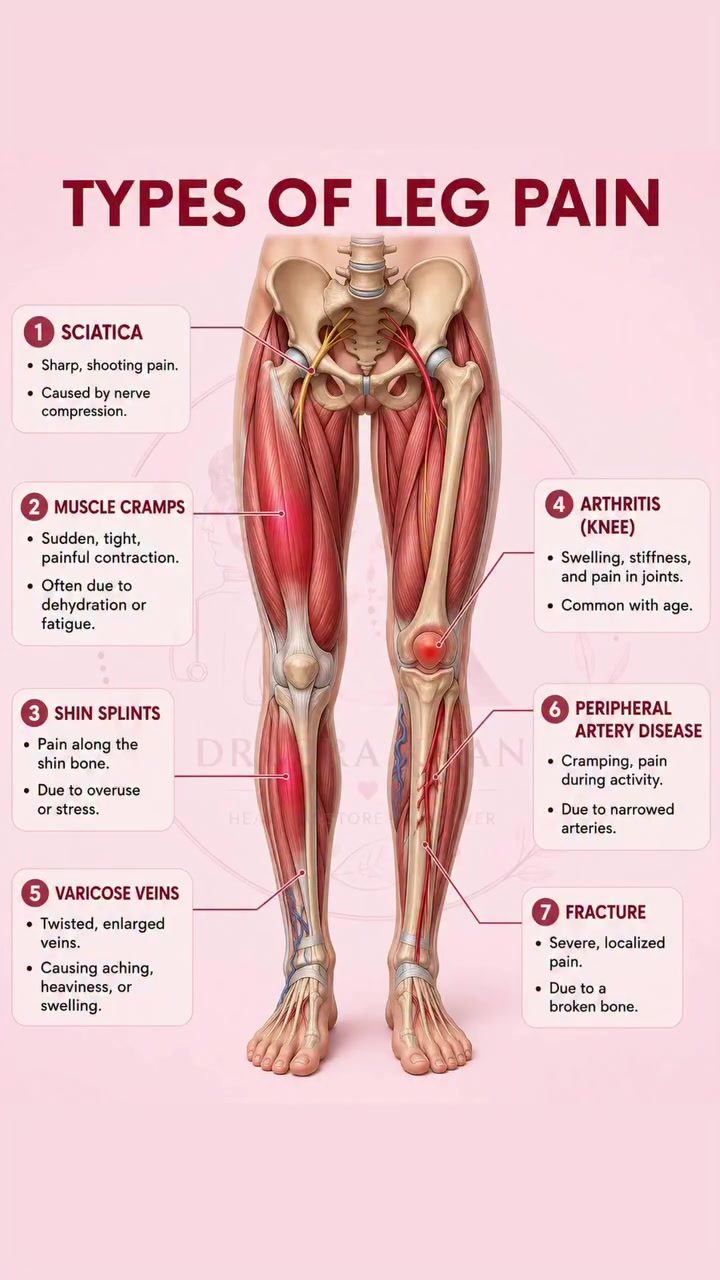
Types of Leg Pain
Leg pain is a common complaint that can stem from various sources, including muscle injuries, nerve compression, joint problems, poor circulation, and even fractures. Understanding the different types of leg pain and their causes is crucial for identifying the most effective treatment. Leg pain can be a result of many conditions, from temporary issues like muscle cramps to more serious conditions like peripheral artery disease.
Why This Matters
Leg pain can significantly impact daily activities and quality of life. It can range from mild discomfort to debilitating pain, and in some cases, it may indicate a serious underlying condition. Misdiagnosing the cause of leg pain can lead to inappropriate treatment and prolonged suffering. Therefore, recognizing the symptoms and understanding the potential causes of leg pain is essential for timely and effective intervention. Some conditions, like fractures, require immediate medical attention to prevent further injury or complications.
Main Discussion
Sciatica
Sciatica is characterized by sharp, shooting pain that often radiates down the leg, sometimes extending to the foot. This type of pain is caused by nerve compression, typically in the lower back, which can result from a herniated disc, spinal stenosis, or piriformis syndrome. Symptoms of sciatica include:
- Sharp, shooting pain along the sciatic nerve
- Numbness or weakness in the affected leg
- Pain that worsens with sitting or standing for prolonged periods
If you experience these symptoms, it's important to consult a healthcare professional for a proper diagnosis and treatment plan. Treatment options may include physical therapy, medication, or in severe cases, surgery.
Muscle Cramps
Muscle cramps are sudden, involuntary contractions of a muscle or a group of muscles, often causing severe pain. These cramps can be local or widespread and are commonly associated with:
- Dehydration, especially in hot weather or intense physical activity
- Muscle fatigue or overuse, often during or after exercise
- Electrolyte imbalances, such as low potassium or magnesium levels
Muscle cramps usually resolve on their own, but they can be alleviated by stretching the affected muscle, staying hydrated, and maintaining a balanced diet.
Shin Splints
Shin splints are a common cause of leg pain, particularly among athletes and runners. The condition is characterized by pain along the shin bone (tibia), usually on the inner side. Shin splints are typically caused by:
- Overuse or stress on the lower leg muscles and tendons
- Inadequate warm-up or stretching before exercise
- Incorrect footwear or running surfaces
Symptoms of shin splints include:
- Dull, aching pain in the lower leg during or after exercise
- Tenderness along the shin bone
- Mild swelling in the affected area
Treatment for shin splints may involve rest, ice, compression, and elevation (RICE), as well as physical therapy or orthotics to correct biomechanical issues.
Knee Arthritis
Arthritis, specifically osteoarthritis, is a degenerative joint disease that commonly affects the knees. It is characterized by swelling, stiffness, and pain in the joints. Arthritis in the knee can result from:
- Wear and tear of the cartilage over time
- Previous injuries or trauma to the knee
- Obesity, which increases stress on the joints
Symptoms of knee arthritis include:
- Pain and stiffness, especially after periods of inactivity
- Swelling and tenderness in the affected knee
- Difficulty walking or bearing weight
Treatment for knee arthritis may include pain management medications, physical therapy, weight loss, and in severe cases, joint replacement surgery.
Varicose Veins
Varicose veins are enlarged, twisted veins that typically appear in the legs. They can cause a range of symptoms, including:
- Aching, heaviness, or swelling in the legs
- Visible, bulging veins under the skin
- Itching or burning sensations around the affected veins
Varicose veins occur when the valves in the veins fail to function properly, causing blood to pool and the veins to enlarge. Risk factors for varicose veins include:
- Obesity and lack of physical activity
- Pregnancy and hormonal changes
- Family history of varicose veins.
Treatment options for varicose veins may include lifestyle changes, compression stockings, or minimally invasive procedures like sclerotherapy or laser treatment.
Peripheral Artery Disease (PAD)
Peripheral artery disease (PAD) is a circulatory condition in which narrowed arteries reduce blood flow to the legs. Symptoms of PAD include:
- Cramping, pain, or discomfort in the legs during physical activity, which typically resolves with rest (intermittent claudication)
- Numbness, weakness, or coldness in the legs
- Sores or wounds on the legs or feet that do not heal properly
PAD is often associated with smoking, high blood pressure, high cholesterol, and diabetes. Treatment for PAD may include lifestyle changes, medication, or in severe cases, surgical procedures to improve blood flow.
Fractures
A fracture is a break or crack in the bone that can result from trauma, overuse, or underlying conditions like osteoporosis. Symptoms of a fracture include:
- Severe, localized pain in the affected area
- Swelling, bruising, or deformity
- Difficulty moving or bearing weight on the affected limb
Fractures require immediate medical attention for proper diagnosis and treatment. Treatment options may include immobilization, surgery, or physical therapy to promote healing and restore function.
Practical Tips
Understanding the various types of leg pain and their causes is the first step toward effective treatment. Here are some practical tips to help manage and prevent leg pain:
- Stay Active and Maintain a Healthy Weight: Regular exercise and maintaining a healthy weight can reduce the risk of many leg pain conditions, including knee arthritis and varicose veins.
- Wear Proper Footwear: Choose supportive, well-fitting shoes to minimize the risk of injuries and conditions like shin splints.
- Stay Hydrated and Maintain Electrolyte Balance: Proper hydration and electrolyte balance can help prevent muscle cramps, especially during physical activity.
- Warm Up and Stretch Before Exercise: A proper warm-up and stretching routine can help prevent muscle and tendon injuries, including shin splints.
- Listen to Your Body: Pay attention to your body's signals and avoid pushing through pain, as this can exacerbate underlying conditions.
- Seek Timely Medical Attention: If you experience severe, persistent, or worsening leg pain, consult a healthcare professional for a proper diagnosis and treatment plan.
Important Takeaways
Recognizing the different types of leg pain and understanding their causes can help you take appropriate action and seek the right treatment. Remember that leg pain can be a sign of a serious underlying condition, so it's essential to pay attention to your body's signals and seek medical attention when necessary. By staying informed and taking proactive steps, you can effectively manage and prevent many common causes of leg pain.
Conclusion
Leg pain is a common issue that can significantly impact daily life. By familiarizing yourself with the various types of leg pain and their causes, you can take proactive steps to manage and prevent these conditions. Whether it's sciatica, muscle cramps, or a more serious condition like PAD, understanding the underlying cause is the first step toward effective treatment.
Watch the Reel
Questions readers ask
What are some common causes of leg pain?
Leg pain can originate from various sources, including muscle injuries, nerve compression, joint problems, poor circulation, and fractures. Common conditions like muscle cramps, arthritis, sciatica, or even serious issues like peripheral artery disease can all cause leg pain. Identifying the specific cause is crucial for effective treatment.
How can I distinguish between sciatica and a muscle cramp?
Sciatica typically causes a sharp, shooting pain that radiates from the lower back down to the leg, often accompanied by numbness or weakness. In contrast, muscle cramps usually cause a sudden, intense pain that is localized to a specific muscle or group of muscles, often in the calf. Sciatica symptoms usually worsen with prolonged sitting or standing, while muscle cramp pain is often triggered by physical activity.
What are the symptoms of a leg fracture?
A leg fracture can cause a range of symptoms, including severe pain that worsens with movement or pressure, swelling, tenderness, bruising, and deformation of the affected area. In some cases, the bone may protrude through the skin, which is a medical emergency. If you suspect a fracture, it is important to seek immediate medical attention and avoid moving the affected leg.
Can varicose veins cause leg pain?
Yes, varicose veins can cause leg pain. They often lead to symptoms such as aching, heaviness, and sometimes a burning or throbbing sensation, especially after prolonged standing or sitting. The pain is usually relieved by elevating the legs or wearing compression stockings. If you experience these symptoms, it is important to consult a healthcare provider for proper evaluation and treatment.
What are the symptoms of peripheral artery disease?
Peripheral artery disease (PAD) can cause leg pain, typically characterized by cramping, aching, or fatigue in the muscles of the legs, buttocks, or feet during physical activity. This pain usually subsides with rest and can be an indication of reduced blood flow to the legs. Other symptoms may include numbness, weakness, and a cold sensation in the lower leg or foot, and slow-healing wounds on the legs or feet.
How is leg pain caused by nerve compression treated?
Leg pain caused by nerve compression, such as sciatica, can often be treated with a combination of rest, physical therapy, and over-the-counter pain relievers. In more severe cases, prescription medications, steroid injections, or even surgery may be required to alleviate the compression and reduce pain. Physical therapy exercises can help strengthen the muscles and improve flexibility, reducing the likelihood of future episodes.
What should I do if I experience leg swelling along with leg pain?
Leg swelling accompanied by leg pain can indicate a variety of conditions, from mild issues like varicose veins to more serious problems like deep vein thrombosis (DVT) or heart failure. If you experience sudden or severe swelling, along with pain, warmth, redness, or shortness of breath, seek immediate medical attention. For less severe cases, elevating the leg, wearing compression stockings, and staying hydrated can help alleviate symptoms.
Recent articles
Fresh deep dives from the latest Reels we unpacked.




Comments
Be the first to comment.