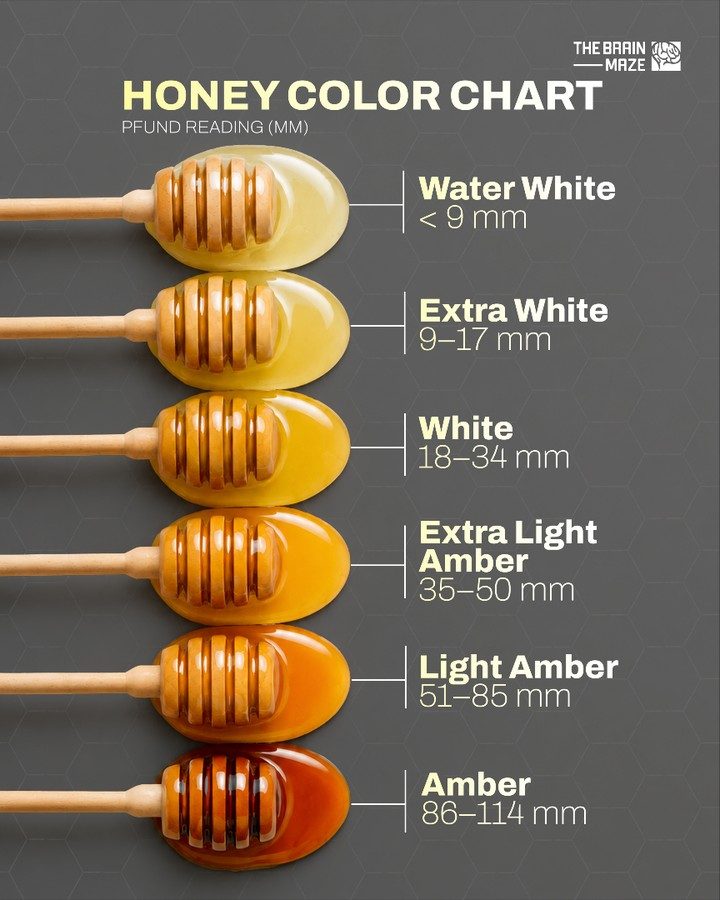
Honey Color Chart
Honey's color varies widely, from water white to amber. This variation is not merely aesthetic but also indicative of the honey's flavor, aroma, and even its potential health benefits. Understanding the color spectrum of honey can help consumers appreciate the nuances of different varieties and make informed choices based on their preferences and needs.
Why This Matters
The color of honey is determined by the nectar source, minerals, and natural compounds it contains. This characteristic is measured using the Pfund scale, which quantifies color intensity in millimeters. The scale ranges from less than 9 mm for water-white honey to over 86 mm for amber honey. This measurement helps in classifying honey into different categories, each with its unique taste and aroma profile.
Main Discussion
The Pfund Scale
The Pfund scale is a standardized method for measuring honey color. It uses a series of transparent glass plates of varying shades, each corresponding to a specific Pfund reading. The glass plates are placed over a sample of honey, and the color is matched to determine the Pfund value.
Honey Color Categories
Honey color can be categorized based on the Pfund reading, which ranges from milder, delicate flavors to richer, more robust ones. Here are the main categories:
Water White
- Pfund Reading: < 9 mm
- Characteristics: Water-white honey is the lightest in color and has a very mild flavor. It is often derived from nectar sources like orange blossoms or alfalfa. Due to its subtle taste, it is versatile and can be used in a variety of culinary applications without overpowering other flavors.
Extra White
- Pfund Reading: 9-17 mm
- Characteristics: Extra white honey is slightly darker than water-white honey but still quite light. It has a delicate flavor that is slightly stronger than water-white honey. This type of honey is also versatile and can be used in both sweet and savory dishes.
White
- Pfund Reading: 18-34 mm
- Characteristics: White honey is a bit darker and has a more pronounced flavor than the lighter varieties. It often comes from sources like clover or wildflowers. This honey is great for baking and adding a touch of sweetness to beverages.
Extra Light Amber
- Pfund Reading: 35-50 mm
- Characteristics: Extra light amber honey is darker and has a richer, more robust flavor. It is often sourced from nectar sources like buckwheat or wildflowers. This type of honey is ideal for spreading on toast or adding to teas and coffees for a stronger honey taste.
Light Amber
- Pfund Reading: 51-85 mm
- Characteristics: Light amber honey has a deep, golden color and a strong, rich flavor. It is usually derived from sources like sage or tupelo. This type of honey is perfect for glazing meats or adding a intense sweetness to desserts.
Amber
- Pfund Reading: 86-114 mm
- Characteristics: Amber honey is the darkest and has the strongest flavor and aroma. It is often sourced from nectar sources like buckwheat or blackberry. This type of honey is excellent for adding depth to marinades, dressings, or using as a natural sweetener in baked goods.
Practical Tips
Choosing the Right Honey
When selecting honey, consider the following tips:
- Flavor Preference: If you prefer a milder, delicate flavor, opt for lighter honeys like water white or extra white. For a richer, more robust taste, choose amber or extra light amber varieties.
- Culinary Use: Consider how you plan to use the honey. Lighter honeys are great for baking and adding a subtle sweetness, while darker honeys are perfect for glazes, marinades, or as a natural sweetener in beverages.
- Health Benefits: Darker honeys often contain more antioxidants and minerals. If you're looking for potential health benefits, consider choosing a darker variety.
Storing Honey
To maintain the quality and flavor of your honey, store it in a cool, dark place. Avoid exposing it to direct sunlight or heat, as this can cause it to crystallize or lose its flavor. Keep the container tightly sealed to prevent moisture loss and contamination.
Important Takeaways
- Color Indicates Flavor: The color of honey, as measured by the Pfund scale, is a good indicator of its flavor and aroma. Lighter honeys are milder, while darker honeys are richer and more robust.
- Versatility in Use: Different hues of honey offer a variety of flavor profiles, making them suitable for a range of culinary applications. From delicate sweeteners to intense flavor enhancers, there's a honey for every need.
- Health Considerations: Darker honeys tend to have higher antioxidant and mineral content, which can provide additional health benefits.
Conclusion
Understanding the color chart of honey can greatly enhance your appreciation and usage of this natural sweetener. By knowing the nuances of each color category, you can choose the perfect honey for your culinary needs and enjoy the unique flavors and health benefits it offers. Whether you prefer a subtle, delicate taste or a rich, robust flavor, there's a honey out there that's just right for you.
Watch the Reel
Questions readers ask
What is the Pfund scale and how does it measure honey color?
The Pfund scale is a measurement tool designed to quantify the color intensity of honey. It uses a range of values from less than 9 mm to over 86 mm, with lower values indicating lighter honey and higher values indicating darker honey. This scale helps in categorizing honey based on its color, which is an indicator of its taste, aroma, and potential benefits.
What does the color of honey indicate about its taste?
The color of honey is a strong indicator of its flavor profile. Lighter honeys, such as those with Pfund scale readings of less than 9 mm, tend to have a milder, sweeter taste. In contrast, darker honeys, with readings over 86 mm, often have a more robust, richer flavor with a higher mineral content. For instance, water white honey has a light and delicate taste, while extra light honey offers a slightly stronger flavor.
How does the Pfund scale help consumers choose honey?
The Pfund scale provides consumers with a reliable guide to understand the characteristics of different honey varieties. By knowing the Pfund scale readings, consumers can choose honey based on their preferred taste and aroma. For example, those who enjoy a mild taste might opt for light honey, while those who prefer a stronger flavor might choose darker varieties.
What are the benefits of darker honey compared to lighter honey?
Darker honey, with higher Pfund scale readings, often contains more minerals and antioxidants. These compounds can contribute to various health benefits, such as enhanced antioxidant properties and a richer nutritional profile. Lighter honey, while still beneficial, may have a milder taste and a lower mineral content.
How can I interpret the honey color chart using the Pfund scale?
To interpret the honey color chart using the Pfund scale, look at the corresponding Pfund scale readings for each color. For example, water white honey has readings of less than 9 mm and is very light in color. Extra light honey might have readings close to 9 mm. As the readings increase, the honey becomes darker, with amber honey having readings over 86 mm. This chart helps you understand the range of honey colors and their associated flavors.
Why does honey color vary so widely?
The color of honey varies widely due to differences in the nectar source, minerals, and natural compounds present. The nectar from different flowers and plants contributes unique properties to the honey, resulting in a spectrum of colors from water white to amber. This variation makes each type of honey distinct and offers a unique taste experience.
What is considered the lightest and darkest honey on the Pfund scale?
On the Pfund scale, water-white honey is considered the lightest, with readings of less than 9 mm. This honey is very pale and has a delicate, mild flavor. In contrast, amber honey is one of the darkest varieties, with readings over 86 mm. These darker hues indicate a richer, more robust flavor and a higher mineral content.
Related deep dives
Similar reads based on topic and creator.




Recent articles
Fresh deep dives from the latest Reels we unpacked.




Comments
Be the first to comment.