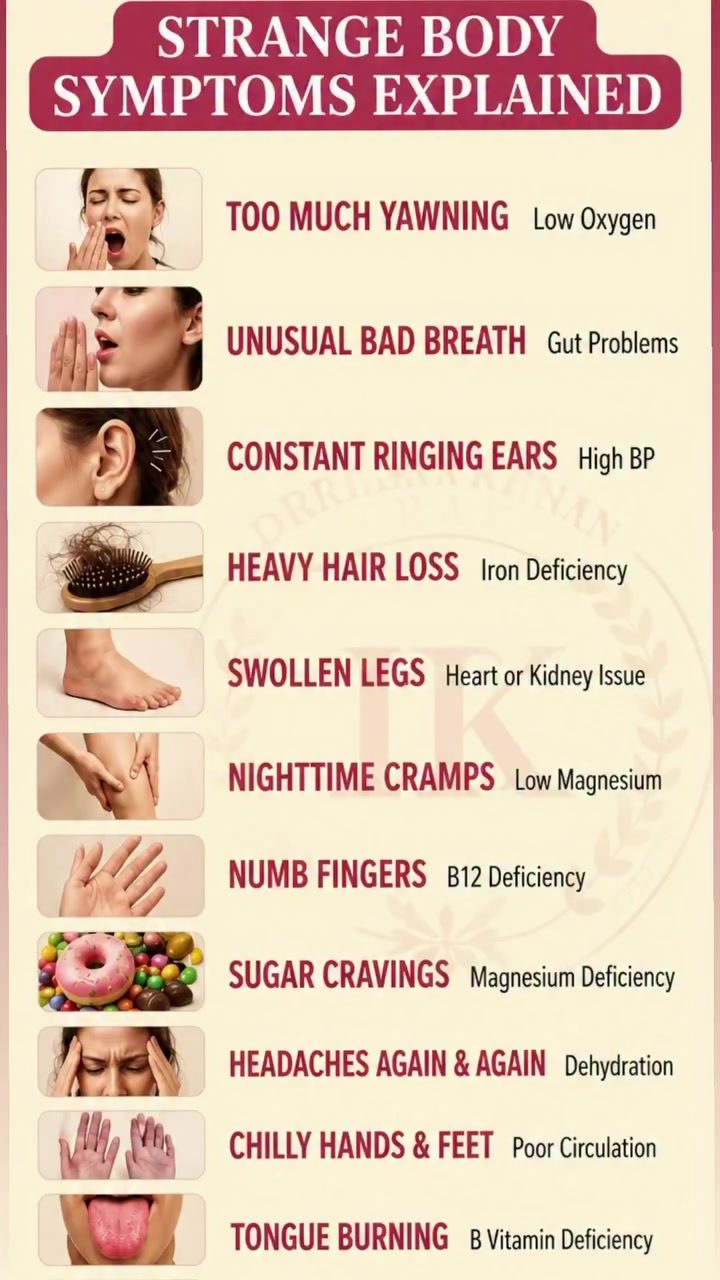
Strange Body Symptoms Explained
The human body often sends subtle signals that something might not be right. Recognizing these signs can help identify potential health issues before they become serious. Here, we explore various strange body symptoms, their possible causes, and why paying attention to them matters.
Why This Matters
Understanding these seemingly minor symptoms can be crucial for maintaining overall health. Early detection of deficiencies or underlying conditions allows for timely intervention, potentially preventing more serious health problems. This awareness can guide you to take proactive steps, such as adjusting your diet, lifestyle, or seeking medical advice.
Main Discussion
Too Much Yawning
Frequent yawning, beyond just feeling tired, might indicate low oxygen levels. This could stem from various issues, including respiratory problems or even stress. Paying attention to this symptom can prompt you to evaluate your breathing habits or consult a healthcare professional.
Unusual Bad Breath
Persistent bad breath, despite good oral hygiene, could be linked to gut problems. Digestive issues or infections can cause a foul odor that regular brushing or mouthwash won't solve. Recognizing this symptom can lead to addressing deeper health concerns.
Constant Ringing in the Ears
A persistent ringing in the ears, or tinnitus, might be related to high blood pressure. This condition is often linked to cardiovascular health and can be an early warning sign. Managing blood pressure through lifestyle changes or medication can help alleviate this symptom.
Heavy Hair Loss
Excessive hair loss can be a sign of iron deficiency. Iron is essential for blood production and oxygen transport. If you notice unusual hair loss, it might be worth checking your iron levels and considering dietary adjustments or supplements.
Swollen Legs
Swollen legs may suggest heart or kidney issues. This condition, known as peripheral edema, can be a sign of fluid retention due to underlying health problems. Addressing the root cause, whether through medication or lifestyle changes, can help alleviate this symptom.
Nighttime Cramps
Night cramps, especially in the legs, could be due to low magnesium levels. Magnesium is crucial for muscle and nerve function. Ensuring adequate magnesium intake through diet or supplements can help prevent these cramps.
Numb Fingers
Numb or tingling fingers might be caused by a B12 deficiency. This vitamin is vital for nerve function and blood production. Recognizing this symptom can prompt you to evaluate your B12 levels and consider dietary changes or supplements.
Sugar Cravings
Intense sugar cravings could be related to magnesium deficiency. Magnesium plays a role in blood sugar regulation, and its deficiency can lead to increased sugar cravings. Balancing your diet with magnesium-rich foods or supplements can help manage this symptom.
Headaches
Reoccurring headaches can be a sign of dehydration. Ensuring adequate hydration is crucial for maintaining bodily functions and preventing headaches. Drinking water regularly can help alleviate this symptom and improve overall health.
Chilly Hands and Feet
Chilly hands and feet may indicate poor circulation. This symptom can be a sign of underlying health issues, such as peripheral artery disease or anemia. Improving circulation through exercise, diet, or medical intervention can help manage this symptom.
Burning Tongue
A burning sensation on the tongue could be a B vitamin deficiency. B vitamins are essential for various bodily functions, and their deficiency can lead to various symptoms, including a burning tongue. Ensuring a balanced diet rich in B vitamins can help alleviate this symptom.
Can’t Smell Well
A decreased sense of smell could be related to a zinc deficiency. Zinc is crucial for immune function and sensory perception. Recognizing this symptom can prompt you to evaluate your zinc intake and consider dietary changes or supplements.
Bleeding Gums
Bleeding gums may indicate a vitamin C deficiency. Vitamin C is essential for immune function and collagen production. Addressing this deficiency through a balanced diet or supplements can help improve oral health.
Always Tired
Persistent fatigue could be due to low vitamin D levels. Vitamin D is crucial for bone health and immune function. Ensuring adequate vitamin D intake through sunlight exposure, diet, or supplements can help manage this symptom.
Practical Tips
Pay Attention to Your Body
Listening to your body's signals is the first step in maintaining good health. Keep a journal of any unusual symptoms and note when they occur. This can help you and your healthcare provider identify patterns or potential deficiencies.
Maintain a Balanced Diet
A balanced diet rich in various vitamins and minerals is essential for overall health. Incorporate foods like leafy greens, lean proteins, whole grains, and colorful fruits and vegetables into your meals.
Stay Hydrated
Adequate hydration is crucial for maintaining bodily functions. Make sure to drink plenty of water throughout the day, especially if you experience symptoms like headaches or fatigue.
Consult a Healthcare Professional
Always consult a healthcare professional if you experience persistent or unusual symptoms. They can provide a proper evaluation and recommend appropriate interventions, whether through lifestyle changes, dietary adjustments, or medication.
Regular Check-ups
Regular health check-ups can help detect deficiencies or underlying conditions before they become serious. Schedule routine appointments with your healthcare provider to monitor your health and address any concerns.
Important Takeaways
- Recognize the Signs: Pay attention to unusual symptoms and consider what your body might be trying to tell you.
- Act Early: Early awareness and intervention can prevent more serious health problems.
- Seek Professional Help: Always consult a healthcare professional for proper evaluation and guidance.
- Maintain a Healthy Lifestyle: A balanced diet, adequate hydration, and regular exercise are crucial for overall health.
Conclusion
The body's subtle signs often provide valuable insights into our health. Paying attention to these symptoms can help identify potential deficiencies or underlying conditions, allowing for timely intervention. Whether it's recognizing the signs of a vitamin deficiency or addressing more serious health issues, taking proactive steps can significantly improve your overall well-being. Stay aware, stay proactive, and prioritize your health.
Watch the Reel
Questions readers ask
What are some common vitamin deficiency symptoms that might be indicated by strange body symptoms?
Vitamin deficiencies can manifest in various ways, such as fatigue, weakness, or changes in skin, hair, or nails. For instance, a lack of vitamin B12 can cause numbness or tingling in the hands and feet. Iron deficiency may lead to fatigue, shortness of breath, or headaches, while a low magnesium levels can cause muscle cramps, twitches, or even seizures.
How can excessive yawning be a sign of hidden health clues?
Excessive yawning, especially when not related to tiredness, can indicate several underlying health issues. It might suggest respiratory problems, such as asthma or COPD, or digestive problems, like acid reflux. Additionally, it can be a sign of vitamin deficiencies, particularly in vitamins B12 and D, and can also relate to mental health conditions, like depression and anxiety.
What are some early signs of respiratory issues that might be indicated by body symptoms?
Early signs of respiratory issues can include frequent coughing, wheezing, or shortness of breath. Other clues might be persistent fatigue, chest discomfort, or a feeling of tightness in the chest. Recognizing these symptoms can help in early detection and management of conditions like asthma, bronchitis, or even COVID-19.
How can I tell if my body symptoms are a sign of iron deficiency?
Iron deficiency can present through a variety of symptoms, including persistent fatigue, weakness, and shortness of breath. Other signs can be rapid heartbeat, dizziness, or headaches. If you experience these symptoms, it is important to consult a healthcare professional for proper diagnosis, as iron deficiency can be a sign of an underlying health condition.
What are some digestive problems symptoms that might be indicated by body symptoms?
Digestive problems can reveal themselves through a range of symptoms, such as persistent abdominal pain, bloating, or changes in bowel habits. Other clues might be nausea, vomiting, or unexplained weight loss. Recognizing these symptoms can help in the early detection and management of conditions like irritable bowel syndrome, celiac disease, or even colon cancer.
What are the signs of zinc deficiency?
Zinc deficiency can manifest in various ways, including a weakened immune system, slow wound healing, or taste and smell changes. Other signs can be hair loss, skin rashes, or diarrhea. If you suspect a zinc deficiency, consult a healthcare professional for proper diagnosis and treatment.
Why is it important to pay attention to these strange body symptoms?
Paying attention to these strange body symptoms is crucial for maintaining overall health. Early detection of deficiencies or underlying conditions allows for timely intervention, which can potentially prevent more serious health problems. This awareness can guide you to take proactive steps, such as adjusting your diet, lifestyle, or seeking medical advice.
Recent articles
Fresh deep dives from the latest Reels we unpacked.




Comments
Be the first to comment.