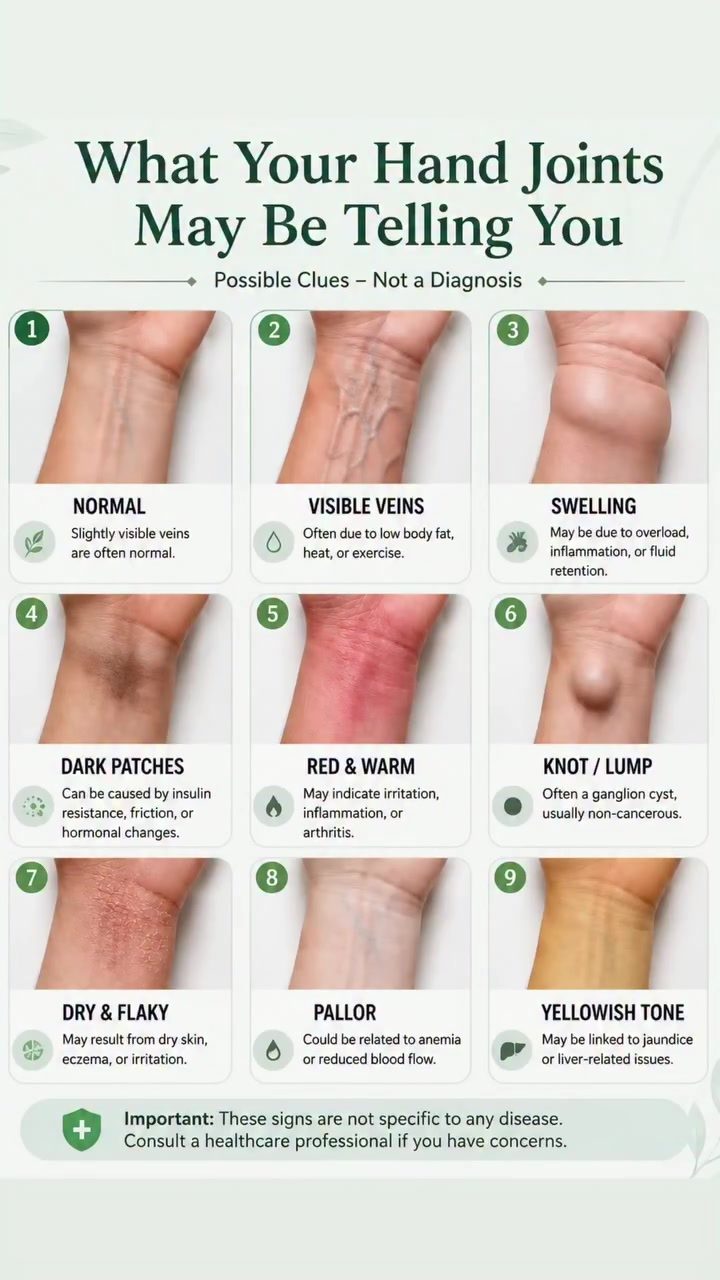
Hand Joint Health: What Your Hands May Be Telling You
While hands are essential for daily tasks, they also serve as a window into your overall health. Changes in the appearance and condition of your hands can provide valuable clues about what’s happening inside your body. This guide will explore various hand symptoms, their possible causes, and when to seek professional help.
Context: Why This Matters
Your hands are composed of a complex network of bones, muscles, tendons, and nerves. Any disruption in this network can manifest as visible changes on the skin. Recognizing these signs early can prompt timely medical intervention, potentially preventing more severe health issues. However, it’s crucial to remember that these changes are not specific diagnoses but rather clues that warrant further investigation.
Main Discussion
Visible Veins
Slightly visible veins are often a normal part of aging, especially in adults. However, prominent veins on your hands could indicate dehydration, obesity, or even genetic predisposition. In rare cases, visible veins might suggest issues like deep vein thrombosis or varicose veins, which require medical attention.
Swelling
Hand swelling can be caused by a variety of factors, including overuse, inflammation, or fluid retention. If one hand is swollen, it could indicate a localized injury or infection. Swelling in both hands might suggest a systemic issue, such as heart failure, kidney disease, or an allergic reaction. Persistent or worsening swelling should be evaluated by a healthcare professional.
Dark Patches
The appearance of dark patches on your hands can be concerning. These spots may indicate hormonal changes, insulin resistance, or a condition called acanthosis nigricans. This condition is often associated with diabetes or other metabolic disorders. While not always indicative of a severe problem, dark patches warrant a medical check-up, especially if accompanied by other symptoms.
Redness and Warmth
Red and warm skin on your hands could signal irritation, inflammation, or arthritis. Conditions like rheumatoid arthritis or psoriatic arthritis can cause these symptoms. Additionally, redness and warmth might indicate an infection, such as cellulitis, which requires prompt medical treatment. If the redness and warmth are accompanied by pain or swelling, seek medical attention.
Knots or Lumps
Lumps or knots on your hands are often ganglion cysts, which are usually benign and non-cancerous. These cysts can form due to repetitive stress or overuse of the hand. While typically harmless, any new or growing lump should be evaluated by a healthcare professional to rule out more serious conditions.
Dry and Flaky Skin
Dry and flaky skin can result from various factors, including dryness, eczema, or irritation. Regular moisturizing and avoiding harsh soaps can often alleviate these symptoms. If the condition persists or worsens, it may indicate an underlying skin condition, such as psoriasis or dermatitis, which requires medical treatment.
Pale Skin
Pale skin, or pallor, could be related to anemia or reduced blood flow. Anemia is a condition where the body lacks sufficient healthy red blood cells to carry adequate oxygen to its tissues. This can cause fatigue, shortness of breath, and a pale complexion. If you notice persistent pallor, consult a healthcare professional for a blood test to check your iron levels and overall health.
Yellowish Skin
Yellowish skin, or jaundice, can be linked to liver-related issues. This condition occurs when the liver fails to process bilirubin, a byproduct of red blood cell breakdown, leading to its accumulation in the skin. Jaundice can result from various conditions, including hepatitis, liver cancer, or gallstones. If you notice yellowing of the skin, seek medical evaluation immediately.
Practical Tips
Regular self-examinations of your hands can help you stay proactive about your health. Here are some practical tips to keep in mind:
- Observe Changes: Pay attention to any changes in the appearance of your hands, including new or worsening symptoms.
- Keep a Record: Maintain a log of any changes, including their duration, severity, and any accompanying symptoms.
- Stay Hydrated: Drink plenty of water to keep your skin hydrated and your joints lubricated.
- Moisturize Regularly: Use a gentle moisturizer to keep your skin soft and supple.
- Wear Gloves: Protect your hands from harsh chemicals and extreme temperatures by wearing gloves when necessary.
- Consult a Professional: If you notice any persistent or worrisome symptoms, do not hesitate to consult a healthcare professional for a thorough evaluation.
Important Takeaways
- The condition of your hands can provide important clues about your overall health.
- Changes in hand appearance, such as visible veins, swelling, dark patches, redness, lumps, dry skin, pallor, or jaundice, can indicate various health issues.
- While these signs are not specific diagnoses, they warrant further investigation.
- Regular self-examinations and prompt medical consultation can help manage and treat potential health problems early.
Conclusion
Your hands are not just tools for daily tasks; they are also indicators of your overall health. By paying attention to changes in their appearance and condition, you can take proactive steps to maintain your well-being.
Watch the Reel
Questions readers ask
What do visible veins on my hands indicate about my health?
Visible veins on your hands can be a sign of dehydration. They can also indicate more serious conditions such as venous insufficiency. If you notice prominent veins accompanied by other symptoms like swelling or pain, it's important to consult a healthcare professional.
Why are my hands swollen and what should I do?
Hand swelling can be caused by a variety of factors, including inflammation, injury, or underlying health conditions such as heart, kidney, or liver problems. If your hands are swollen, it's essential to monitor for other symptoms and consult a doctor for a proper evaluation.
What do dark patches on my hands mean?
Dark patches on your hands can be a result of aging, sun exposure, or certain medical conditions like diabetes or liver disease. If you notice dark patches, especially if they are new or changing, it's a good idea to have them checked by a healthcare provider.
Is it normal to have dry or flaky skin on my hands?
Dry or flaky skin on your hands can be due to environmental factors like cold weather or frequent hand washing. However, it can also be a sign of an underlying skin condition or deficiency. Regular moisturizing can help, but if the condition persists, consider speaking with a healthcare professional.
What could yellowish hands indicate about my health?
Yellowish discoloration of the hands can be a sign of jaundice, which is often associated with liver problems. It can also indicate issues with the gallbladder or certain blood disorders. If your hands have a yellow tint, it's important to seek medical attention for a thorough evaluation.
When should I be concerned about hand inflammation and seek medical help?
Hand inflammation can be a response to injury, overuse, or an underlying condition such as arthritis. If the inflammation is accompanied by severe pain, redness, warmth, or limited mobility, it's a good idea to seek medical help promptly. Early intervention can prevent further complications.
What are some normal signs of hand health and what should I look for?
Normal signs of hand health include smooth, hydrated skin, minimal swelling, and no discoloration or pain. Regularly inspect your hands for any changes in appearance or function. If you notice persistent or concerning symptoms, it's best to consult a healthcare professional for guidance.
Recent articles
Fresh deep dives from the latest Reels we unpacked.




Comments
Be the first to comment.