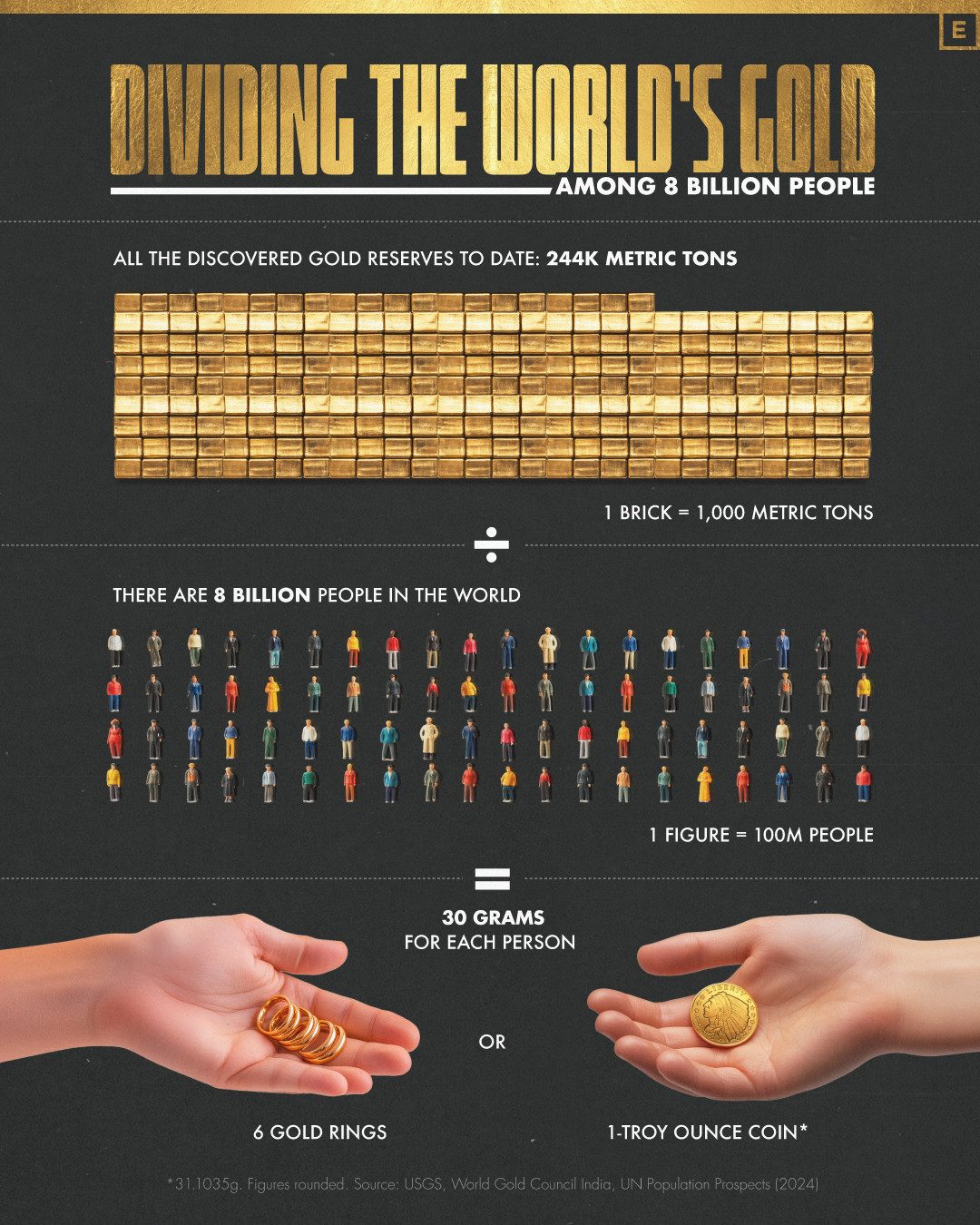
World’s Gold Distribution
Gold has long captivated human imagination, symbolizing wealth, power, and prestige. To understand the global gold distribution, it’s essential to delve into the data surrounding the world's gold reserves and how they are allocated among the population. The total amount of gold discovered worldwide to date stands at approximately 244,000 metric tons. This figure provides a foundation for exploring the distribution of gold on a per-person basis and highlights the disparities in gold ownership.
Context / Why this matters
The distribution of gold reserves is a critical aspect of global wealth and economy. Understanding how gold is allocated can provide insights into economic power dynamics, central bank strategies, and the impact of gold on personal wealth. The U.S. alone holds around 8,000 tonnes of gold in reserves, underscoring the significant role that central banks play in gold ownership. This context is crucial for grasping the broader implications of gold distribution on a global scale.
Main discussion
Global Gold Reserves
The total amount of gold discovered to date amounts to 244,000 metric tons. This massive quantity of gold is distributed unevenly across the globe, with central banks and private entities holding the majority. The U.S. Geological Survey (USGS) and the World Gold Council India provide key data on global gold reserves.
Population and Gold Distribution
With approximately 8 billion people in the world, the distribution of gold per person is a compelling metric. If all the gold in the world were divided equally among the global population, each individual would receive 30 grams of gold. This equates to about six standard gold rings or one troy ounce coin. Visualizing this distribution helps in grasping the magnitude of global gold reserves and their allocation.
Central Banks and Gold Reserves
Central banks play a pivotal role in the global gold market. They hold significant amounts of gold as reserves to stabilize their currencies and manage economic crises. The U.S. Federal Reserve, for example, has about 8,000 tonnes of gold in its reserves, illustrating the substantial gold holdings of central banks. This concentration of gold in central banks is a key factor in the unequal distribution of gold among the population.
Gold in Personal Wealth
For individuals, gold represents a tangible asset that can be held as jewelry, coins, or bullion. Whether in the form of six gold rings or one troy ounce coin, gold holds intrinsic value and is often viewed as a safe investment. Understanding the distribution of gold on a per-person basis provides a unique perspective on personal wealth and the potential for gold ownership.
Hypothetical Equal Division
The hypothetical scenario of dividing all the world's gold equally among the population offers a thought-provoking perspective. Each person receiving 30 grams of gold highlights the disparity between individual gold ownership and the vast reserves held by central banks and other entities. This visualization helps in comprehending the economic and social implications of gold distribution.
The Role of Visualizations
Infographics and visual representations are powerful tools for understanding complex data. By visually depicting the total gold reserves, comparing them to bricks of gold, and representing the population with figures, infographics make the distribution of gold more accessible. These visualizations help in grasping the magnitude of gold reserves and their allocation.
Practical tips
Whether you are an investor, a gold enthusiast, or simply curious about global wealth distribution, here are some practical tips:
-
Research Gold Holdings: Familiarize yourself with the gold holdings of major central banks, particularly the U.S. Federal Reserve. This information can provide insights into global economic strategies and the role of gold in stabilizing currencies.
-
Understand Gold as an Asset: Recognize the value of gold as a tangible asset. Whether in the form of jewelry, coins, or bullion, gold can be a valuable addition to your investment portfolio. It’s commonly viewed as a safe investment in uncertain economic times.
-
Consider Personal Gold Ownership: Explore the possibility of owning gold in various forms, such as rings, coins, or bars. Knowing the global distribution of gold can help you understand the value and potential of your personal gold holdings.
Important takeaways
- The total amount of discovered gold reserves worldwide is approximately 244,000 metric tons.
- If distributed equally, each person would receive 30 grams of gold, equivalent to about six gold rings or one troy ounce coin.
- Central banks, including the U.S. Federal Reserve, hold significant amounts of gold as reserves, contributing to the unequal distribution of gold.
- Visual representations, such as infographics, are effective tools for understanding the distribution and allocation of gold.
- Gold holds intrinsic value and is often viewed as a safe investment, making it a valuable asset for both individuals and central banks.
Conclusion
The distribution of gold on a global scale is a multifaceted issue that touches on economics, wealth, and investment. By analyzing the total reserves, the role of central banks, and the hypothetical equal division of gold, we gain valuable insights into the dynamics of global wealth. Understanding these dynamics can help individuals and institutions make informed decisions about gold ownership and investment. Whether through personal wealth or central bank reserves, gold remains a cornerstone of global economic stability and personal investment strategies.
Watch the Reel
Questions readers ask
What is the total amount of gold that has been discovered worldwide?
Approximately 244,000 metric tons of gold have been discovered globally. This vast amount provides a basis for understanding the distribution of gold and its concentration in various regions and entities.
Who holds the majority of the world's gold reserves?
Central banks and private entities hold the majority of the world's gold reserves. Central banks often hold gold as a reserve asset to support their currencies and manage economic stability, while private entities include individuals and organizations that invest in gold for wealth preservation and speculation.
How is global gold distribution relevant to understanding economic power dynamics?
The distribution of gold reserves offers insights into economic power dynamics by revealing which countries and institutions hold significant gold reserves. This information can indicate economic stability, influence, and strategic financial planning.
What is the significance of gold reserves per capita?
Gold reserves per capita provide a way to assess the distribution of gold wealth among the global population. This metric can highlight disparities in wealth and economic power, showing how concentrated gold ownership is in certain regions or among specific groups.
What are some key trends in global gold prospects for 2024?
Current trends indicate ongoing interest in gold as a safe-haven asset, driven by economic uncertainties and inflation concerns. This is likely to influence central bank gold holdings and private ownership, making it an important factor to monitor in global gold statistics and distribution.
Recent articles
Fresh deep dives from the latest Reels we unpacked.




Comments
Be the first to comment.