Global Economy Contribution
The global economy is significantly shaped by the service sector, which has been a critical driver of economic activity in the world's largest countries over the past few decades. To understand the economic landscape, it's essential to break down the Gross Domestic Product (GDP) of each country into three main sectors: services, industry, and agriculture.
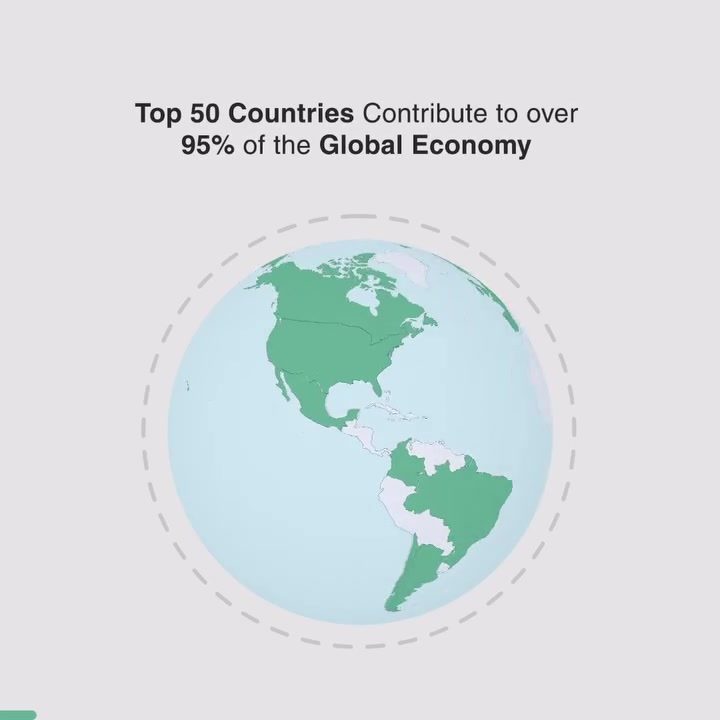
This breakdown provides valuable insights into how different sectors contribute to a country's economic output. The top 50 countries collectively account for over 95% of the global economy, highlighting their substantial influence. The contributions from the service, industry, and agriculture sectors vary widely across continents, each region presenting a unique economic profile.
The Three Pillars of GDP
The GDP of a country is comprised of three key pillars: services, industry, and agriculture. Each of these sectors plays a crucial role in the overall economic output, and their relative contributions can differ significantly from one country to another.
Service Sector
The service sector encompasses a wide range of activities, including finance, healthcare, education, and information technology. In many advanced economies, the service sector is the largest contributor to GDP. For instance, in countries like the United States and European nations, services can account for over 70% of GDP. This sector is vital for job creation and economic stability, as it includes many non-manufacturing jobs.
Industrial Sector
The industrial sector includes manufacturing, construction, and utilities. It is a crucial component of a country's economic output, particularly in emerging economies. For example, in China, the industrial sector has been a significant driver of economic growth, contributing to a substantial portion of its GDP. However, in some developed countries, the industrial sector has seen a decline in recent decades due to automation and outsourcing, though it remains essential for innovation and production.
Agricultural Sector
The agricultural sector involves farming, forestry, and fishing. Despite its traditional role, the contribution of agriculture to GDP has generally decreased in many developed countries. However, it remains a critical sector in developing economies, where a significant portion of the population is engaged in farming. Agriculture provides essential raw materials and supports the livelihoods of millions of people worldwide.
Contribution by Sector: A Global Perspective
The contributions from each sector vary significantly across different continents. This variation highlights the distinct economic landscapes and development stages of various regions.
Asia
Asia is home to some of the world's largest economies, including China and India. The region's GDP is influenced by a balanced mix of all three sectors, with a notable emphasis on industry and services. For instance, China's industrial sector has been a critical driver of its economic growth, while India's service sector, particularly information technology, has grown rapidly in recent years.
Africa
Africa presents a diverse economic landscape with varying contributions from the three sectors. Agriculture remains a significant contributor to GDP in many African countries, supporting a large portion of the population. However, there is growing potential in the industrial and service sectors, particularly in countries like South Africa and Kenya, which have seen an increase in manufacturing and technology services.
America
In the Americas, the service sector is the dominant contributor to GDP, particularly in the United States and Canada. These countries have highly developed service economies, including finance, healthcare, and technology. The industrial sector also plays a significant role, particularly in regions with strong manufacturing bases, such as the Midwest in the United States. Agriculture, while important, generally contributes a smaller percentage to GDP.
Europe
Europe is characterized by a well-developed service sector, which is a significant contributor to GDP in countries like Germany, France, and the United Kingdom. The industrial sector is also robust, with countries like Germany known for their manufacturing expertise. Agriculture, while important, has a smaller contribution to GDP compared to services and industry.
Oceania
Oceania, comprising countries like Australia and New Zealand, has a diverse economic profile. The service sector is a significant contributor, especially in Australia, where financial services and tourism play a crucial role. The industrial sector, particularly mining, is also important. Agriculture, while not the largest contributor to GDP, is vital for exports, especially in countries like New Zealand, known for dairy and meat exports.
Practical Tips
Understanding the sectoral contributions to GDP can provide valuable insights for investors, policymakers, and businesses. Here are some practical tips for leveraging this information:
-
Investors: Look for opportunities in sectors with high growth potential. For instance, in countries with a growing service sector, investing in technology and financial services could be lucrative.
-
Policymakers: Tailor economic policies to support the strengths of each sector. For example, in countries with a strong agricultural sector, investing in agricultural technology and infrastructure can boost productivity.
-
Businesses: Identify sectors with high demand and potential for growth. For example, in regions with a developing industrial sector, investing in manufacturing plants and technology could yield significant returns.
Important Takeaways
To summarize, the global economy is driven by the diverse contributions of the service, industrial, and agricultural sectors. Understanding how these sectors contribute to GDP provides valuable insights into the economic health and potential of various regions. Investors, policymakers, and businesses can use this information to make informed decisions and capitalize on growth opportunities.
Conclusion
The global economy is a complex and dynamic system, with each country and region presenting a unique economic profile. By examining the contributions of the service, industrial, and agricultural sectors to GDP, we gain a deeper understanding of the economic landscape and can identify trends and opportunities. Whether you are an investor, policymaker, or business owner, understanding these sectoral dynamics is essential for making informed decisions and driving economic growth.
Watch the Reel
Questions readers ask
Which sectors make up the global economy and how do they contribute to a country's GDP?
The global economy is primarily composed of three sectors: services, industry, and agriculture. Each sector contributes differently to a country's GDP. The service sector, which includes areas like finance and technology, often dominates the GDP, especially in advanced economies, while industry and agriculture also play significant roles, varying by region and country.
How does the service sector impact job creation and economic stability?
The service sector is a major driver of job creation, providing a large portion of employment opportunities, particularly in developed countries. Its dominance in the GDP also contributes to economic stability, as it often exhibits resilience during economic fluctuations and can help buffer the impact of downturns in other sectors.
Which countries have the most influence on the global economy?
The top 50 countries collectively account for over 95% of the global economy, making them the most influential. Among these, the largest economies, including the United States, China, and Germany, significantly shape global economic trends.
What can the sector breakdown of GDP tell us about a country’s economic profile?
The breakdown of GDP into service, industry, and agriculture sectors offers insights into a country’s economic strengths and dependencies. For instance, a high contribution from the service sector might indicate a strong focus on technology and finance, while a significant industrial sector could point to robust manufacturing capabilities.
How does the economic profile vary across different continents?
The contributions from the service, industry, and agriculture sectors vary widely across continents. For example, North America and Europe often have a higher service sector contribution, while Asia and Africa may have more significant industry and agriculture sectors. This diversity in economic profiles reflects each region’s unique historical, cultural, and resource-based conditions.
What role do the industry and agriculture sectors play in the global economy?
While the service sector is dominant, industry and agriculture remain vital for economic output. The industry sector, which includes manufacturing, construction, and utilities, is crucial for producing goods and driving innovation, while agriculture supports food security and provides raw materials for industrial processes.
Why is it important to compare the global economy sectors across different continents?
Comparing the global economy sectors across continents helps identify regional strengths, weaknesses, and opportunities. This analysis can inform policy decisions, investment strategies, and international cooperation efforts, ultimately fostering a more balanced and resilient global economy.
Recent articles
Fresh deep dives from the latest Reels we unpacked.




Comments
Be the first to comment.