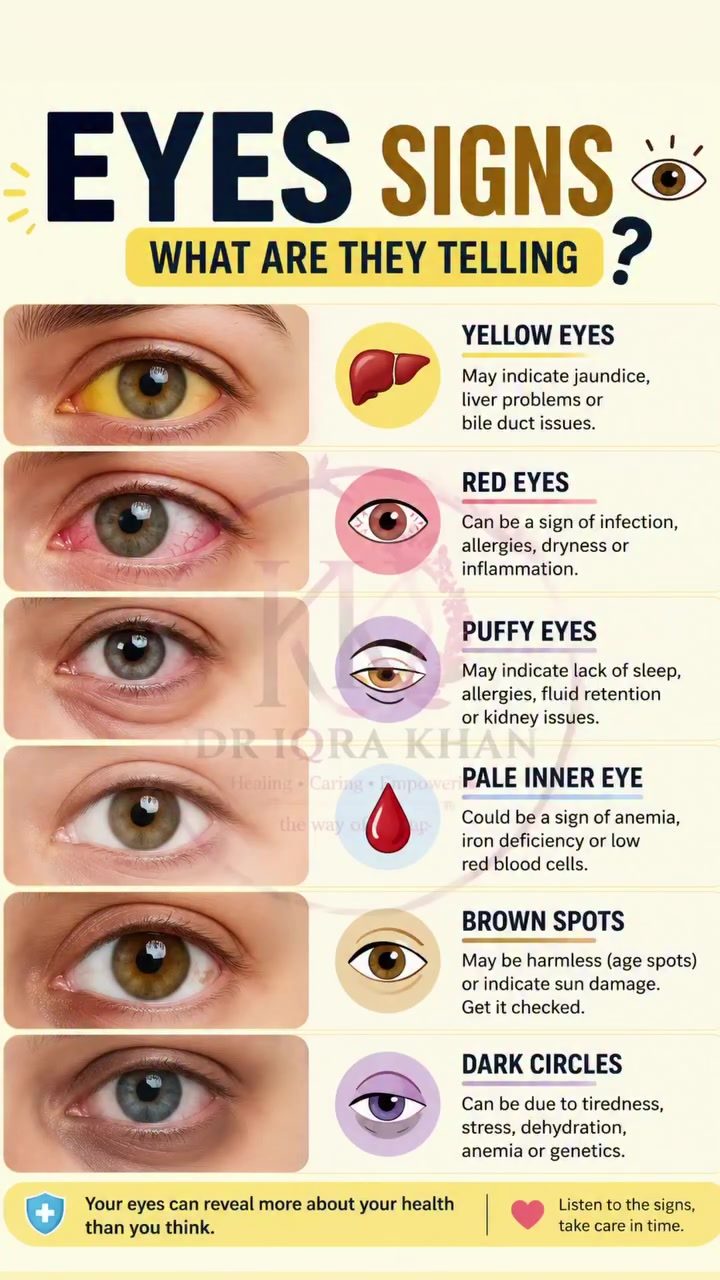
Understanding the Health Clues Hidden in Your Eyes
Your eyes are not just windows to your soul; they can also provide valuable insights into your overall health. Dr. Lora Khan highlights several signs that your eyes might be revealing about your well-being. Let's delve into these indicators and understand what they might mean.
Why This Matters
Recognizing the signs your eyes present can help you take proactive steps towards maintaining your health. While not all signs indicate serious conditions, being aware of these clues can prompt you to seek medical attention when necessary.
Exploring the Signs
Yellow Eyes
Yellow eyes can be alarming, but they often indicate specific health issues. Yellowing of the eyes, or jaundice, typically points to problems with the liver, bile duct, or gallbladder. Conditions such as liver disease, hepatitis, or bile duct blockage can cause this discoloration. If you notice a yellow tint in your eyes, it's crucial to consult a healthcare professional for further evaluation.
Red Eyes
Red eyes are a common issue and can result from various causes. Allergies, infections, dryness, or inflammation are frequent culprits. While red eyes often resolve on their own, persistent redness or pain should be checked by a doctor. Conditions like conjunctivitis, or "pink eye," can cause redness and require medical treatment. Additionally, prolonged screen time or environmental irritants can lead to dry eyes, which may also appear red.
Puffy Eyes
Puffy eyes are often a sign of insufficient sleep, allergies, or fluid retention. However, they can also indicate more serious conditions, such as kidney issues. If you frequently experience puffy eyes, consider evaluating your lifestyle habits. Improving your sleep quality, reducing salt intake, and using allergen-free bedding can help alleviate puffiness. If symptoms persist, consult a healthcare provider to rule out underlying health issues.
Pale Inner Eyes
The inner part of the eye, known as the conjunctiva, can sometimes appear pale. While this may be harmless, it can also indicate anemia, iron deficiency, or low red blood cell count. If you notice persistent paleness in the inner eye, it's a good idea to get a blood test to check for these conditions. Ensuring a balanced diet rich in iron can help prevent anemia and related symptoms.
Brown Spots
Brown spots on the eyes can be due to tiredness, stress, dehydration, or sun damage. While these spots are often benign, they can also indicate more serious conditions such as liver spots or age-related changes. If you notice new or changing brown spots, it's essential to get them checked by a healthcare professional. Protecting your eyes from the sun and maintaining a healthy lifestyle can help prevent the development of these spots.
Dark Circles
Dark circles under the eyes are a common concern and can result from various factors. Tiredness, stress, dehydration, anemia, or genetics can all contribute to their appearance. While dark circles are usually not a cause for concern, persistent or worsening symptoms may warrant a visit to a healthcare provider. Ensuring adequate sleep, staying hydrated, and using gentle skincare products can help minimize dark circles.
Practical Tips
Taking care of your eyes involves more than just maintaining good vision. Here are some practical tips to keep your eyes healthy:
Maintain a Balanced Diet
A diet rich in vitamins and minerals is essential for eye health. Foods high in antioxidants, such as leafy greens, citrus fruits, and fatty fish, can help protect your eyes from damage.
Stay Hydrated
Dehydration can lead to dry eyes and other discomforts. Ensure you drink plenty of water throughout the day to keep your eyes hydrated and healthy.
Protect Your Eyes from the Sun
Ulraviolet (UV) rays from the sun can damage your eyes over time. Wear sunglasses with UV protection and a wide-brimmed hat to shield your eyes from harmful rays.
Get Regular Eye Check-ups
Regular eye examinations can help detect potential issues early. Even if you don't experience any symptoms, routine check-ups are crucial for maintaining good eye health.
Practice Good Hygiene
Washing your hands before touching your eyes and avoiding rubbing them can help prevent infections. If you wear contact lenses, follow proper cleaning and storage guidelines to maintain their hygiene.
Important Takeaways
Your eyes can reveal a lot about your overall health, and recognizing the signs they present can help you take proactive steps towards wellness. While some symptoms may be benign, others can indicate more serious conditions. It's essential to listen to your body and seek medical attention when necessary.
Conclusion
Understanding the health clues hidden in your eyes can be a valuable tool for maintaining your overall well-being. By recognizing the signs and taking proactive steps, you can ensure that your eyes stay healthy and your body remains in good condition.
Watch the Reel
Questions readers ask
Why should I pay attention to changes in my eye color?
Changes in eye color can indicate various health issues. For instance, a yellowish tint might suggest liver problems, while a sudden change in color could be a sign of other underlying conditions. If you notice any discoloration, it's important to consult with a healthcare professional.
What do red eyes typically indicate?
Red eyes can be caused by a variety of factors, including allergies, eye infections, or even dryness due to environmental factors. Inflammation, increased blood pressure, or dehydration may also cause redness. If your red eyes are accompanied by pain, swelling, or changes in vision, seek medical attention.
How can pale eyes be a sign of health issues?
Pale eyes, particularly a bluish or pale tint in the eyelids, can sometimes indicate anemia, which is a condition where the body lacks sufficient healthy red blood cells. This can lead to fatigue and weakness. If you suspect anemia, it's crucial to have a blood test.
What causes eye swelling and what does it mean?
Eye swelling can occur due to allergies, infections, or even fatigue. It can also be a sign of more serious conditions like thyroid issues or kidney problems. If the swelling is severe or accompanied by pain, vision changes, or redness, it's important to consult a healthcare provider.
Can dehydration be detected through the eyes?
Yes, dehydration can manifest in the eyes through symptoms like redness, dryness, or the sensation of grit or sand in the eyes. If you experience these symptoms, it's important to increase your fluid intake and consider using lubricating eye drops to alleviate discomfort.
What are some common eye signs of liver problems?
One of the most noticeable signs of liver problems in the eyes is jaundice, which causes a yellowing of the whites of the eyes. This occurs due to the buildup of bilirubin, a yellow pigment produced by the liver. Other signs might include redness, itching, or a feeling of pressure around the eyes.
How can I tell if my eye symptoms are due to allergies?
Eye allergies often present with symptoms like redness, itching, and tearing. You might also experience swelling and a stringy, white discharge. If you suspect allergies, try to identify the trigger and consider allergy medications or consult an allergist for further guidance.
Recent articles
Fresh deep dives from the latest Reels we unpacked.




Comments
Be the first to comment.