Cortisol Imbalance: Recognizing the Signs
Cortisol, often referred to as the "stress hormone," plays a crucial role in how the body responds to stress. While short-term stress can be beneficial, chronic stress leads to prolonged elevated cortisol levels, which can have significant impacts on both physical and mental health. Recognizing the signs of cortisol imbalance is the first step in managing its effects.
Why This Matters
Chronic stress and elevated cortisol levels can affect various aspects of your life, from your physical appearance to your emotional well-being. Understanding the signs of cortisol imbalance can help you take proactive steps to manage stress and improve your overall health. This knowledge is particularly important in today's fast-paced world, where stress has become a common part of daily life.
Main Discussion
Understanding Cortisol and Its Impact
Cortisol is a steroid hormone produced by the adrenal glands. It helps the body respond to stressful situations by increasing blood sugar, suppressing the immune system, and altering metabolism. While cortisol is essential for survival, chronic stress can lead to consistently high cortisol levels, resulting in a variety of symptoms.
Signs of Cortisol Imbalance
Effects on the Face and Head
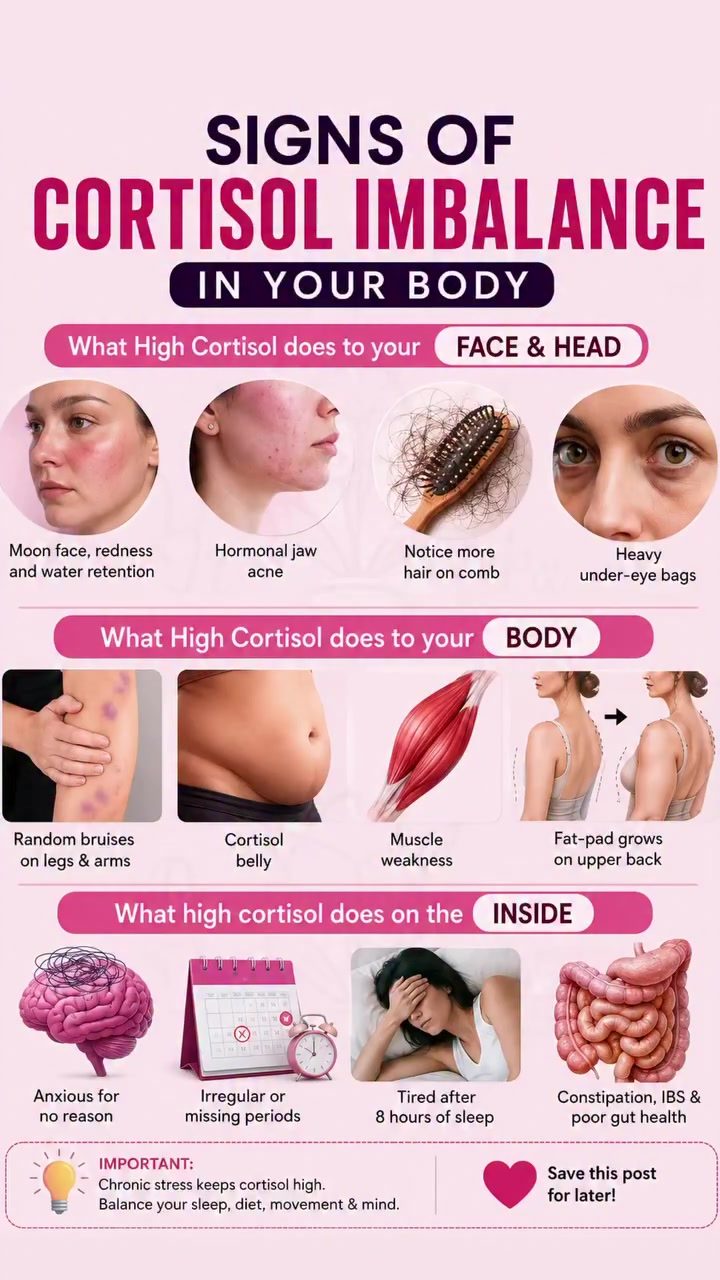
Cortisol imbalance can manifest in several ways on the face and head. Some of the most noticeable signs include:
- Moon Face: This refers to a rounded, full face caused by fat deposits, particularly around the cheeks and jawline.
- Redness and Water Retention: Elevated cortisol levels can lead to increased water retention, resulting in a puffy, red appearance.
- Hormonal Acne: Breakouts, particularly around the jawline and chin, can be a sign of hormonal imbalances, including high cortisol levels.
- Under-Eye Bags: Chronic stress can lead to fatigue, which often manifests as dark circles and under-eye bags.
- Excessive Hair Loss: Notice more hair on your comb? It might be due to stress-related hormonal imbalances.
Effects on the Body
Cortisol imbalance can also affect the body in various ways, including:
- Random Bruises: Unexplained bruises on the legs and arms can be a sign of weakened blood vessels, which can be linked to high cortisol levels.
- Cortisol Belly: Weight gain around the abdomen, often referred to as a "cortisol belly," is a common sign of elevated cortisol.
- Muscle Weakness: High cortisol levels can lead to muscle weakness and fatigue, making it difficult to perform daily activities.
- Fat-Pad Growth: The accumulation of fat on the upper back, often referred to as a "buffalo hump," can be a sign of cortisol imbalance.
Internal Symptoms
In addition to physical signs, cortisol imbalance can also cause a range of internal symptoms, such as:
- Anxiety: Chronic stress can lead to persistent feelings of anxiety and restlessness.
- Irregular Periods: High cortisol levels can disrupt the menstrual cycle, leading to irregular or missing periods.
- Fatigue: Feeling tired after a full night's sleep can be a sign of elevated cortisol levels, which can disrupt sleep patterns.
- Digestive Issues: Chronic stress can lead to digestive problems, including constipation, irritable bowel syndrome (IBS), and poor gut health.
Managing Cortisol Levels
Managing cortisol levels involves a holistic approach that includes balancing sleep, diet, physical activity, and mental well-being. Here are some strategies to help manage cortisol levels:
- Quality Sleep: Aim for 7-9 hours of quality sleep per night. Establish a consistent sleep routine and create a relaxing bedtime environment.
- Balanced Diet: Consume a balanced diet rich in fruits, vegetables, lean proteins, and whole grains. Avoid processed foods, sugars, and excessive caffeine.
- Regular Exercise: Engage in regular physical activity, such as walking, jogging, swimming, or yoga. Exercise helps reduce stress and improve overall health.
- Relaxation Techniques: Practice relaxation techniques, such as meditation, deep breathing, and mindfulness, to help manage stress and lower cortisol levels.
Practical Tips
Creating a Stress Management Plan
Developing a stress management plan can help you cope with chronic stress and maintain balanced cortisol levels. Here are some practical tips to get you started:
- Set Realistic Goals: Avoid overcommitting yourself. Set realistic goals and prioritize your tasks to prevent feeling overwhelmed.
- Practice Time Management: Use time management techniques, such as the Pomodoro Technique, to stay focused and productive.
- Stay Connected: Maintain strong social connections with friends and family. Regular social interaction can help reduce stress and improve overall well-being.
- Seek Professional Help: If stress becomes unmanageable, consider seeking help from a mental health professional. They can provide strategies and techniques to help you cope with stress.
Important Takeaways
Cortisol imbalance can have wide-ranging effects on both your physical and mental health. Recognizing the signs and taking proactive steps to manage stress can help you maintain balanced cortisol levels and improve your overall well-being. Remember, it's essential to consult with a healthcare provider for a proper evaluation if you suspect cortisol imbalance.
Conclusion
Cortisol imbalance is a common issue in today's fast-paced world, but it's one that can be managed with the right strategies. By recognizing the signs and taking proactive steps to manage stress, you can improve your overall health and well-being. Take control of your stress levels and prioritize your health today.
Watch the Reel
Questions readers ask
What is cortisol and why does its imbalance matter?
Cortisol is a hormone produced by the adrenal glands, primarily in response to stress. An imbalance, particularly when cortisol levels are consistently high, can disrupt various bodily functions. Recognizing the signs of a cortisol imbalance is vital for taking proactive steps to improve overall health and well-being.
How does stress affect cortisol levels in the body?
Stress triggers the release of cortisol. In short-term situations, this is beneficial, preparing the body for a 'flight or fight' response. However, chronic stress can lead to prolonged elevated cortisol levels, which can negatively impact both physical health, such as muscle weakness, and mental health, including mood changes.
What are some common symptoms of high cortisol levels?
High cortisol levels can manifest in various ways. Physical symptoms may include hormonal acne, irregular periods, fatigue, and muscle weakness. Mental health symptoms can include mood changes, such as increased irritability or anxiety. Sleep disturbances, including insomnia, can also occur.
How do cortisol imbalances specifically affect women?
Women may experience unique symptoms of cortisol imbalance, such as irregular periods due to the hormonal fluctuations. Additionally, cortisol imbalances can lead to skin issues like hormonal acne, which can be particularly noticeable on the face, affecting overall appearance and self-esteem.
Can cortisol imbalances affect sleep patterns?
Yes, cortisol imbalances can significantly disrupt sleep patterns. Elevated cortisol levels, especially in the evening, can lead to insomnia and restlessness, making it difficult to fall asleep or stay asleep. This can create a vicious cycle, as poor sleep can further exacerbate stress levels and cortisol production.
What should I do if I suspect I have a cortisol imbalance?
If you suspect a cortisol imbalance, it's important to consult with a healthcare professional. They can perform tests to measure your cortisol levels and provide guidance on managing stress and improving overall health. Lifestyle changes, such as regular exercise, a balanced diet, and stress-reduction techniques, can also help manage cortisol levels effectively.
Recent articles
Fresh deep dives from the latest Reels we unpacked.




Comments
Be the first to comment.