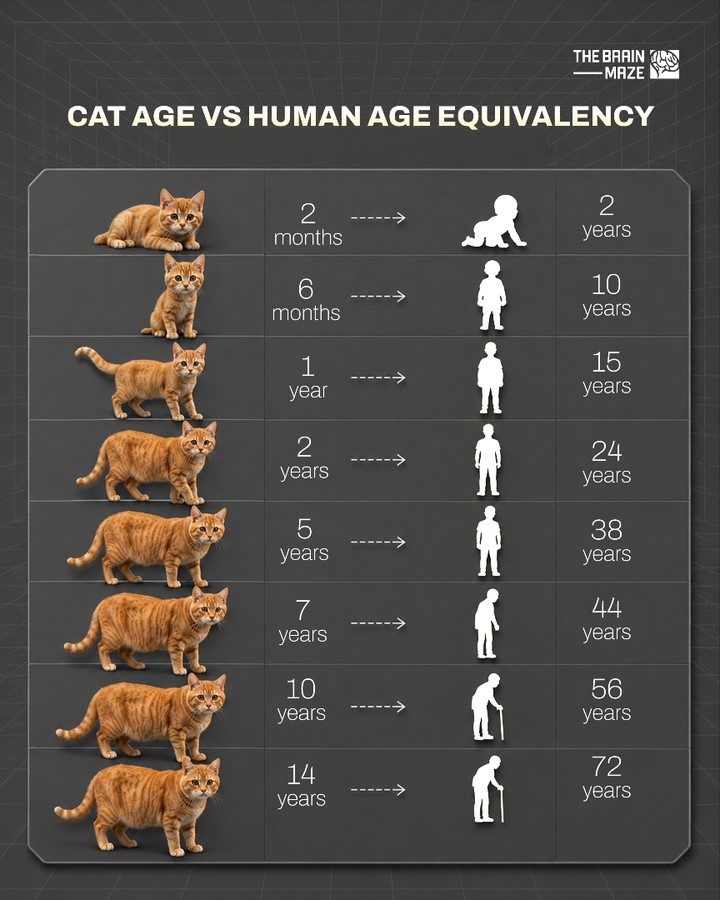
Cat Age Equivalence
Feline life spans progress rapidly, especially during the early years. Understanding cat age equivalence can offer valuable insights into their developmental stages and overall well-being. Unlike humans, cats age significantly faster in their first two years. By the time a cat reaches one year, it is roughly equivalent to a 15-year-old human teenager. This rapid aging is crucial for cat owners to recognize, as it shifts how we manage their care, nutrition, and veterinary needs.
Cat Age vs. Human Age Equivalence
Cat years and human years are not interchangeable. Cats age more rapidly than humans during the early stages of their lives. A helpful guide to understanding this equivalence is as follows:
2 Months
At 2 months, a cat is similar to a 2-year-old human. This stage is marked by rapid physical development and the onset of key behaviors.
6 Months
By 6 months, a cat is roughly equivalent to a 10-year-old human. This period corresponds to early adolescence in human terms, where the cat becomes more independent and starts to show its adult personality.
1 Year
At 1 year, a cat is comparable to a 15-year-old human. This stage is similar to the teenage years in humans, where the cat is fully grown but still developing emotionally and behaviorally.
2 Years
By 2 years, a cat's age equates to about 24 human years. Here, the cat has reached full maturity, both physically and emotionally, similar to a young adult in human years.
5 Years
At 5 years, a cat is equivalent to a 38-year-old human. While the cat is still considered young by feline standards, this stage is when some health concerns may begin to arise, similar to a middle-aged human.
7 Years
By 7 years, a cat is comparable to a 44-year-old human. This period is significant because it marks the beginning of middle age for cats, where regular health checks and preventive care become increasingly important.
10 Years
At 10 years, a cat is similar to a 56-year-old human. This stage is when geriatric care begins, and the cat may start to exhibit age-related health issues, much like a human in their late 50s.
14 Years
By 14 years, a cat is equivalent to a 72-year-old human. This is the senior stage, where the cat needs more attentive care, regular veterinary check-ups, and possibly special diets to manage age-related health issues.
Why This Matters
Understanding the equivalence between cat and human ages can help owners provide better care for their feline companions. Early intervention and preventive care are crucial for maintaining a cat's health and well-being. Regular vet check-ups, appropriate nutrition, and a keen eye for any age-related changes can all contribute to extending a cat's lifespan and improving its quality of life.
Developmental Milestones
The developmental stages of cats are markedly different from those of humans. Cats reach physical maturity much faster, which means they need tailored care at each life stage. For example, a kitten at 2 months is still highly dependent and requires frequent feeding and nurturing, similar to a human toddler.
Health and Nutrition
As cats age, their nutritional needs change. A kitten requires a diet high in protein and fat to support its rapid growth, while an adult cat needs a balanced diet to maintain its health. Senior cats, on the other hand, may benefit from a diet that supports joint health and kidney function. Regular vet check-ups can help monitor these needs and adjust the diet accordingly.
Behavioral Changes
Cats can experience behavioral changes as they age, mirroring human developmental stages. For instance, a 2-month-old kitten may exhibit high energy levels and curiosity, similar to a human toddler. As the cat ages, these behaviors may shift, requiring adjustments in playtime, exercise, and mental stimulation.
Practical Tips
Routine Veterinary Check-ups
Regular veterinary check-ups are essential, especially as cats age. These visits can help detect any health issues early and provide tailored advice on nutrition and care.
Age-Appropriate Nutrition
Feeding a cat an age-appropriate diet is crucial. Kittens, adults, and seniors all have different nutritional needs, and providing the right diet can support their overall health.
Environment and Enrichment
Creating an enriching environment for cats is important at every age. This includes providing toys, climbing structures, and interactive play to keep their minds and bodies active.
Monitoring for Age-Related Conditions
As cats age, they are more prone to conditions like arthritis, dental disease, and urinary tract issues. Regular monitoring and early intervention can help manage these conditions effectively.
Senior Care
Senior cats need extra care and attention. This includes regular vet check-ups, a balanced diet, and monitoring for any age-related health issues. Providing comfortable bedding, easy access to litter trays, and gentle handling can also make a significant difference.
Important Takeaways
Understanding cat age equivalence is crucial for providing the best possible care for cats. Recognizing the rapid aging in the early years and the corresponding human age can help owners adjust their care routines accordingly. Regular vet check-ups, age-appropriate nutrition, and a stimulating environment can all contribute to a cat's overall well-being.
Conclusion
By grasping the equivalence between cat and human ages, owners can better support their feline companions through each life stage. Whether it's adjusting nutrition, providing appropriate veterinary care, or creating a stimulating environment, these insights can make a significant difference in a cat's quality of life. A deeper understanding of feline aging can help ensure that cats live happier, healthier, and more fulfilling lives.
Watch the Reel
Questions readers ask
How do I convert my cat's age to human years?
To convert your cat's age to human years, you can follow a general guideline: the first year of a cat's life is equivalent to about 15 human years, and the second year is equivalent to 24. After that, each additional year is roughly 4 to 5 human years.
Why do cats age faster than humans in the early years?
Cats age faster than humans during their early years due to their rapid growth and development. In the first two years, a cat's physical and behavioral changes are significant, which is why we see a higher conversion rate to human years.
What is the human equivalent of a 5-year-old cat?
Using the general guideline, a 5-year-old cat would be approximately 29 in human years. This is calculated by adding 4 to the 24-year equivalent of a 2-year-old cat.
How can understanding cat-to-human age conversion help me care for my cat?
Understanding this conversion helps you recognize your cat's developmental stages and adjust their care, nutrition, and veterinary needs accordingly. For instance, knowing your cat's human equivalent can guide decisions about diet, exercise, and medical care.
Are there differences in aging rates between cats and dogs?
Yes, cats and dogs age at different rates. Generally, cats reach senior status around 10 to 12 years, while dogs can achieve this much earlier, depending on their breed. This difference is due to variations in their growth rates and life spans.
Related deep dives
Similar reads based on topic and creator.

Recent articles
Fresh deep dives from the latest Reels we unpacked.




Comments
Be the first to comment.