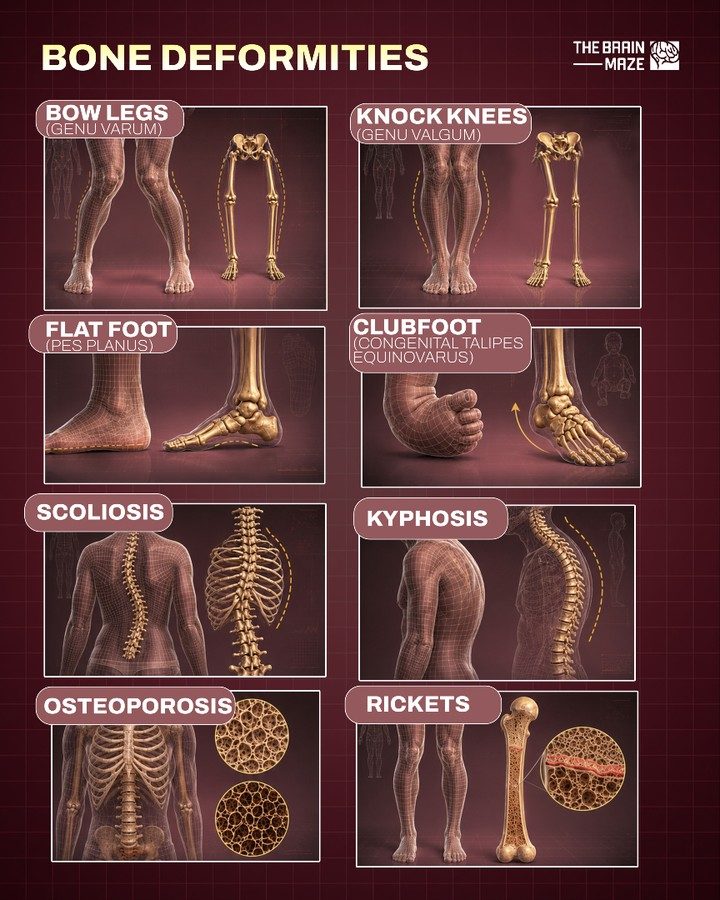
Bone Deformities: Causes, Types, and Impacts on the Skeleton
Bone deformities encompass a range of conditions that affect the shape, alignment, and strength of the skeleton. These alterations can significantly influence posture, movement, and joint function, often necessitating early diagnosis and appropriate treatment to enhance overall function and quality of life.
Why This Matters
Understanding bone deformities is crucial for several reasons. First, these conditions can develop at various stages of life, from before birth to later years. Early identification and intervention can mitigate the impact on mobility, posture, and general well-being. Additionally, recognizing the signs and symptoms can lead to more effective management and treatment strategies.
Types of Bone Deformities
Bone deformities vary widely in their causes and effects. Below are some of the most common conditions:
Lower Limb Deformities
Bow Legs (Genu Varum)
Bow legs, medically known as genu varum, is a condition where the legs bend outward at the knees, creating a bow-shaped appearance. This deformity can affect both children and adults. In children, it often corrects itself as they grow, but in adults, it may require intervention to alleviate discomfort and improve mobility.
Knock Knees (Genu Valgum)
Knock knees, or genu valgum, is the opposite of bow legs, where the knees angle inward and touch each other when standing with feet together. This condition can lead to pain and instability in the joints. Similar to bow legs, knock knees in children often resolve on their own, but in adults, surgical or therapeutic interventions may be necessary.
Flat Foot (Pes Planus)
Flat foot, or pes planus, is a condition where the arch of the foot collapses, leading to a flat foot appearance. While it is common in children and often resolves with age, it can cause discomfort and instability in adults. Proper footwear and orthotics can help manage this condition.
Clubfoot (Congenital Talipes Equinovarus)
Clubfoot is a congenital condition where the foot is twisted inward and downward. Early diagnosis and treatment, typically involving a series of casts and sometimes surgery, are crucial for correcting this deformity and ensuring normal foot function.
Spinal Deformities
Scoliosis
Scoliosis is a sideways curvature of the spine that can cause pain, discomfort, and mobility issues. It can develop during adolescence and may require bracing or surgical correction in severe cases. Early detection through regular screenings is essential for effective management.
Kyphosis
Kyphosis is characterized by an excessive outward curvature of the spine, often resulting in a hunched posture. This condition can be congenital or develop due to aging, osteoporosis, or other underlying health issues. Treatment options range from physical therapy to surgical intervention, depending on the severity.
Bone Diseases
Osteoporosis
Osteoporosis is a bone disease that leads to a loss of bone density, making bones brittle and prone to fractures. It is often associated with aging and can be exacerbated by hormonal changes, nutritional deficiencies, and sedentary lifestyles. Regular exercise, a balanced diet, and medications can help manage and slow the progression of osteoporosis.
Rickets
Rickets is a condition that affects bone development in children, causing soft and weak bones. It is primarily caused by a deficiency in vitamin D, calcium, or phosphate. Proper nutrition and, in some cases, vitamin supplementation are key to treating and preventing rickets.
Causes and Risk Factors
Bone deformities can arise from a variety of factors, including:
- Genetic Predisposition: Some deformities, like clubfoot and certain types of scoliosis, have a genetic component.
- Nutritional Deficiencies: Insufficient intake of essential nutrients, such as vitamin D and calcium, can lead to conditions like rickets and osteoporosis.
- Aging: Bone density naturally decreases with age, increasing the risk of deformities and fractures.
- Disease: Certain medical conditions, including metabolic disorders and neurological diseases, can affect bone health and alignment.
- Trauma: Injuries and accidents can lead to bone deformities, especially if not properly treated or if healing is compromised.
Practical Tips for Managing Bone Deformities
Early detection and management are critical for improving the quality of life for those with bone deformities. Here are some practical tips:
- Regular Check-ups: Schedule regular medical check-ups, especially for children and the elderly, to monitor bone health and detect any deformities early.
- Balanced Diet: Ensure a diet rich in calcium, vitamin D, and other essential nutrients to support bone health.
- Exercise Regularly: Engage in weight-bearing exercises like walking, running, and strength training to maintain bone density and strength.
- Proper Footwear: Wear supportive footwear and use orthotics if necessary to manage conditions like flat feet and knock knees.
- Early Intervention: If a deformity is diagnosed, follow the recommended treatment plan, which may include physical therapy, braces, or surgery, to correct the condition and prevent further complications.
Important Takeaways
- Early Detection: Early diagnosis and intervention are crucial for managing bone deformities effectively.
- Variety of Causes: Bone deformities can result from genetic, nutritional, aging, and disease-related factors.
- Diverse Conditions: Different types of deformities, such as bow legs, knock knees, and scoliosis, require specific treatments and management strategies.
- Holistic Approach: A combination of a balanced diet, regular exercise, and appropriate medical interventions can significantly improve bone health and overall quality of life.
Conclusion
Bone deformities are complex conditions that can significantly impact the skeleton's structure and function. Understanding the various types, their causes, and effective management strategies is essential for improving the lives of those affected. By focusing on early detection, a balanced diet, regular exercise, and appropriate medical interventions, individuals can better manage bone deformities and maintain good bone health. Proper awareness and regular check-ups can lead to timely interventions, ensuring a higher quality of life.
Watch the Reel
Related deep dives
Similar reads based on topic and creator.

Recent articles
Fresh deep dives from the latest Reels we unpacked.




Comments
Be the first to comment.