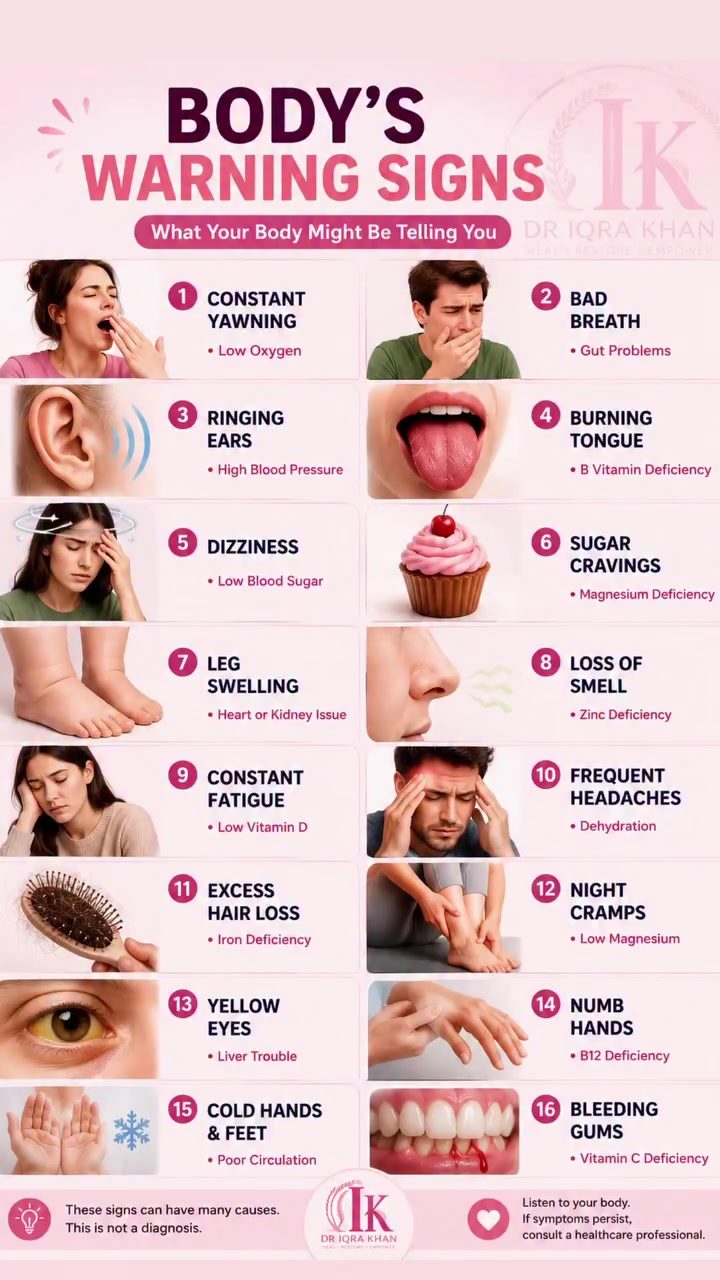
Body Warning Signs
Your body often communicates important information through various signals and symptoms. Recognizing and understanding these warning signs can help you take timely action and seek appropriate care. Dr. IQRA KHAN outlines several key warning signs that your body might be experiencing, each with multiple potential causes.
Why This Matters
Many people overlook subtle changes in their body, attributing them to stress, fatigue, or minor issues. However, these signs can sometimes indicate underlying health conditions that require attention. Understanding these signs can help you identify potential problems early, improving the chances of effective treatment.
Main Discussion
Constant Yawning
While yawning is often considered a sign of boredom or fatigue, it can also indicate low oxygen levels in the blood. This can be a symptom of various conditions, including anemia, COPD, or even a heart issue. If you find yourself yawning excessively, it might be worth discussing with a healthcare professional to rule out any underlying issues.
Bad Breath
Persistent bad breath, or halitosis, is often linked to poor oral hygiene. However, it can also be a sign of digestive issues, such as gastrointestinal problems or even an underlying infection. If brushing and flossing don't resolve the issue, consider consulting a healthcare provider to explore other potential causes.
Ringing Ears
Tinnitus, or ringing in the ears, can be a symptom of high blood pressure, but it might also be a sign of an ear infection or even damage to the eardrum. While it can be a sign of serious issues, it can also be a result of exposure to loud noises. Prolonged or severe cases should be evaluated by a healthcare professional.
Burning Tongue
A burning sensation on the tongue can be discomforting, but it might point to a B vitamin deficiency, diabetes, or even an underlying fungal infection. This symptom can be particularly common in smokers or those with dental issues. If you experience a persistent burning sensation, consult a healthcare professional for further evaluation.
Dizziness
Dizziness can be caused by a variety of factors, including dehydration, low blood sugar, or even a viral infection. However, it can also indicate more serious conditions such as anemia or an underlying heart condition. If you experience frequent dizziness, it is advisable to discuss the issue with a healthcare provider.
Sugar Cravings
Increasing sugar cravings can be a result of fluctuating blood sugar levels, stress, or even a nutrient deficiency. While occasional cravings are normal, persistent and intense cravings should be evaluated by a healthcare professional.
Leg Swelling
Sudden or gradual swelling in the legs can indicate fluid retention, but it can also be a sign of a circulatory issue, kidney dysfunction, or even a blood clot. Sudden or severe swelling should be evaluated urgently, as it can indicate a serious condition.
Loss of Smell
A sudden or gradual loss of smell can be linked to nasal congestion, sinus infections, or even a head injury. In some cases, it might indicate a neurological issue or even a viral infection like COVID-19. If the loss of smell persists, it is important to consult a healthcare provider for a proper evaluation.
Constant Fatigue
Persistent fatigue can be a sign of sleep deprivation, but it can also indicate an underlying condition such as anemia, thyroid issues, or even depression. If you are consistently feeling tired, it is crucial to discuss the issue with a healthcare professional to explore potential causes.
Frequent Headaches
Frequent headaches can be caused by stress, dehydration, or even dietary triggers, but they can also indicate underlying issues such as migraines, high blood pressure, or even a neurological condition. Regular headaches should be monitored and discussed with a healthcare provider.
Excess Hair Loss
Excessive hair loss can be a sign of hormonal imbalances, nutrient deficiencies, or even an underlying autoimmune condition. While it can also be a result of stress or dietary changes, persistent hair loss should be evaluated by a healthcare professional.
Night Cramps
Night cramps can be a result of dehydration, or a calcium deficiency, or even a problem with poor circulation. While they can be uncomfortable, they often resolve with proper hydration and stretching. However, if night cramps are severe and persistent, it may be wise to consult a healthcare professional.
Yellow Eyes
Yellowing of the eyes, also known as jaundice, can indicate liver problems or even a gallbladder issue. However, it can also be a sign of a viral infection, such as hepatitis. Persistent yellowing of the eyes should be evaluated by a healthcare professional to rule out any serious underlying conditions.
Numb Hands
Numbness in the hands can be a result of poor circulation or nerve issues, but it can also indicate carpal tunnel syndrome or even a vitamin B12 deficiency. While it can be a symptom of a simple condition, persistent numbness should be discussed with a healthcare provider.
Cold Hands and Feet
Cold extremities can be a sign of poor circulation, but it can also indicate an underlying thyroid issue or even an autoimmune condition. While it can be a result of cold weather or stress, persistent cold hands and feet should be evaluated by a healthcare professional.
Bleeding Gums
Bleeding gums can be a symptom of poor oral hygiene or even gum disease, but they can also indicate a vitamin deficiency, such as a lack of vitamin C. While it can be a result of brushing too hard, persistent bleeding should be addressed by a healthcare provider.
Important Takeaways
Understanding these warning signs is the first step toward taking control of your health. Remember that a single symptom can have multiple causes, and it is essential to consult a healthcare professional to determine the underlying issue. Early detection and treatment can significantly improve your chances of recovery and well-being.
Practical Tips
When noticing any of these warning signs, consider the following steps:
-
Monitor Your Symptoms: Keep a record of when and how often you experience these signs. Note any patterns or triggers.
-
Stay Hydrated: Dehydration can exacerbate many of these symptoms, so ensure you are drinking enough water throughout the day.
-
Maintain a Balanced Diet: Nutrient deficiencies can contribute to many of these signs, so eat a varied and balanced diet.
-
Regular Check-Ups: Regular medical check-ups can help detect underlying issues before they become serious.
-
Consult a Professional: If symptoms persist or worsen, do not hesitate to seek medical advice. Early intervention can make a significant difference in your health outcomes.
Conclusion
Your body's warning signs serve as valuable indicators of your overall health. By recognizing and understanding these symptoms, you can take proactive steps toward maintaining your well-being. Always remember that early detection and timely intervention are key to effective treatment. Listen to your body and take action when necessary.
Watch the Reel
Recent articles
Fresh deep dives from the latest Reels we unpacked.




Comments
Be the first to comment.