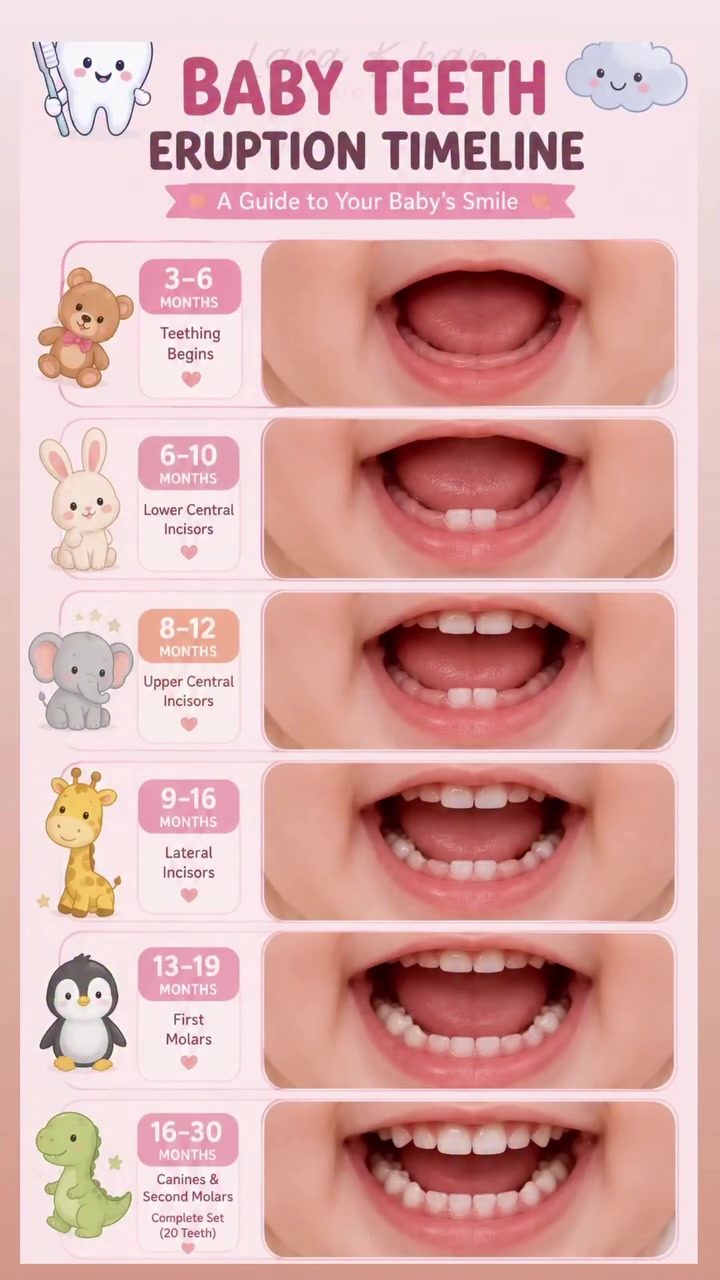
Baby Teeth Eruption Timeline: A Guide to Your Baby’s Smile
Watching your baby’s first tooth appear is an exciting milestone. Every baby develops at their own pace, but understanding the general timeline of baby teeth eruption can help parents know what to expect. This guide provides a typical timeline and offers helpful tips for managing the teething process.
Context: The Importance of Baby Teeth
Baby teeth, also known as primary teeth, play a crucial role in your child's development. They help with chewing, speaking, and maintaining space for permanent teeth. Understanding the eruption timeline can help parents prepare for their baby's dental development and address any concerns that may arise.
Main Discussion
The Eruption Timeline
Teething typically begins around 3-6 months. This period is marked by increased drooling, gum irritation, and a strong desire to chew on objects. Here’s a breakdown of the typical eruption timeline:
- 3-6 months: Teething begins. Babies may show signs of discomfort, increased drooling, and a need to chew on objects.
- 6-10 months: Lower central incisors usually erupt. These are the bottom front teeth, and their appearance often coincides with increased gum soreness and a greater tendency to chew.
- 8-12 months: Upper central incisors emerge. These are the top front teeth, and their eruption can cause similar symptoms to the lower incisors.
- 9-16 months: Lateral incisors appear. These are the teeth next to the central incisors, both on the top and bottom rows.
- 13-19 months: First molars typically erupt. These are the larger teeth located at the back of the mouth.
- 16-30 months: Canines and second molars emerge. By around 30 months, a complete set of 20 baby teeth is usually in place.
What to Expect During Teething
Teething can be uncomfortable for babies, and parents should be prepared to offer relief. Here are some common symptoms and helpful tips:
- Drooling and gum irritation: These are normal and can be managed with gentle gum massages or chilled teething rings.
- Chewing: Babies may chew on objects to relieve discomfort. Offer safe teething toys.
- Fever, diarrhea, or persistent illness: These are not typical signs of teething. If your baby exhibits these symptoms, consult a healthcare professional.
Practical Tips for Managing Teething
Here are some practical tips to help your baby through the teething process:
- Offer a chilled (not frozen) teething ring. The cool temperature can help soothe sore gums.
- Gently massage your baby’s gums with clean fingers. This can provide relief and help with the eruption process.
- Clean gums daily and brush new teeth with a soft baby toothbrush. Oral hygiene is important even for babies.
- Keep your baby hydrated. Sufficient hydration can help with overall comfort and health.
- Schedule your baby’s first dental visit by age 1 or within 6 months after the first tooth appears. Early dental care is essential for maintaining good oral health.
Important Takeaways
Every baby is unique, and teeth may appear a little earlier or later than expected. Here are some key takeaways to remember:
- Normal symptoms: Mild drooling, chewing, and gum irritation are normal during teething.
- When to worry: High fever, severe diarrhea, or persistent illness are not typical signs of teething and should be assessed by a healthcare professional.
- Early dental care: Schedule your baby’s first dental visit by age 1 or within 6 months after the first tooth appears.
Conclusion
Understanding the baby teeth eruption timeline and knowing how to manage the teething process can make this milestone a smoother experience for both babies and parents. By following the typical timeline and practical tips, you can help your baby navigate through the teething process with ease.
Watch the Reel
Questions readers ask
When do baby teeth typically start to appear?
Baby teeth, or primary teeth, usually begin to appear between 3 and 6 months. However, it's normal for some babies to start teething as early as 2.5 months or as late as 12 months. If your baby's teeth haven't emerged by 12 months, consult your pediatrician.
In what order do baby teeth usually erupt?
The first teeth to erupt are typically the two bottom front teeth, known as the lower central incisors, usually between 6 to 10 months. This is followed by the upper central incisors, and then the remaining incisors, usually appearing in pairs. Molar and canine teeth typically emerge next, with the teeth eruption sequence continuing until around 2.5 to 3 years.
How can I manage my baby's teething discomfort?
Teething can cause discomfort and irritability. To help manage this, you can gently rub your baby's gums with a clean finger, offer a teething ring, or use a damp cloth. Over-the-counter pain relievers can also be used, but consult your doctor before administering any medication.
What should I do if my baby's teeth aren't following the typical eruption timeline?
Every baby is unique, and timing can vary. However, if your baby's teeth haven't started erupting by 12 months, or if there are significant delays or irregularities in the eruption sequence, it's a good idea to consult your pediatrician. They can assess your baby's dental development and provide guidance.
Why is it important to understand the baby teeth eruption timeline?
Understanding the eruption timeline can help parents anticipate and manage the teething process more effectively. It also allows parents to monitor their baby's dental development, identify any potential issues early, and maintain good oral hygiene habits from the start.
Recent articles
Fresh deep dives from the latest Reels we unpacked.




Comments
Be the first to comment.