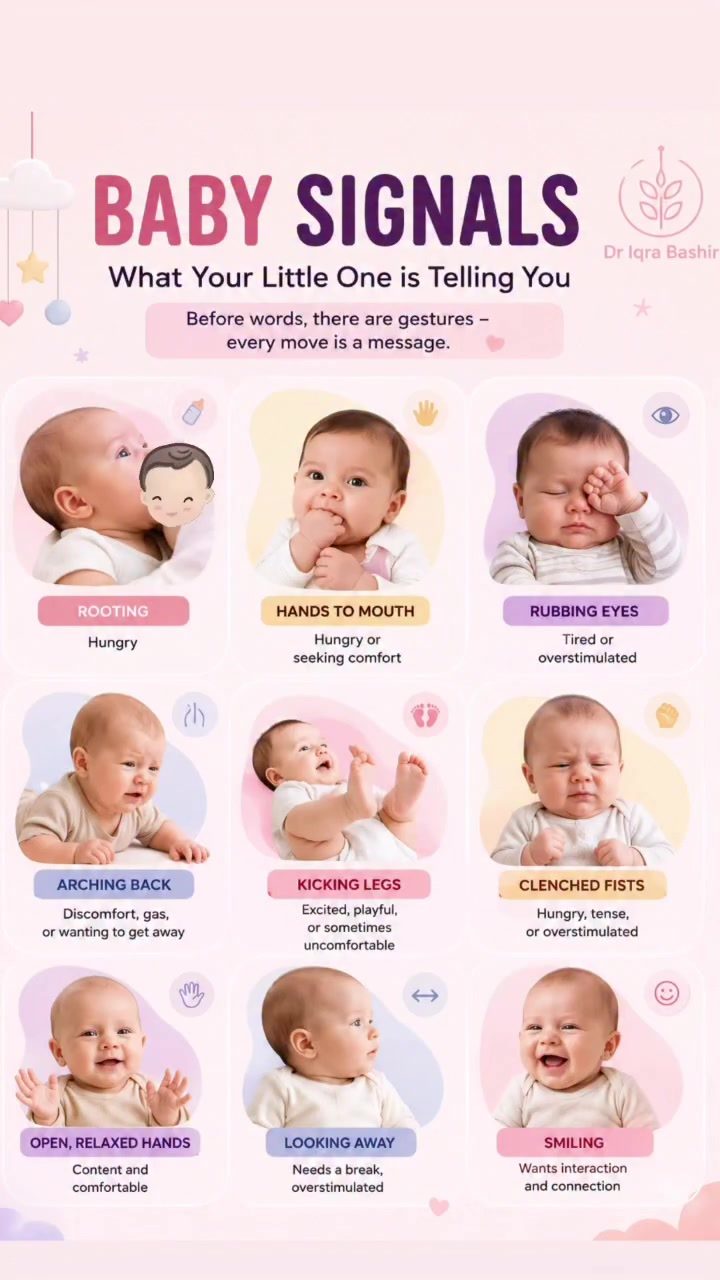
Baby Signals: What Your Little One Is Telling You
Baby signals are a baby’s way of communicating their needs and emotions before they can speak. Understanding these signals can greatly enhance a parent's ability to care for their baby effectively. By recognizing and responding to these cues, parents can foster a stronger bond with their little ones and ensure their needs are met promptly.
Why This Matters
Before babies can articulate their needs with words, they rely on a rich variety of non-verbal cues to express themselves. These cues, or "baby signals," cover a wide range of emotions and physical states, from hunger and discomfort to excitement and contentment. Learning to decipher these signals is essential for new parents, as it helps them to respond appropriately and build a deeper connection with their baby.
Main Discussion
Common Baby Signals
Babies use a range of gestures to communicate their needs. Here are some of the most common signals and their potential meanings:
Hunger
- Rooting: Babies may turn their head and open their mouth in search of food. This is often accompanied by sucking motions and rooting reflexes.
- Hands to Mouth: When a baby brings their hands to their mouth, it can indicate that they are hungry and seeking a way to soothe themselves.
- Clenched Fists: Tightly clenched fists can also be a sign of hunger or tension, indicating that the baby is seeking some form of relief or comfort.
Sleepiness
- Rubbing Eyes: When a baby rubs their eyes, it often signals that they are tired and ready for sleep. This can be a subtle cue that should not be overlooked.
Discomfort
- Arching Back: Babies may arch their backs as a way to express discomfort, often due to gas, colic, or other physical issues.
- Kicking Legs: Vigorous kicking can indicate discomfort or excitement, depending on the context. If the baby is also fussy, it may be a sign that something is bothering them.
Need for Interaction
- Relaxed Hands and Smiling: When a baby’s hands are relaxed and they are smiling, it is a clear indication that they are comfortable and content. This can also be a signal that they are open to interaction and play.
Understanding and Responding to Baby Signals
Recognizing baby signals is just the first step. Knowing how to respond appropriately is equally important. Here are some tips:
- Observe for Patterns: Babies often repeat certain behaviors when they need something specific. By paying attention to these patterns, parents can anticipate their needs and respond more effectively.
- Respond Promptly: Quickly addressing a baby’s signals can help them feel secure and understood. For instance, if a baby is showing signs of hunger, offering a feed promptly can help prevent them from becoming too distressed.
- Stay Calm and Patient: Babies can sense a parent's emotions. Staying calm and patient when responding to their signals can create a more soothing environment for both the baby and the parent.
Practical Tips
- Keep a Diary: Write down the signals you notice and the responses that seem to work best. This can help you keep track of your baby’s unique communication style.
- Ask for Help: If you are unsure about a signal, don’t hesitate to ask a healthcare provider or a more experienced parent. It can provide valuable insights and reassurance.
- Use Visual Aids: Infographics and charts can be helpful in remembering the various signals and their meanings. Consider downloading or printing a guide for quick reference.
Important Takeaways
Baby signals are an essential form of communication between a baby and their caretaker. By learning to recognize and respond to these signals, parents can:
- Enhance their bonding with their baby
- Provide timely care that meets the baby’s needs
- Create a more harmonious and understanding relationship with their little one
Conclusion
Understanding and responding to baby signals is a crucial part of parenting. It allows parents to meet their baby’s needs more effectively and fosters a deeper connection. By paying close attention to the non-verbal cues your baby is sending, you can create a nurturing and responsive environment that supports their development and well-being.
Watch the Reel
Questions readers ask
What are some common baby signals that indicate hunger?
Newborn hunger signs can include rooting reflex, which is when a baby turns their head and opens their mouth to search for the nipple. Other signs are sucking on their hands, lip-smacking, or making sucking noises. Additionally, babies may become agitated or cry as hunger intensifies.
How can I recognize if my baby is experiencing discomfort?
Babies show infant discomfort signals through various means. They may squirm or arch their back, cry inconsolably, or have a furrowed brow. Changes in body language, such as clenching fists or pulling their legs up to their tummy, are also indicators.
What does it mean when a baby makes hand signals, like waving or clenching fists?
Newborn hand movements can convey various emotions and needs. For instance, waving or flailing their arms often indicates excitement or happiness. On the other hand, clenched fists might signal discomfort or stress, while gently opening and closing hands may suggest sleepiness or relaxation.
Why is it important to understand and respond to a baby’s signals?
Understanding and responding to a baby’s signals fosters a strong bond between parent and child. It ensures that the baby’s needs are met promptly, which can lead to better overall well-being. Additionally, it helps to minimize frustration for both the baby and the parent.
What should a new parent do if they are having trouble understanding their baby’s signals?
New parents who struggle with understanding baby signals should trust their instincts and observe their baby closely. Keeping a log of the baby's signals and corresponding needs can be helpful. Consulting with a pediatrician or a baby care specialist may also provide additional insights and support.
Can baby signals change as the baby grows older?
Yes, baby signals can evolve as the baby grows. Newborns initially rely on basic reflexes and physical cues, but as they develop, they learn to communicate more complex emotions and needs, like frustration or wanting to play. Parents should stay attentive to these changes and adapt their responses accordingly.
How can parents use baby signals to build a stronger bond with their infant?
Parents can build a stronger bond by paying close attention to their infant’s signals and responding promptly. This interaction helps the baby feel understood and cared for, promoting a sense of security. Consistently responding to these signals also encourages open communication and trust between parent and baby.
Recent articles
Fresh deep dives from the latest Reels we unpacked.




Comments
Be the first to comment.