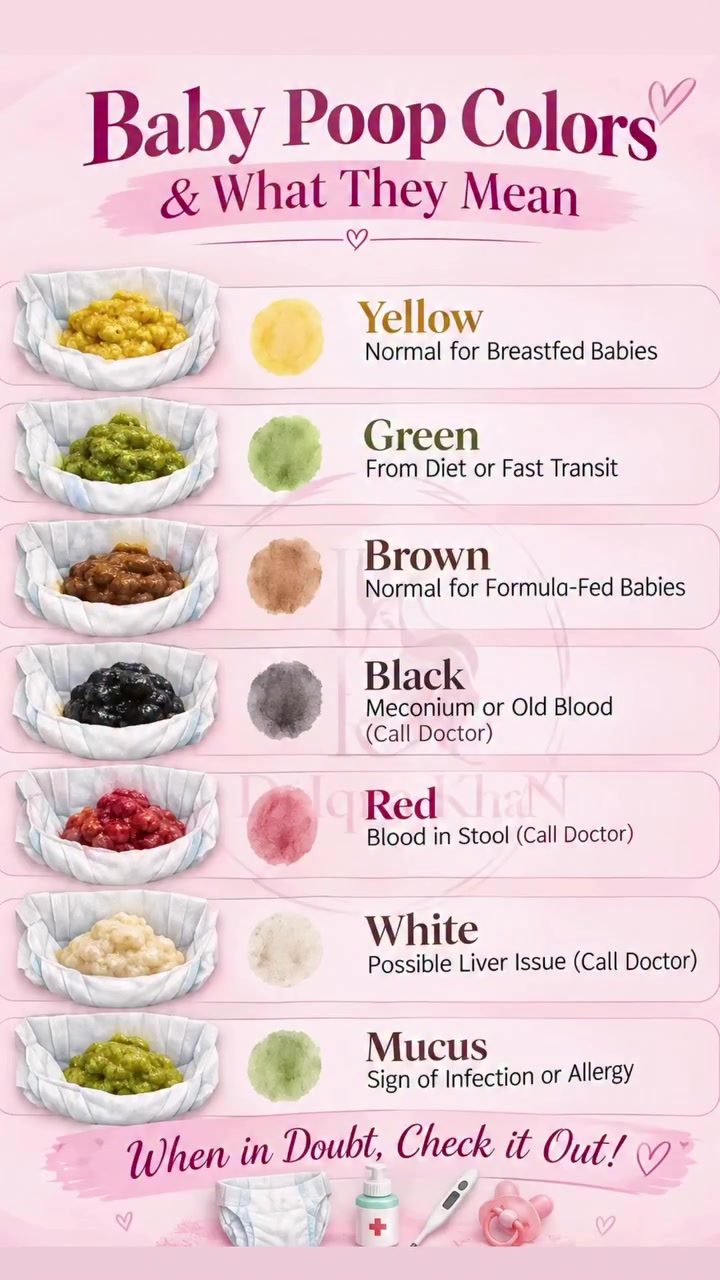
Baby poop can tell you a lot about your little one’s health. The color of an infant's stool can vary widely, and while some hues are completely normal, others may indicate potential health issues that need immediate medical attention. Understanding the different colors and what they might mean can help parents stay informed and act quickly when necessary.
Context / Why This Matters
Newborns and infants go through significant physiological changes in their first few months of life, and their stool can often reflect these changes. Monitoring stool color can provide valuable insights into a baby's health, helping parents identify when to seek medical advice and when to remain calm. Recognizing the various shades of baby poop and their possible meanings can help foster a sense of confidence in new parents, enabling them to differentiate between normal and concerning changes.
Understanding the Colors
Yellow Poop
Yellow poop is common in breastfed babies. This color typically indicates that the baby is digesting well. Breast milk contains colostrum, which is rich in antibodies and supports the development of a healthy gut. When babies consume breast milk, the stool often appears yellow, which is a sign of normal digestion and the presence of bile.
Green Poop
Green poop can result from a few different factors, including diet or fast transit. Formula-fed babies are more likely to have green stools due to the iron content in the formula, but even breastfed babies can experience this. Green poop can also result from a faster-than-normal transit time through the digestive system. This can happen if the baby is constipated or has a dietary reaction to something, such as a new food.
Brown Poop
Brown poop is typical for formula-fed babies. While breastfed babies can also have brown stools, they are usually associated with formula-fed infants. Brown stool color indicates that the baby's digestive system is functioning as expected, and the stool reflects the standard color of digested food and bile. However, if the stool is consistently brown and the infant has not been formula-fed, it might be worth consulting a healthcare provider to ensure there are no underlying digestive issues.
Black Poop
Black poop in a newborn is often a sign of meconium, the first stool that a baby passes after birth. Meconium is thick, black, and sticky, and its presence is normal during the first few days of life. However, after the first few days, black poop may indicate the presence of old blood in the stool, which requires immediate medical attention. If black stool is observed in an older infant, it's vital to consult a doctor to rule out any potential digestive issues.
Red Poop
Red poop can be alarming for parents, as it often suggests the presence of blood in the stool. The blood can come from various sources, including the esophagus, stomach, or intestines, and it may indicate a serious condition such as an intestinal injury or infection. If the stool is red and accompanied by other concerning symptoms like vomiting or fever, a trip to the pediatrician is necessary.
White Poop
White poop could be a sign of a liver issue. When the stool is pale or white, it may indicate that the body is not producing enough bile to digest food properly. This can be a symptom of various liver or gallbladder problems, and it's essential to consult a doctor for further evaluation. White stool in a newborn can also indicate a bile duct obstruction, which requires urgent medical attention.
Mucus in Stool
Mucus in the stool can indicate an infection or allergy. The presence of mucus may suggest an underlying digestive issue, such as an intestinal infection, inflammation, or an allergic reaction. While mucus in stool is not always a cause for concern, it's important to monitor the baby for other symptoms and consult a healthcare provider if the mucus persists or is accompanied by other worrying signs.
Practical Tips
Here are some practical tips for parents to keep in mind when monitoring their baby’s stool:
- Consult a Pediatrician: If you notice any unusual or concerning changes in your baby’s stool, such as black, red, or white stools, it's essential to consult a pediatrician. Early intervention can prevent potential health complications.
- Keep a Diaper Log: Maintaining a record of the baby's stool color, consistency, and frequency can help identify any patterns or sudden changes. This log can also be useful for healthcare providers when evaluating the baby's health.
- Stay Informed: Educate yourself about the various colors and their meanings. Knowing what is normal and what is not can help you stay calm and make informed decisions when necessary. Ask healthcare providers any questions you may have to better understand your baby’s digestive health.
- Be Aware of Dietary Changes: Pay attention to any dietary changes that may be introduced to your baby. Introducing new foods, especially to infants, can cause temporary changes in stool color and consistency, so it's essential to monitor for any signs of intolerance or allergic reactions.
- Observe for Other Symptoms: While stool color is an important indicator, it's also crucial to observe for other symptoms, such as fever, vomiting, or abdominal pain. These symptoms, when combined with unusual stool color, may indicate a more serious health issue.
Important Takeaways
- Yellow and brown poop are usually signs of healthy digestion in breastfed and formula-fed babies, respectively.
- Green poop can be due to diet or fast transit and is usually harmless.
- Black, red, or white poop can be indicators of serious health issues and should be evaluated by a healthcare provider.
- Presence of mucus in stool may suggest an infection or allergy, warranting medical attention.
- Maintaining a stool log and consulting a pediatrician can provide valuable insights and ensure the well-being of your baby.
Conclusion
Monitoring your baby's stool color is an essential aspect of parenting, as it provides valuable insights into your little one’s health. By understanding the different colors and their potential meanings, you can better assess whether your baby's stool is normal or if it warrants a visit to the doctor. Staying informed and knowing when to seek medical advice can help ensure your baby remains healthy and thriving.
Watch the Reel
Questions readers ask
What are the normal colors for a newborn's stool?
In the first few days of life, a newborn's stool is typically dark green or black and tarry, known as meconium. This is normal and expected. As the baby begins to digest milk, the stool color may transition to yellow or greenish-yellow, which is also considered normal.
When should I be concerned about my baby's poop color?
Contact your pediatrician if you notice any of the following: white, grey, or pale yellow stool; red streaks or blood in the stool; or stool that is black and tarry beyond the first few days. These colors can indicate potential health issues that require medical attention.
What color is breastfed baby poop typically?
Breastfed baby poop is usually soft, pasty and mustard yellow or yellowish-green, with a sweetish smell. The consistency and color can vary widely. Breast milk is easily digested, so breastfed babies may poop more frequently and the stool is often seedy looking, with tiny, white, curd-like bits.
How does formula-fed baby poop differ from breastfed baby poop?
Formula-fed baby poop is typically browner, thicker, and has a stronger odor than breastfed baby poop. The color may be in the tan, yellow, green, or brown range, and the consistency can be pastier or even a bit firmer, due to the slower digestion of formula.
Why is my baby's poop green?
Green baby poop can be normal, especially if the baby is formula-fed. It can also occur when the baby has a mild stomach upset or if the mother has recently eaten foods with green pigments, like spinach or green beans. However, if green poop is accompanied by other symptoms like vomiting, or a change in appetite, consult your pediatrician.
Should I worry if my baby's poop is orange or red?
Orange or red baby poop can be alarming, but it is not always a cause for concern. Red poop can occur due to food dyes or certain medications. Orange poop, on the other hand, may indicate a slight issue with the liver, or it could just be a result of something the mother has eaten. Monitor the baby for other symptoms and consult a healthcare professional if you're unsure.
What does it mean if my baby's poop is white or pale yellow?
White or pale yellow stool can indicate a problem with the liver or bile ducts. It could be a sign of biliary atresia, a condition where the bile ducts are blocked or absent. This is a serious condition that requires immediate medical attention. If you notice this color in your baby's stool, contact your pediatrician right away.
Recent articles
Fresh deep dives from the latest Reels we unpacked.




Comments
Be the first to comment.