Baby Body Language: A Comprehensive Guide
Understanding a baby's body language is crucial for new parents. Babies cannot verbally express their needs, but their bodies communicate volumes through cries, facial expressions, and movements. Recognizing these cues helps parents respond effectively, fostering a stronger bond with their little ones.
Why This Matters
Interpreting a baby's body language is essential for several reasons. First, it helps parents understand their baby's needs without relying solely on crying, which can be stressful for both the baby and the parent. Second, recognizing these cues can prevent discomfort or distress, ensuring the baby feels loved and cared for. Lastly, understanding a baby's body language can provide early insights into their health and development, allowing parents to seek medical advice when necessary.
Main Discussion
Babies communicate in various ways, and understanding these signals can greatly enhance parental responsiveness and the overall well-being of the child. Here, we delve into some common cues and their meanings.
Common Body Language Cues
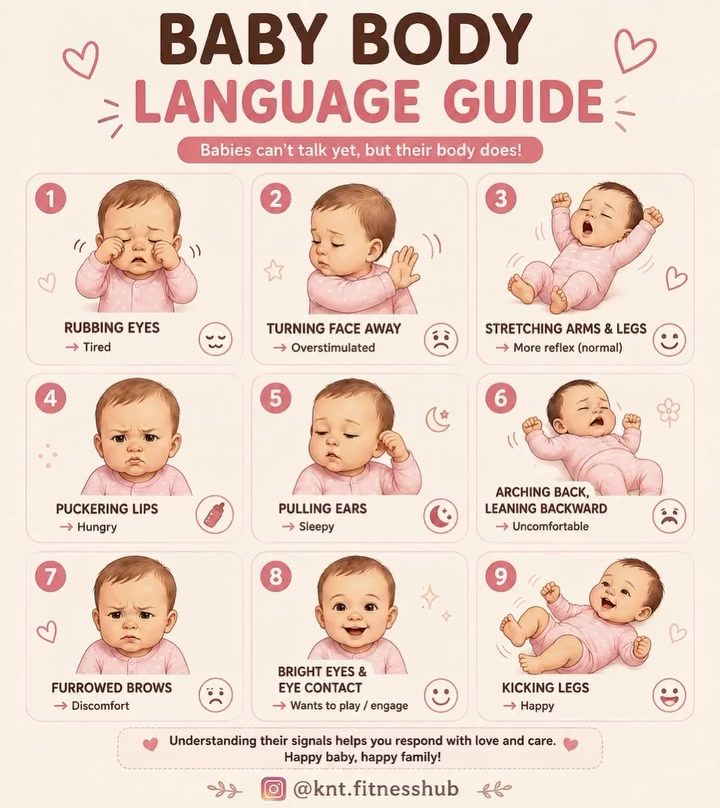
Rubbing Eyes
Rubbing eyes is often a clear indicator that a baby is tired. This cue is particularly useful for parents trying to establish a sleep routine. By recognizing this signal, parents can help their baby develop healthy sleep habits, ensuring they get the rest they need for growth and development.
Turning Face Away
When a baby turns their face away, it usually indicates that they are overstimulated. Overstimulation can occur in noisy or crowded environments and can be overwhelming for a baby. By recognizing this cue, parents can remove the baby from the stressful situation and provide a calm, quiet space to help them relax and settle down.
Stretching Arms and Legs
Stretching arms and legs is a normal reflex for babies. This movement is often observed during active sleep and is a way for babies to exercise their muscles and maintain flexibility. While this cue does not indicate a specific need, it is a comforting sign that the baby is developing motor skills and muscle control.
Puckering Lips
Puckering lips is a well-known signal that a baby is hungry. This reflex is often accompanied by rooting, where the baby turns their head and opens their mouth in search of the breast or bottle. Recognizing this cue helps parents ensure their baby is fed on time, promoting healthy growth and preventing excess crying due to hunger.
Pulling Ears
Pulling ears can indicate that a baby is sleepy or self-soothing. This behavior is often observed when babies are tired and trying to settle down. By recognizing this cue, parents can create a soothing environment, such as a dark, quiet room, to help their baby fall asleep more easily.
Arching Back
Arching the back or leaning backward is a clear sign that a baby is uncomfortable. This can be due to various reasons, such as gas, colic, or an uncomfortable position. Parents can help alleviate this discomfort by changing the baby's position, burping them, or checking for other potential sources of discomfort.
Furrowed Brows
Furrowed brows often signal discomfort or pain. This cue can be accompanied by other signs of distress, such as crying or changes in facial expression. Parents should pay close attention to this signal and investigate the cause of discomfort, whether it's a wet diaper, a hungry tummy, or something more serious requiring medical attention.
Bright Eyes and Eye Contact
Bright eyes and eye contact indicate that a baby is alert and ready to engage in play or interaction. This is a critical time for bonding and stimulating the baby's cognitive development. Parents can take this opportunity to engage in activities like reading, singing, or playing games to foster a strong emotional connection and promote cognitive growth.
Kicking Legs
Kicking legs is often a sign of happiness and excitement. This movement is commonly seen when a baby is content and exploring their surroundings. Parents can use this cue to continue engaging with their baby, providing a stimulating and nurturing environment that supports their overall well-being.
Practical Tips
Recognizing and responding to a baby's body language cues can be challenging, especially for new parents. Here are some practical tips to help you become more attuned to your baby's signals:
Observe and Document
Keep a record of your baby's body language and corresponding needs. Over time, you will notice patterns that are unique to your baby, making it easier to interpret their signals accurately.
Trust Your Instincts
Parents often intuitively understand their baby's needs. Trust your instincts and pay attention to your baby's cues, even if they don't perfectly align with common signals. Every baby is unique, and their cues may vary.
Seek Professional Advice
If you notice persistent crying, unusual behavior, or are concerned about your baby's health, consult a pediatrician. Early intervention can address potential health issues and provide peace of mind.
Important Takeaways
Understanding a baby's body language is a critical skill for parents. By recognizing and responding to these cues, you can ensure your baby feels loved, cared for, and comfortable. Key takeaways include:
- Babies communicate their needs through body language, including facial expressions, movements, and reflexes.
- Common cues such as rubbing eyes, turning the face away, and puckering lips can indicate specific needs like tiredness, overstimulation, and hunger.
- Observing and documenting your baby's patterns can help you better interpret their unique signals.
- Trust your instincts and seek professional advice if you have concerns about your baby's health or behavior.
Conclusion
Your baby's body language provides valuable insights into their needs and emotions. By understanding and responding to these cues, you can build a stronger bond, ensure your baby's comfort, and support their overall development. Pay attention to your baby's signals, trust your instincts, and seek professional advice when needed. With practice and observation, you will become more proficient at interpreting your baby's body language, fostering a deeper connection and providing the best possible care for your little one.
Watch the Reel
Questions readers ask
What are the most common reasons for baby crying and how can I interpret them?
Baby crying can signal various needs. Hunger and discomfort are common reasons. Pay attention to the pitch and pattern of the cry. A high-pitched, persistent cry could indicate pain or discomfort, while a rhythmic, lower-pitched cry may signal hunger or tiredness. Regular feeding and checking for common discomforts, such as a wet diaper, can often resolve these cries.
How can I understand my baby's facial cues?
Babies use facial expressions to communicate a range of feelings. A happy baby will often smile or coo, while a frowning baby might be uncomfortable or in pain. Watch for specific cues, such as wrinkled noses or furrowed brows, which can indicate gas or other discomfort. Squinting and turning away can signal tiredness or sensory overload. Paying attention to these cues can help you respond to your baby's needs more effectively.
What do baby movements, such as stretching and yawning, indicate?
Baby stretching and yawning are often signs of being tired and ready for sleep. However, these movements can also indicate that a baby is waking up from sleep or stretching after a nap. If your baby is stretching and yawning, it might be a good time to prepare for a nap or bedtime routine. Alternatively, if your baby is trying to stretch or yawn and is fussy, it could indicate discomfort or the need for a diaper change. It's essential to observe the context to ensure you're interpreting the movement correctly.
What should I do when my baby turns away from me?
When a baby turns away, it can signal that they need a break from stimulation or interaction. This could mean they are tired, overwhelmed, or simply need time to process their surroundings. It's important to respect this cue and give your baby some space. However, if your baby turns away frequently during feedings, it might indicate discomfort or a potential issue with latching. Consulting with a healthcare provider can help rule out any underlying issues.
How can understanding baby body language help in fostering a stronger bond?
By recognizing and responding to your baby's body language, you demonstrate that you understand and care for their needs, which helps build trust and emotional connection. This attentiveness can make your baby feel more secure and loved, strengthening your bond. Over time, you'll become more attuned to your baby's unique cues, allowing for more effective communication and nurturing.
What are some essential baby cues for parents to look out for, especially in the early weeks?
In the early weeks, parents should look out for cues like arching their back, which can indicate discomfort or gas. Additionally, constant fist-clenching and grimacing might signal hunger or pain. Look for signs of comfort, like relaxed limbs and a calm facial expression, which indicate that your baby is content and at ease. Paying close attention to these cues can help you address any issues promptly and ensure your baby's well-being.
Recent articles
Fresh deep dives from the latest Reels we unpacked.




Comments
Be the first to comment.