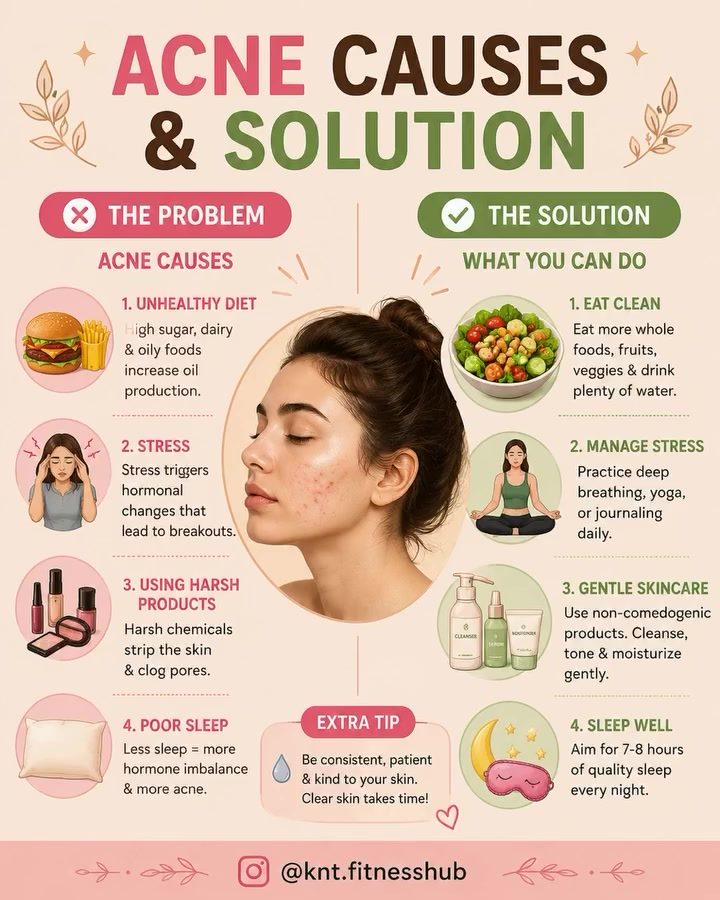
Acne Causes and Solutions
Acne is a universal skin concern that affects people of all ages. Understanding the causes and solutions is key to managing breakouts effectively. This guide delves into the factors contributing to acne and provides practical steps to achieve clear, healthy skin.
Why This Matters
Acne is more than just a cosmetic issue; it can significantly impact self-confidence and overall well-being. Recognizing the underlying causes and implementing effective solutions can lead to a clearer complexion and improved skin health. Addressing acne requires a holistic approach that considers diet, stress, skincare, and lifestyle factors.
Understanding the Causes of Acne
Unhealthy Diet
An unhealthy diet, particularly one high in sugar, dairy, and oily foods, can exacerbate acne. These foods can increase sebum production, leading to clogged pores and breakouts. In contrast, a diet rich in whole foods, fruits, and vegetables can support skin health and reduce the likelihood of acne.
Stress
Stress is a common trigger for hormonal imbalances that can lead to acne. When stressed, the body produces cortisol, a hormone that can stimulate oil glands and contribute to breakouts. Managing stress through deep breathing, yoga, or journaling can help mitigate these effects.
Harsh Skincare Products
Using harsh skincare products can strip the skin of its natural oils, causing it to overproduce sebum in response. This overproduction can clog pores and lead to acne. Gentle, non-comedogenic skincare products are essential for maintaining skin health and preventing breakouts.
Poor Sleep
Sleep plays a crucial role in overall health, including skin health. Insufficient sleep can lead to hormonal imbalances, which in turn can trigger acne. Aiming for 7-8 hours of quality sleep each night is essential for maintaining a clear complexion and overall well-being.
Practical Solutions for Clear Skin
Eating Clean
A diet rich in whole foods, fruits, and vegetables can support skin health and reduce the likelihood of acne. Drinking plenty of water helps flush out toxins and keeps the skin hydrated. Avoiding processed foods, high sugar, dairy, and oily foods can also make a significant difference in skin health.
Managing Stress
Stress management techniques such as deep breathing, yoga, or journaling can help reduce cortisol levels and prevent stress-related breakouts. Incorporating these practices into daily routines can promote overall well-being and support healthy skin.
Gentle Skincare
Using non-comedogenic skincare products that are gentle on the skin is crucial for preventing acne. These products are designed not to clog pores and help maintain the skin's natural balance. A simple skincare routine that includes cleansing, toning, and moisturizing with gentle products can support clear, healthy skin.
Quality Sleep
Aiming for 7-8 hours of quality sleep each night is essential for maintaining hormonal balance and supporting overall skin health. Quality sleep allows the body to repair and regenerate, contributing to a clearer complexion and improved well-being.
Practical Tips for Achieving Clear Skin
Consistency and Patience
Achieving clear skin is a journey that requires consistency and patience. Stick to your skincare routine and make gradual adjustments as needed. Remember, clear skin takes time, and consistent effort is key to long-term success.
Hydration
Drinking plenty of water is essential for maintaining skin health. Hydration helps flush out toxins and keeps the skin supple and hydrated, reducing the likelihood of breakouts.
Gentle Exfoliation
Gentle exfoliation can help remove dead skin cells and unclog pores, but it's important to do so carefully. Over-exfoliation can strip the skin of its natural oils, leading to increased sebum production and breakouts. Use a gentle exfoliant once or twice a week, depending on your skin type.
Avoiding Touching the Face
Touching your face can transfer bacteria and oils, leading to clogged pores and breakouts. Keep hands away from the face to minimize the risk of acne.
Monitoring Diet
Pay attention to how your body responds to different foods. If certain foods seem to trigger breakouts, consider reducing or eliminating them from your diet. A balanced, nutrient-rich diet can support overall skin health.
Regular Check-Ups
Regular skincare check-ups with a dermatologist can help identify underlying issues and provide personalized recommendations for managing acne. Professional advice can be invaluable in achieving clear, healthy skin.
Important Takeaways
Understanding acne causes and solutions is essential for managing breakouts effectively. An unhealthy diet, stress, harsh skincare products, and poor sleep are common factors contributing to acne. Addressing these issues through a clean diet, stress management, gentle skincare, and quality sleep can lead to a clearer complexion.
Clear skin is a habit, not a quick fix. Consistency and patience are key to achieving long-term results. Incorporate these practical tips into your daily routine to support healthy, clear skin.
Conclusion
Managing acne involves a holistic approach that considers diet, stress, skincare, and lifestyle factors. By understanding the causes and implementing effective solutions, you can achieve clear, healthy skin. Remember, clear skin is a journey that requires consistency and patience. Stick to your routine, make gradual adjustments, and be kind to your skin. With the right practices, you can support skin health and achieve a clearer complexion.
Watch the Reel
Related deep dives
Similar reads based on topic and creator.




Recent articles
Fresh deep dives from the latest Reels we unpacked.




Comments
Be the first to comment.