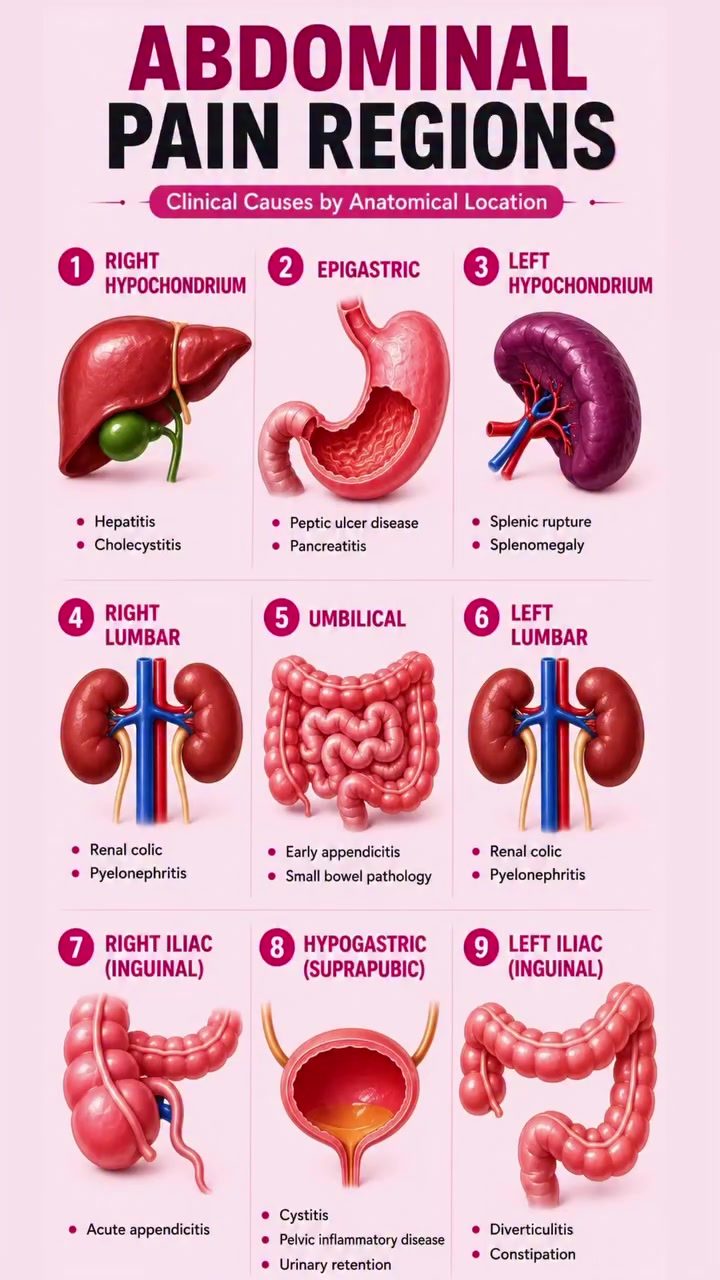
Abdominal Pain Regions
Understanding the location and potential causes of abdominal pain is crucial for identifying underlying issues. The abdomen is a complex area, and pain in different regions can indicate a variety of health problems. Knowing the clinical causes associated with specific areas can help you better communicate with healthcare professionals and seek appropriate care. Here, we break down the key regions and their associated conditions.
Why this matters
Abdominal pain is a common complaint that can range from minor to severe. Recognizing the location of the pain and understanding what it might indicate can help you take the right steps, whether that's seeing a doctor or managing symptoms at home. However, it's essential to remember that while this guide can provide valuable insights, it should not replace professional medical advice.
Main discussion
Right Hypochondrium
This region, located in the upper right section of the abdomen, is associated with conditions affecting the liver and gallbladder. Some of the potential causes of pain in this area include:
- Hepatitis: Inflammation of the liver, often due to viral infections, alcohol use, or other factors.
- Cholecystitis: Inflammation of the gallbladder, which can be caused by gallstones or infection.
Epigastric
The epigastric region is in the upper middle part of the abdomen. Pain here can indicate issues with the stomach or pancreas. Common causes include:
- Peptic Ulcer Disease: Ulcers in the stomach or the first part of the small intestine, often due to H. pylori bacteria or long-term use of NSAIDs.
- Pancreatitis: Inflammation of the pancreas, which can be acute or chronic and is often caused by gallstones or excessive alcohol use.
Left Hypochondrium
Located in the upper left section of the abdomen, this region is linked to the spleen and adjacent organs. Pain here might be due to:
- Splenic Rupture: A medical emergency where the spleen tears, often due to trauma or certain infections.
- Splenomegaly: Enlargement of the spleen, which can be caused by a variety of conditions, including infections, liver disease, and blood disorders.
Right Lumbar
The right lumbar region is on the right side of the lower back. Pain in this area can be related to kidney issues. Some of the conditions include:
- Renal Colic: Severe pain caused by kidney stones.
- Pyelonephritis: A kidney infection that often originates in the bladder and travels up the urinary tract.
Umbilical
The umbilical region is around the belly button. Pain here can indicate issues with the small intestine or early stages of appendicitis. Possible causes include:
- Early Appendicitis: Inflammation of the appendix, which can be life-threatening if not treated promptly.
- Small Bowel Pathology: Conditions affecting the small intestine, such as inflammation or obstruction.
Left Lumbar
The left lumbar region is on the left side of the lower back. Like the right lumbar region, pain here can also indicate kidney problems, including:
- Renal Colic: Severe pain caused by kidney stones.
- Pyelonephritis: A kidney infection that often originates in the bladder and travels up the urinary tract.
Right Iliac (Inguinal)
This region is in the lower right abdomen. Pain here is often a sign of appendicitis. Other conditions can include:
- Acute Appendicitis: Inflammation of the appendix, which requires immediate medical attention.
Hypogastric (Suprapubic)
The hypogastric, or suprapubic, region is in the lower middle abdomen. Pain in this area can be linked to several conditions, including:
- Cystitis: Infection of the bladder.
- Pelvic Inflammatory Disease (PID): Infection of the female reproductive organs.
- Urinary Retention: Difficulty emptying the bladder.
- Constipation: Infrequent or difficult bowel movements.
Left Iliac (Inguinal)
This region is in the lower left abdomen. Pain here can indicate issues with the intestines, specifically the sigmoid colon. Possible causes include:
- Diverticulitis: Inflammation or infection of small pouches that can form in the intestinal wall.
Practical tips
When to Seek Immediate Medical Attention
While many causes of abdominal pain are manageable at home, some require immediate medical attention. Seek urgent care if you experience:
- Severe, persistent pain.
- Pain accompanied by fever, vomiting, or fainting.
- Blood in stools or urine.
- Chest pain.
When to Consult a Healthcare Professional
If your pain is mild to moderate but persistent, or if you notice any concerning symptoms, consult a healthcare professional. They can perform a thorough examination, order necessary tests, and provide a proper diagnosis and treatment plan.
Home Care Tips
For minor abdominal discomfort, consider the following home care tips:
- Hydration: Drink plenty of fluids to stay hydrated.
- Diet: Avoid foods that aggravate symptoms, such as spicy or fatty foods.
- Rest: Give your body time to recover.
- Over-the-Counter Medications: Use antacids, antidiarrheals, or pain relievers as directed, but avoid NSAIDs if you suspect an ulcer or other gastro-intestinal issues.
Important takeaways
The Importance of Location
Understanding the specific location of abdominal pain can provide valuable clues about the underlying cause. However, it is not a definitive diagnostic tool. Always consult a healthcare professional for an accurate diagnosis and appropriate treatment.
When to Seek Help
Do not ignore severe or persistent abdominal pain. Seek immediate medical attention if pain is severe, accompanied by fever, vomiting, or other concerning symptoms. Early intervention can prevent complications and improve outcomes.
The Value of Professional Advice
While self-awareness and home care tips are useful, they should not replace professional medical advice. Always consult a healthcare provider for persistent or concerning symptoms.
Conclusion
Abdominal pain can be a sign of various health issues, from minor discomfort to life-threatening conditions. Recognizing the location of the pain and understanding the potential causes can help you take the right steps. However, it is crucial to remember that this guide is for informational purposes only and should not replace professional medical advice. Always consult a healthcare provider for an accurate diagnosis and appropriate treatment.
Watch the Reel
Recent articles
Fresh deep dives from the latest Reels we unpacked.




Comments
Be the first to comment.