Unemployment and Recessions
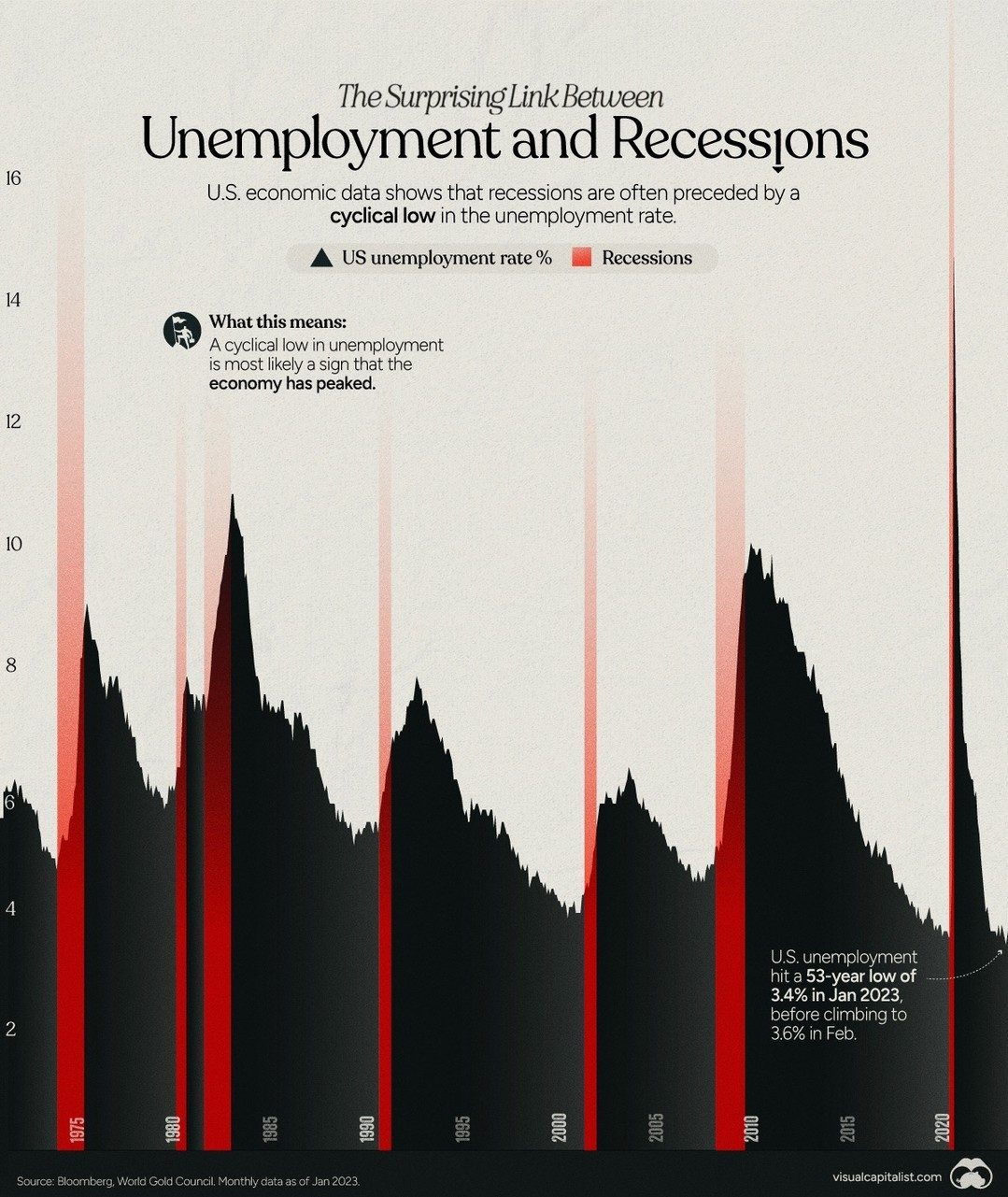
Unemployment rates and recessions are intrinsically linked, and understanding this relationship can provide valuable insights into the economic landscape. For instance, during periods of low unemployment, employers often struggle to find workers, leading to higher wages and potentially contributing to inflation. In January 2023, the U.S. unemployment rate reached a historic low of 3.4%, only to rise slightly to 3.6% in February.
Why This Matters
The relationship between unemployment and recessions is crucial for several reasons. Firstly, it helps economists and policymakers predict economic cycles and make informed decisions. Secondly, understanding this relationship can guide individuals in making personal financial choices. Finally, it sheds light on broader economic trends and their potential impact on various sectors.
The Cyclical Nature of Unemployment and Recessions
Historical Trends
Over the past few decades, U.S. economic data has shown a consistent pattern: recessions are often preceded by a cyclical low in the unemployment rate. This means that when the unemployment rate hits an unusually low point, it often signals that the economy has reached its peak and is likely to enter a recessionary phase soon after.
Recent Data
In 2023, the U.S. unemployment rate hit a 53-year low of 3.4% in January, making it the lowest recorded unemployment rate in over five decades. However, by February, the unemployment rate had already climbed to 3.6%. This slight increase, while not dramatic, is notable in the context of historical trends. It suggests that the economy may be approaching a peak, potentially signaling the onset of a recession in the near future.
Economic Indicators and Their Implications
Wage Inflation
When unemployment is low, employers have to compete more aggressively for available workers. As a result, wages tend to rise, which can contribute to overall inflation. This dynamic can lead to a situation where workers benefit from higher wages, but consumers face increased prices for goods and services. These shifts in the labor market can have far-reaching effects on the broader economy.
Consumer Spending and Business Confidence
Low unemployment rates often correlate with high consumer confidence and increased spending. This is because people in employment tend to have more disposable income and are more likely to engage in economic activities such as spending and investing. However, this optimism can be short-lived if it is followed by a recession. Businesses may also experience a surge in confidence and investment during periods of low unemployment, but this can quickly turn to caution or retrenchment if economic conditions worsen.
Practical Tips for Navigating Economic Cycles
For Employees
Employees can take several steps to navigate economic cycles effectively. For instance, during periods of low unemployment, it might be beneficial to seek higher-paying opportunities or negotiate better terms with current employers. Conversely, during recessions, it is crucial to maintain financial discipline and build an emergency fund to weather potential job losses or reduced income.
For Employers
Employers should remain vigilant about economic indicators and adjust their strategies accordingly. During low unemployment periods, they may need to focus on retaining talent through competitive compensation packages and benefits. In contrast, during recessions, cost-cutting and strategic planning become critical to ensure business survival and eventual recovery.
Important Takeaways
-
Historical Trends: Recessions are often preceded by a cyclical low in unemployment, indicating an economic peak.
-
Current Data: The U.S. unemployment rate hit a 53-year low in January 2023, rising slightly in February, which may signal an economic peak.
-
Economic Impact: Low unemployment can lead to wage inflation and increased consumer spending, but these effects can be short-lived if a recession follows.
-
Practical Considerations: Employers and employees should adapt their strategies based on current economic conditions to navigate cycles effectively.
Conclusion
Understanding the link between unemployment and recessions is vital for both personal and economic decision-making. By being aware of historical trends and current data, individuals and businesses can better prepare for economic cycles. Keeping an eye on unemployment rates and other economic indicators can provide valuable insights into the broader economic landscape and help in making informed choices.
Watch the Reel
Questions readers ask
What does a low unemployment rate, like the 3.4% in January 2023, indicate about the economy?
A low unemployment rate can indicate a strong economy with many job opportunities. However, it can also signal that a recession may be on the horizon, as it can lead to increased wages and inflation, which may cause businesses to slow down hiring and potentially lay off workers.
How does the unemployment rate relate to recessions?
The unemployment rate and recessions are closely linked. A falling unemployment rate typically indicates a healthy economy, but a very low rate can sometimes precede a recession. Historically, a significant drop in the unemployment rate has often been followed by a recession within 12 to 18 months.
What are some signs of an upcoming recession in 2023?
Several signs can indicate an upcoming recession, including a sudden increase in unemployment after a period of low rates, a decrease in consumer spending, and a rise in inflation. Additionally, a significant decrease in manufacturing activity and a drop in stock market values can all signal an imminent economic downturn.
Why did the unemployment rate rise slightly to 3.6% in February 2023 after reaching 3.4% in January 2023?
The slight increase in the unemployment rate from 3.4% in January 2023 to 3.6% in February 2023 could be due to seasonal factors, a temporary slowdown in hiring, or a slight increase in layoffs. However, this increase could also indicate the beginning of a larger recessionary trend, emphasizing the importance of monitoring future unemployment data.
How might a low unemployment rate contribute to inflation?
In periods of low unemployment, employers may struggle to find workers, leading to increased wages. This increased wage growth can drive up the cost of goods and services, contributing to overall inflation. If inflation rises too quickly, it can lead to an economic slowdown or recession as the cost of living rises for consumers.
What should people consider when making financial decisions during low unemployment periods?
During low unemployment periods, it's important to consider potential economic shifts. While a strong job market may present opportunities for career advancement and higher wages, it is also wise to prepare for potential economic downturns. Building an emergency fund, paying down debt, and diversifying income sources can help individuals weather potential financial storms.
How can understanding unemployment and recession trends benefit individuals?
Understanding the trends of unemployment and recessions can help individuals anticipate economic changes and prepare accordingly. This can involve making informed decisions about career moves, savings, and investments, and safeguarding financial well-being. By staying informed, individuals can navigate economic uncertainties more effectively.
Recent articles
Fresh deep dives from the latest Reels we unpacked.




Comments
Be the first to comment.