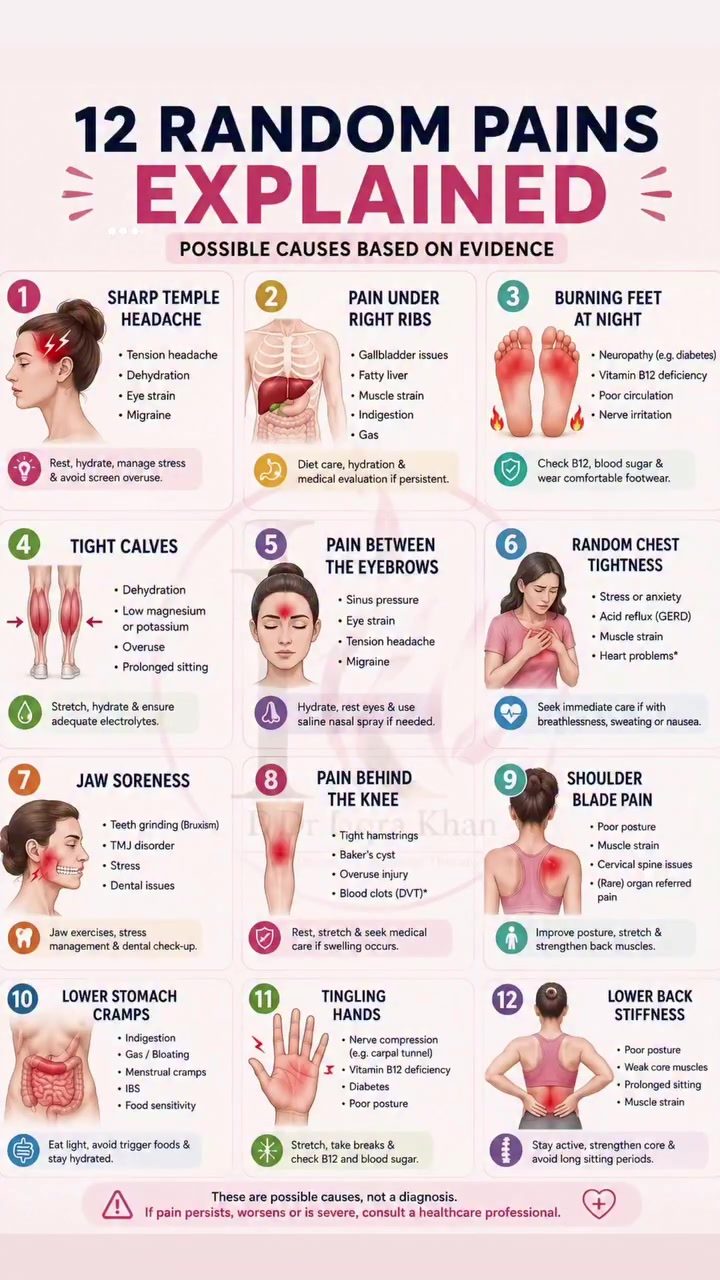
12 Random Pains Explained
Pain is a common symptom that can signal a variety of underlying issues. Understanding the potential causes of different types of pain can help in seeking appropriate care. Here, we delve into 12 common pains, exploring their possible causes and what you can do to alleviate them.
Why This Matters
The location of pain can provide clues about its cause, but it's not always straightforward. Many conditions share similar symptoms, making it crucial to understand the broader context of your pain. This guide aims to empower you with knowledge about common pain locations, their potential causes, and when to seek medical attention.
Pain Explanations
Sharp Temple Headache
Sharp temple headaches can be quite discomforting and are often caused by a few common factors:
- Tension headaches: These are typically caused by stress and muscle strain in the neck and scalp.
- Dehydration: Not drinking enough water can lead to headaches, especially in the temple area.
- Eye strain: Prolonged screen time or reading without proper lighting can result in headaches.
- Migraine: Characterized by throbbing pain, sensitivity to light, and sometimes nausea, migraines can be triggered by various factors, including hormonal changes, stress, and diet.
Pain Under the Right Ribs
Pain under the right ribs can be alarming and has several potential causes:
- Gallbladder issues: Biliary colic or gallstones can cause severe pain in this area, often after eating fatty foods.
- Fatty liver: This condition can cause discomfort and pain in the upper right abdomen.
- Muscle pain: Strain or injury to the abdominal muscles can result in pain under the ribs.
- Indigestion: Gastritis, acid reflux, or stomach ulcers can lead to discomfort and pain in the upper abdomen.
Burning Feet at Night
Burning feet at night can disrupt sleep and indicate several underlying issues:
- Vitamin B12 deficiency: A lack of this vital nutrient can lead to nerve issues, causing burning sensations in the extremities.
- Poor circulation: Conditions like peripheral artery disease can lead to reduced blood flow, causing burning and numbness.
- Nerve irritation or damage: Conditions like peripheral neuropathy can cause burning foot pain, especially at night.
Tight Calves
Tight calves can be bothersome and can be attributed to several factors:
- Dehydration: Inadequate hydration can lead to muscle cramps and tightness.
- Low magnesium: This essential mineral is crucial for muscle function and relaxation. A deficiency can cause tightness and spasms.
- Prolonged sitting: Sitting for extended periods can lead to muscle tightness and stiffness, particularly in the calves.
Pain Between the Eyebrows
Pain between the eyebrows can be uncomfortable and is often linked to:
- Stress or anxiety: Emotional stress can lead to tension headaches, often felt between the eyebrows.
- Muscle pain: Tension in the forehead and scalp muscles can cause pain in this area.
- Migraine: Migraines can also cause pain between the eyebrows, often accompanied by other symptoms like sensitivity to light or nausea.
Jaw Soreness
Jaw soreness can be caused by several factors:
- Teeth grinding (bruxism): This condition, often associated with stress, can lead to jaw pain and soreness.
- TMJ disorder: Issues with the temporomandibular joint, which connects the jaw to the skull, can cause pain and discomfort.
Pain Behind the Knee
Pain behind the knee can result from various conditions:
- Tight hamstrings: Overworked or tight hamstring muscles can cause pain and discomfort behind the knee.
- Baker’s cyst: This fluid-filled cyst that forms at the back of the knee can cause pain and swelling.
Shoulder Blade Pain
Shoulder blade pain can be caused by several factors:
- Poor posture: Slouching or poor posture can put strain on the muscles and ligaments around the shoulder blades, leading to pain.
- Muscle pain: Overuse or injury to the muscles around the shoulder blades can cause pain and discomfort.
- Cervical spine issues: Problems with the cervical spine (neck area) can cause referred pain in the shoulder blades.
Lower Stomach Cramps
Lower stomach cramps can be painful and have multiple causes:
- Indigestion: Gas or bloating can lead to discomfort and cramping in the lower abdomen.
- Menstrual cramps: Many individuals experience menstrual cramps before or during their period.
- Irritable bowel syndrome (IBS): This condition can cause abdominal pain, bloating, and changes in bowel movements.
Lower Back Stiffness
Lower back stiffness is a common complaint with various potential causes:
- Poor posture: Slouching or improper sitting can strain the back muscles, leading to stiffness.
- Muscle atrophy: Weak or inactive muscles can result in back stiffness, as the muscles may not be strong enough to support the spine.
- Prolonged sitting: Extended periods of sitting can lead to muscle tightness and stiffness in the lower back.
Tingling Hands
Tingling in the hands can be alarming and has several potential causes:
- Nerve compression: Conditions like carpal tunnel syndrome can lead to tingling and numbness in the hands.
- Diabetes: High blood sugar levels can damage nerves, leading to tingling and other sensory issues.
- Low vitamin B12 and blood sugar: Deficiencies in these nutrients can affect nerve function, causing tingling.
Practical Tips
While this guide offers insights into common pain causes, it is essential to remember:
- Seek medical advice: If pain is severe, sudden, persistent, or accompanied by symptoms like difficulty breathing, weakness, or fever, consult a healthcare professional immediately.
- Stay hydrated: Adequate hydration can help prevent and alleviate many types of pain.
- Maintain good posture: Proper posture can help prevent muscle strain and discomfort.
- Regular exercise: Strengthening and stretching exercises can improve muscle function and reduce the risk of pain and stiffness.
- Nutritional balance: A balanced diet rich in essential nutrients can support overall health and prevent nutrient deficiencies that cause pain.
Important Takeaways
Pain is your body’s way of signaling that something is amiss, and understanding its location and potential causes can guide you in seeking appropriate care. This guide emphasizes the importance of recognizing common pain causes, the need for a holistic approach to health, and the necessity of seeking professional advice when needed.
Conclusion
Pain is a complex symptom that can result from various underlying conditions. This guide has explored 12 common types of pain, their potential causes, and practical tips for prevention and management. By understanding the broader context of pain, you can take proactive steps to address discomfort and seek the appropriate care when necessary.
Watch the Reel
Questions readers ask
What are the most common causes of burning feet at night?
Burning feet at night can be caused by several factors, including peripheral neuropathy, poor circulation, and nerve damage. Other potential causes include dry skin, athlete's foot, and certain medications. If you experience this symptom, it's important to consult a healthcare provider for a proper diagnosis.
How can I relieve pain under the right ribs?
Pain under the right ribs can be due to issues like gallstones, liver problems, or muscle strains. To alleviate discomfort, you can try applying heat, maintaining good posture, and taking over-the-counter pain relievers. However, if the pain is severe or accompanied by other symptoms like fever or jaundice, seek immediate medical attention.
What are the possible causes of lower back pain and muscle cramps?
Lower back pain and muscle cramps can be caused by various factors, including muscle strains, poor posture, or underlying conditions like sciatica, or herniated discs. Muscle cramps might also result from dehydration or electrolyte imbalances. Gentle exercise, hydration, and appropriate stretching can help manage these symptoms, however if you experience persistent cramps, consult a healthcare provider.
What might be causing my sharp temple headache?
Sharp temple headaches can be caused by tension headaches, migraines, or even issues with the temporomandibular joint (TMJ). Other causes include sinus infections or dental problems. To alleviate the pain, try over-the-counter pain relievers, rest, and stress management techniques. If headaches are frequent or severe, consult a healthcare professional for further evaluation.
What are the common causes of shoulder pain, and how can I alleviate it?
Shoulder pain can be caused by muscle strains, rotator cuff injuries, or poor posture. Other potential causes include arthritis or frozen shoulder. To alleviate shoulder pain, try applying ice or heat, gentle stretching, and over-the-counter pain relievers. If the pain is severe or persistent, seek medical attention for a proper diagnosis and treatment plan.
When should I be concerned about knee pain?
Knee pain can result from injuries like sprains or strains, or from conditions like arthritis or tendinitis. Seek immediate medical attention if you experience severe pain, swelling, or inability to bear weight on the knee. If the pain is mild, try rest, ice, compression, and elevation (RICE) and consult a healthcare provider if symptoms persist.
What could be causing the tingling in my hands?
Tingling in the hands can be due to nerve compression, such as carpal tunnel syndrome, or other conditions like diabetes or poor circulation. If you experience tingling along with pain, weakness, or numbness, it's important to see a healthcare provider for a thorough evaluation. In the meantime, try gentle hand exercises and ergonomic adjustments to reduce strain.
Recent articles
Fresh deep dives from the latest Reels we unpacked.




Comments
Be the first to comment.