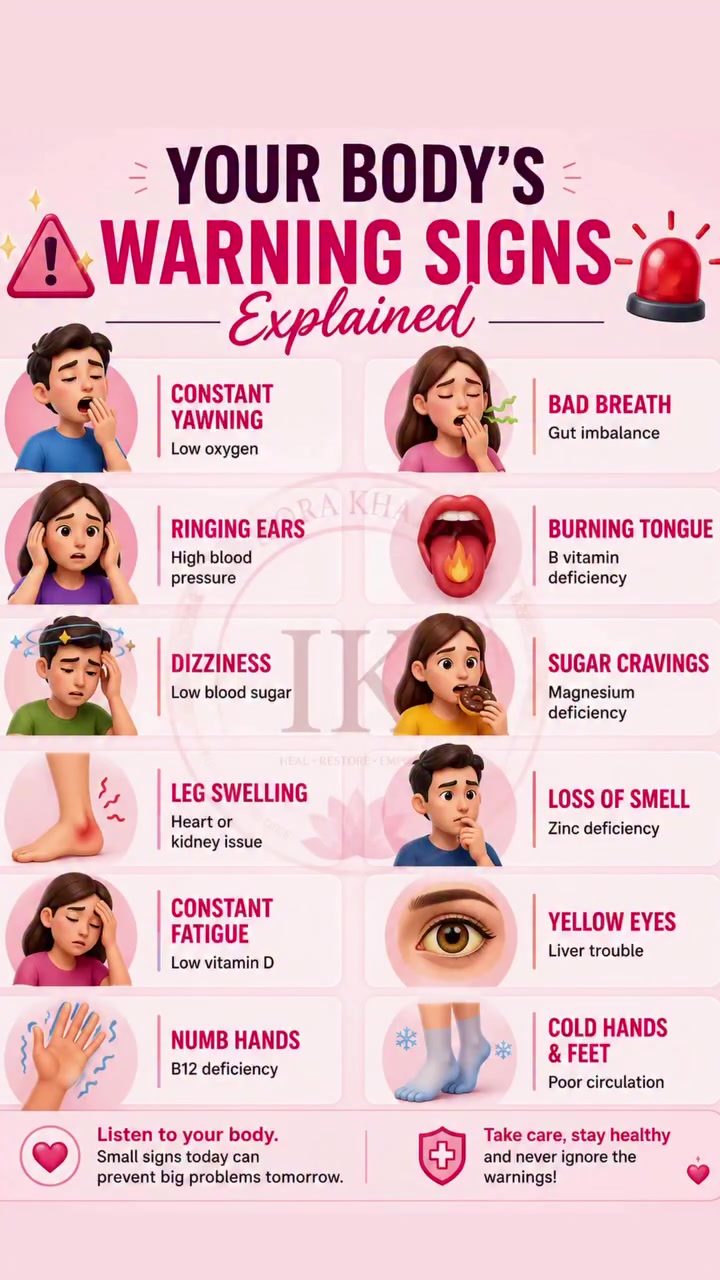
Body Warning Signs
Your body is a complex system that often communicates through subtle signs and symptoms. Recognizing these warning signals can be crucial in preventing serious health issues. Here, we explore various body warning signs, their potential causes, and why you should pay close attention to them.
Why This Matters
Understanding and responding to your body's warning signs can help you take proactive steps toward maintaining your health. Ignoring these signs could lead to more significant health problems down the line. Whether it's constant yawning, ringing ears, or leg swelling, each symptom can provide valuable insights into your overall well-being.
Main Discussion
Constant Yawning
Constant yawning is often dismissed as a sign of boredom or fatigue, but it can also indicate low oxygen levels in the body. This condition, known as hypoxia, can be caused by various factors, including respiratory issues, anemia, or even sleeping disorders. Low oxygen levels can affect your body's ability to function properly, making it essential to consult a healthcare professional if you experience excessive yawning.
Ringing Ears
Ringing in the ears, also known as tinnitus, can be caused by various factors, including high blood pressure, low blood sugar, or even ear infections. While tinnitus can sometimes be temporary, persistent ringing should be evaluated by a healthcare professional. High blood pressure, in particular, can lead to severe health complications if left untreated, making it crucial to address this symptom promptly.
Leg Swelling
Leg swelling and fatigue could signal heart or kidney issues. This condition, known as edema, can occur due to fluid retention in the body. Heart or kidney problems can cause fluid to accumulate in the legs, leading to swelling and discomfort. Other potential causes include vein problems or liver disease. If you experience leg swelling, it's essential to consult a healthcare professional to rule out any underlying conditions.
Constant Fatigue
Constant fatigue is a common symptom that can be caused by various factors, including vitamin deficiencies, anemia, thyroid disorders, or poor sleep. While occasional fatigue is normal, persistent exhaustion can indicate an underlying health issue. Low vitamin D levels, in particular, are often associated with chronic fatigue. Addressing the root cause of your fatigue can help improve your overall well-being and energy levels.
Numb Hands
Numb hands can be a symptom of vitamin B12 deficiency, nerve compression, or diabetes. Vitamin B12 is essential for the proper functioning of the nervous system, and a deficiency can lead to various neurological symptoms, including numbness and tingling. If you experience persistent numbness in your hands, it's important to consult a healthcare professional to rule out any underlying conditions.
Bad Breath
Bad breath, or halitosis, can be caused by poor oral hygiene, digestive issues, or gum disease. While occasional bad breath is normal, persistent halitosis can indicate an underlying health issue. Poor oral hygiene can lead to the buildup of bacteria in the mouth, resulting in bad breath. Digestive issues, such as acid reflux or gastrointestinal infections, can also contribute to halitosis. Maintaining good oral hygiene and addressing any underlying digestive issues can help prevent bad breath.
Burning Tongue
A burning tongue may occur with vitamin B12, folate, or iron deficiency. These vitamins are essential for the production of red blood cells and the proper functioning of the nervous system. A deficiency in any of these vitamins can lead to various symptoms, including a burning sensation in the tongue. Addressing the underlying vitamin deficiency can help alleviate this symptom and improve your overall health.
Dizziness
Dizziness can result from dehydration, low blood sugar, low blood pressure, or other conditions. This symptom can vary in severity and duration, making it important to identify and address the underlying cause. Dehydration, in particular, can lead to dizziness and other symptoms, including fatigue and headaches. Rehydrating and addressing the root cause of your dizziness can help improve your overall well-being.
Loss of Smell
Loss of smell may occur after viral infections or with certain neurological disorders. This symptom, known as anosmia, can be temporary or permanent, depending on the underlying cause. Viral infections, such as the common cold or COVID-19, can temporarily affect your sense of smell. Neurological disorders, such as Parkinson's disease or Alzheimer's disease, can also contribute to anosmia. If you experience a persistent loss of smell, it's essential to consult a healthcare professional to rule out any underlying conditions.
Practical Tips
- Pay Attention to Your Body: Listen to your body and take note of any warning signs or symptoms. Even minor symptoms can indicate an underlying health issue that requires attention.
- Consult a Healthcare Professional: If you experience persistent or severe symptoms, consult a healthcare professional for a proper evaluation and treatment plan.
- Maintain a Healthy Lifestyle: A healthy lifestyle, including a balanced diet, regular exercise, and adequate sleep, can help prevent many health issues and improve your overall well-being.
- Stay Hydrated: Dehydration can cause various symptoms, including dizziness and fatigue. Make sure to drink enough water throughout the day to stay hydrated.
- Address Vitamin Deficiencies: Vitamin deficiencies can lead to various symptoms, including fatigue and numbness. Make sure to include a variety of nutrient-rich foods in your diet to meet your body's vitamin needs.
Important Takeaways
Your body's warning signs can provide valuable insights into your overall health and well-being. Paying attention to these symptoms and addressing any underlying issues can help prevent serious health problems. Whether it's constant yawning, ringing ears, or leg swelling, each symptom can indicate an underlying health issue that requires attention. Taking proactive steps toward maintaining your health, including consulting a healthcare professional and maintaining a healthy lifestyle, can help you stay healthy and prevent future health problems.
Conclusion
Your body's warning signs are essential indicators of your overall health and well-being. By recognizing and responding to these symptoms, you can take proactive steps toward maintaining your health and preventing serious health problems. Whether it's constant yawning, ringing ears, or leg swelling, each symptom can provide valuable insights into your body's needs. Paying attention to your body, consulting a healthcare professional, and maintaining a healthy lifestyle can help you stay healthy and address any underlying health issues.
Watch the Reel
Questions readers ask
Why should I be concerned about constant yawning beyond just fatigue?
While constant yawning can indeed indicate tiredness, it can also be a sign of underlying health issues such as sleep disorders, anemia, or even heart problems. If you find yourself yawning excessively, it's important to consider other accompanying symptoms and consult with a healthcare professional to rule out any potential health concerns.
What might ringing in the ears indicate?
Ringing in the ears, also known as tinnitus, can be a symptom of various conditions, including ear wax buildup, hearing loss, or even more serious issues like a tumor. It can also be a warning sign of high blood pressure or circulatory system problems. If you experience persistent ringing in the ears, it's crucial to seek medical attention for a proper diagnosis.
When should I worry about leg swelling?
Leg swelling can be a normal response to certain activities or conditions, such as standing for long periods or minor injuries. However, sudden or severe swelling, especially if accompanied by pain, redness, or warmth, can indicate a blood clot, heart failure, or kidney disease. If you notice unexplained or persistent leg swelling, contact your doctor promptly.
What are some signs of vitamin B12 deficiency?
Vitamin B12 deficiency can manifest in various ways, including fatigue, weakness, constipation, loss of appetite, and weight loss. More severe symptoms may include numbness or tingling in the hands and feet, memory problems, and even depression. If you suspect you might be deficient in vitamin B12, consult your healthcare provider for proper evaluation and treatment.
What could cold hands and feet indicate?
Cold hands and feet can be a response to cold temperatures or stress, but they can also indicate poor circulation. This could be due to conditions like Raynaud's disease, peripheral artery disease, or even an underactive thyroid. If you frequently experience cold extremities, especially if accompanied by other symptoms, it's a good idea to discuss this with your healthcare provider.
How are blood sugar levels reflected by body signals?
Fluctuations in blood sugar levels can cause a variety of symptoms, including excessive thirst, frequent urination, fatigue, and blurred vision. These symptoms can indicate both high and low blood sugar levels, which, if left unaddressed, can lead to serious health complications, including diabetes. Regular monitoring and maintaining a balanced diet can help manage these symptoms effectively.
What are some subtle signs of poor health that should not be ignored?
Subtle signs like changes in bowel habits, persistent headaches, unexplained weight changes, or frequent infections can all indicate underlying health issues. While these symptoms may seem minor, they can sometimes point to more serious conditions. Paying attention to these signals and discussing them with a healthcare professional can help ensure timely intervention and better overall health management.
Recent articles
Fresh deep dives from the latest Reels we unpacked.




Comments
Be the first to comment.