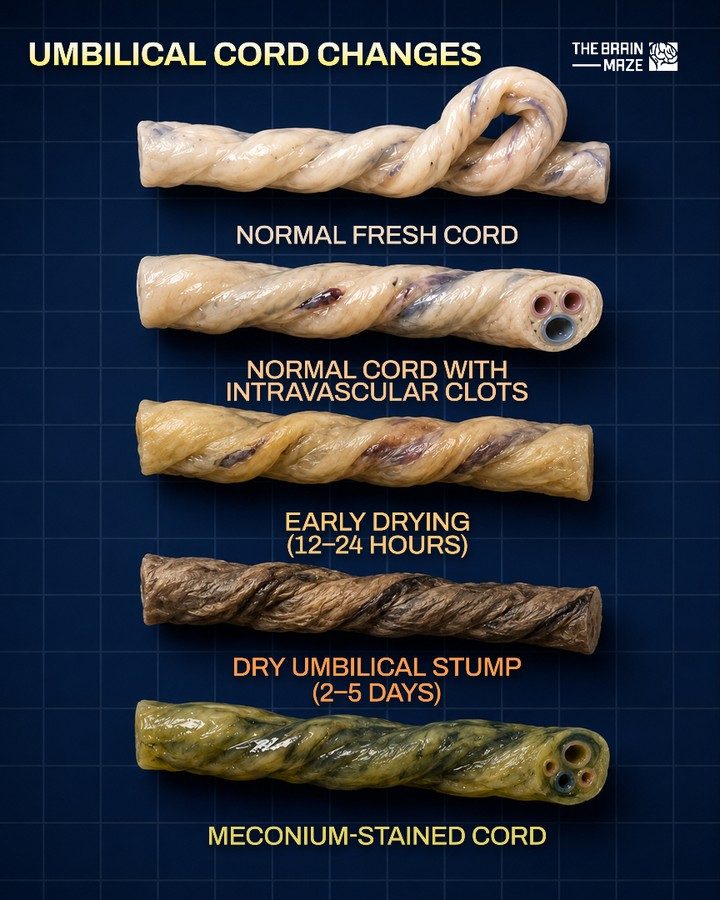
Umbilical Cord Changes: What to Expect
After birth, the umbilical cord undergoes a series of natural changes as it transforms from a vital lifeline into a dry stump. Understanding these changes can help new parents recognize what is normal and when to seek medical advice. This process, though straightforward, involves several stages and conditions that are essential to monitor.
Why This Matters
New parents often have many questions about their newborn's umbilical cord. Knowing what to expect during the transition from a functioning cord to a dry stump can alleviate anxiety and ensure proper care. This knowledge also helps in identifying any potential issues that may require medical attention.
Understanding the Stages
Fresh Umbilical Cord
Immediately after birth, a healthy umbilical cord appears pearly white to pale yellow and is rich in Wharton's jelly. This jelly provides essential support and cushioning to the blood vessels within the cord. The cord is thick and moist, serving as the lifeline between the mother and the newborn during pregnancy. In the first few days, the cord is still functioning, supplying the newborn with necessary nutrients and oxygen.
Early Drying (12–24 Hours)
Within the first 12 to 24 hours after birth, the umbilical cord begins to dry out. This process is natural and involves the cord losing its moisture and turning slightly darker. The drying process is crucial as it prepares the cord for eventual separation from the baby's body.
Dry Umbilical Stump (2–5 Days)
Over the next few days, typically between 2 to 5 days, the umbilical cord continues to dry and shrivel. It turns a darker shade and becomes visibly smaller and drier. During this stage, the cord stump is no longer moist and appears as a dry, dark mass. This is the final stage before the cord separates from the baby's body. The separation usually occurs within 1 to 3 weeks after birth.
Meconium-Stained Cord
Meconium is the baby's first stool, which can sometimes pass into the amniotic fluid during labor or delivery. When this happens, the umbilical cord may become stained with a greenish discoloration. While this can be alarming, it is generally not a cause for concern unless other complications are present. The meconium-stained cord is a normal finding in some newborns and does not typically indicate a health issue.
Normal Cord with Intravascular Clots
Internal vascular clots within the umbilical cord are often a normal finding in newborns. These clots appear as dark spots inside the cord and are usually nothing to worry about. They indicate that the blood vessels within the cord are functioning correctly and should not cause any concern unless accompanied by other symptoms.
Practical Tips
Cord Care
Proper care of the umbilical cord is crucial during the drying and separation process. Here are some practical tips for caring for your newborn's umbilical cord:
- Keep it Dry: Avoid submerging the cord in water during baths. Instead, use a sponge bath to keep the area clean and dry.
- Air Exposure: Expose the cord to air as much as possible. This helps in drying out the cord more quickly.
- Avoid Tight Clothing: Ensure that the baby's diaper is folded down below the cord to allow for better air circulation. Avoid tight clothing that may irritate the area.
- Cleanliness: Use a clean, damp cloth to gently clean the base of the cord if needed. Avoid using alcohol or other harsh chemicals.
When to Seek Medical Advice
While most changes in the umbilical cord are normal, there are times when medical attention may be necessary. Contact your healthcare provider if you notice any of the following:
- Foul Smell: An unpleasant odor coming from the umbilical cord area.
- Discharge: Excessive discharge or pus from the cord.
- Redness or Swelling: Significant redness, swelling, or warmth around the cord.
- Bleeding: Any bleeding from the cord area.
- Delayed Separation: The cord has not separated after 3 weeks.
Important Takeaways
Understanding the natural changes in the umbilical cord after birth can provide peace of mind for new parents. Here are the key takeaways:
- A healthy fresh cord is pearly white to pale yellow and rich in Wharton's jelly.
- The cord dries, darkens, and shrivels over the next few days.
- Meconium staining and intravascular clots are common and usually not a cause for concern.
- Proper cord care involves keeping the area clean and dry.
- Seek medical advice if there are signs of infection, excessive bleeding, or delayed separation.
Monitoring the umbilical cord changes and knowing when to seek medical advice can ensure a smooth transition for both the newborn and the parents.
Watch the Reel
Questions readers ask
How long does it take for the umbilical cord to dry and fall off?
The umbilical cord typically takes about 10 days to 3 weeks to dry up and fall off. The process begins with the cord turning from moist and shiny to dry and shrivelled, eventually detaching from the baby's navel.
What should I do if the umbilical cord develops a foul odor?
If the umbilical cord develops a strong, foul odor, it could indicate an infection. Contact your healthcare provider immediately for evaluation and appropriate treatment. This is particularly important if the odor is accompanied by redness or discharge.
Is it normal for the umbilical cord to have a pearly white substance?
Yes, it is normal to see a pearly white substance around the base of the umbilical cord. This is called the granuloma, which is a small, harmless mass of tissue that forms as the cord dries up. Monitor the area, but it should not cause concern unless it persists for more than a few weeks or becomes inflamed.
What can I do to care for my newborn's umbilical cord stump in the first few days?
In the first few days, keep the umbilical cord stump clean and dry. Fold the diaper below the cord and avoid covering it with clothing. Cleanse the area with water and mild soap as needed. Avoid using alcohol or antiseptic wipes unless advised by a healthcare provider.
When should I seek medical advice about my newborn's umbilical cord?
Seek medical advice if the umbilical cord or stump remains wet and hasn't started to dry after 2-3 weeks, if there are signs of infection such as redness or swelling, if there is a yellow or green discharge, or if the baby seems to be in pain during diaper changes.
Why does the umbilical cord change color during the drying process?
As the umbilical cord dries, it undergoes a natural transformation. The cord will change from a shiny, moist appearance to a darker, shriveled, and eventually blackish color before naturally falling off. This is a typical part of the drying process and indicates the cord is detaching from the baby's navel.
What should I avoid doing while the umbilical cord is drying?
Avoid using adhesives or creams to speed up the drying process. Additionally, avoid pulling or picking at the umbilical cord stump. Bathing should be avoided or kept minimal, particularly focusing on keeping the area dry, ensuring a smooth drying process.
Related deep dives
Similar reads based on topic and creator.

Recent articles
Fresh deep dives from the latest Reels we unpacked.




Comments
Be the first to comment.