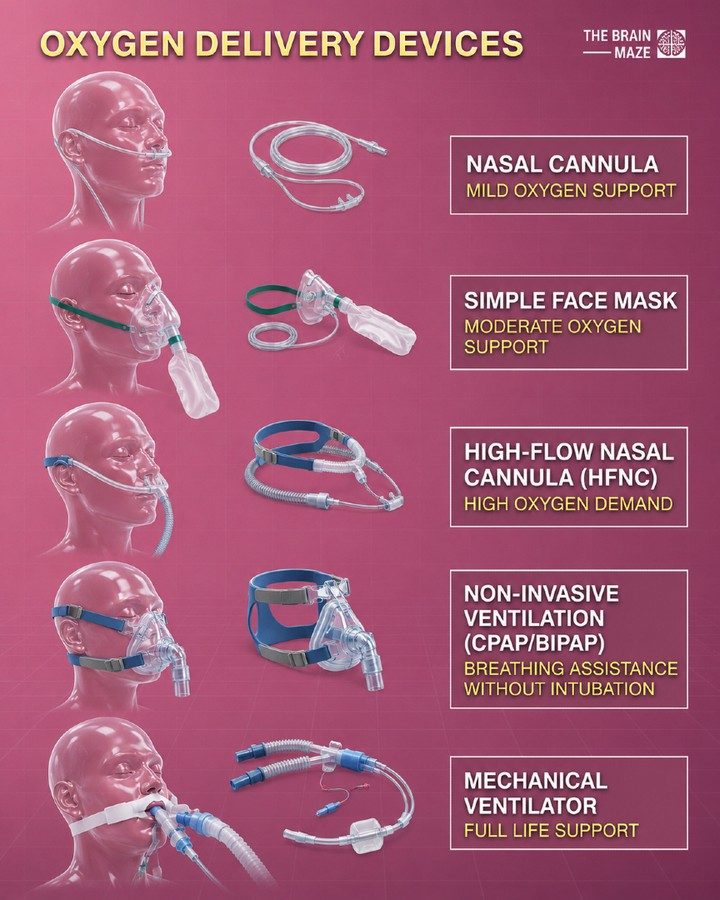
Oxygen Delivery Devices: Levels of Respiratory Support
Oxygen delivery devices play a crucial role in providing respiratory support tailored to a patient's specific needs. These devices range from simple nasal cannulas to complex mechanical ventilators, each designed to deliver varying levels of oxygen support. Understanding the different types of oxygen delivery devices and their appropriate uses is essential for effective respiratory care.
Why This Matters
Respiratory support is vital for patients with compromised breathing abilities due to various conditions, such as chronic obstructive pulmonary disease (COPD), pneumonia, or severe COVID-19. The choice of oxygen delivery device can significantly impact a patient's comfort, recovery, and overall health outcomes. Selecting the right device ensures that patients receive the appropriate level of oxygen support without unnecessary invasiveness.
Main Discussion
Nasal Cannulas
Nasal cannulas are the most basic form of oxygen delivery devices, suitable for patients with mild oxygen needs. These small, lightweight devices are inserted into the nostrils and connected to an oxygen source. Nasal cannulas deliver oxygen at low flow rates, typically between 1 to 6 liters per minute, and are ideal for patients who require supplemental oxygen but can still breathe independently.
Simple Face Masks
For patients with moderate oxygen needs, a simple face mask is often used. These masks cover the nose and mouth, delivering higher oxygen concentrations than nasal cannulas. Simple face masks can provide oxygen at flow rates up to 10 liters per minute and are particularly useful for patients with conditions that require higher oxygen saturation levels.
High-Flow Nasal Cannulas (HFNC)
High-flow nasal cannulas (HFNC) are designed for patients with high oxygen demand. These devices deliver warmed, humidified oxygen at high flow rates, typically between 30 to 60 liters per minute. The humidification and high flow rate help reduce the work of breathing and improve patient comfort, making HFNC suitable for patients with more severe respiratory conditions.
Non-Invasive Ventilation (CPAP/BiPAP)
Non-invasive ventilation (NIV) devices, such as Continuous Positive Airway Pressure (CPAP) and Bilevel Positive Airway Pressure (BiPAP), provide breathing assistance without the need for intubation. CPAP delivers a continuous flow of air at a set pressure, keeping the airways open and improving oxygenation. BiPAP alternates between two pressure levels, supporting both inhalation and exhalation, and is often used for patients with more complex respiratory needs.
Mechanical Ventilators
Mechanical ventilators are used for patients who require full life support, including those with severe respiratory failure or those who are critically ill. These devices fully support breathing through an endotracheal tube, delivering oxygen and removing carbon dioxide. Mechanical ventilators are typically used in intensive care units (ICUs) and are essential for patients who cannot breathe on their own.
Practical Tips
- Assess Patient Needs: Evaluate the patient's oxygen saturation levels, respiratory rate, and overall condition to determine the appropriate oxygen delivery device.
- Monitor Oxygen Levels: Regularly monitor the patient's oxygen saturation and adjust the flow rates or device type as needed.
- Patient Comfort: Ensure the device is comfortable and well-fitted to improve patient compliance and reduce the risk of complications.
- Hygiene and Maintenance: Clean and maintain the oxygen delivery devices regularly to prevent infection and ensure optimal performance.
- Training and Education: Provide proper training and education to healthcare providers and patients on the use and care of oxygen delivery devices.
Important Takeaways
- Different oxygen delivery devices are designed to meet varying levels of respiratory support.
- Nasal cannulas are suitable for mild oxygen needs, while simple face masks provide higher oxygen concentrations.
- High-flow nasal cannulas (HFNC) offer warmed, humidified oxygen for high oxygen demand.
- Non-invasive ventilation (CPAP/BiPAP) supports breathing without intubation.
- Mechanical ventilators provide full life support for critically ill patients.
- Choosing the right device and monitoring the patient's condition are crucial for effective respiratory care.
Conclusion
Oxygen delivery devices are essential tools in respiratory care, offering a range of support levels to meet the diverse needs of patients. From nasal cannulas for mild oxygen needs to mechanical ventilators for full life support, each device plays a critical role in improving patient outcomes. By understanding the different types of oxygen delivery devices and their appropriate uses, healthcare providers can deliver effective, patient-centered care.
Watch the Reel
Questions readers ask
What are the most common types of oxygen delivery devices?
The most common types of oxygen delivery devices include nasal cannulas, simple face masks, venturi masks, non-rebreather masks, and high flow nasal cannulas. Each device delivers oxygen at different flow rates and concentrations to meet varying patient needs, especially those with conditions like COPD or pneumonia.
How does a high flow nasal cannula differ from a simple nasal cannula?
A simple nasal cannula provides low to moderate oxygen flow rates and can deliver up to 6 liters per minute of oxygen. A high flow nasal cannula, on the other hand, can provide higher flow rates, up to 60 liters per minute, and offers heated and humidified oxygen, making it suitable for patients with more severe respiratory conditions.
What is the role of a ventilator machine in respiratory support?
A ventilator machine serves as a critical respiratory support device for patients with severe respiratory failure. It provides mechanical ventilation, taking over or supporting the patient's breathing by delivering oxygen and facilitating air exchange in the lungs. Ventilators are used in intensive care settings for patients who cannot breathe on their own.
How do CPAP and BiPAP machines support breathing?
CPAP (Continuous Positive Airway Pressure) machines provide a constant flow of oxygen at a fixed pressure, helping to keep airways open, especially for patients with sleep apnea. BiPAP (Bilevel Positive Airway Pressure) machines offer two pressure settings: one for inhalation and a lower one for exhalation, assisting patients with more complex breathing issues, such as COPD or respiratory failure.
What factors should be considered when choosing an oxygen delivery device?
When selecting an oxygen delivery device, consider the patient's specific respiratory needs, the severity of their condition, and their comfort level. Factors include the required oxygen flow rate, the desired oxygen concentration, and whether the device can be used with other respiratory support equipment, such as a humidifier or ventilator.
What are the benefits of using a high flow oxygen device?
High flow oxygen devices, such as high flow nasal cannulas, offer several benefits. They can deliver higher oxygen flow rates, provide heated and humidified oxygen to reduce discomfort, and meet the demands of patients with severe respiratory conditions, such as those in intensive care or with severe COVID-19. They also help to reduce the work of breathing and improve patient comfort.
What is the difference between a non-rebreather mask and a venturi mask?
A non-rebreather mask delivers high concentrations of oxygen, often 80-100%, by allowing fresh oxygen to flow directly into the mask and preventing the patient from rebreathing exhaled air. A venturi mask, however, delivers a fixed oxygen concentration, typically ranging from 24% to 60%, by mixing oxygen with room air to control the exact concentration of oxygen delivered to the patient.
Related deep dives
Similar reads based on topic and creator.

Recent articles
Fresh deep dives from the latest Reels we unpacked.




Comments
Be the first to comment.