Cutting vs. Bulking: Choosing the Right Foods for Your Fitness Goals
Diet plays a crucial role in achieving fitness goals, whether it be cutting (fat loss) or bulking (muscle gain). The best foods for these goals are determined by the ratio of calories, protein, and fat.
Why It Matters
Foods that are high in protein and low in calories help maintain muscle while promoting fat loss. On the other hand, calorie-dense foods support muscle growth and recovery, making them ideal for bulking. Understanding the nutritional profiles of different foods can help tailor a diet to specific fitness goals.
Beef: 96/4 vs 80/20
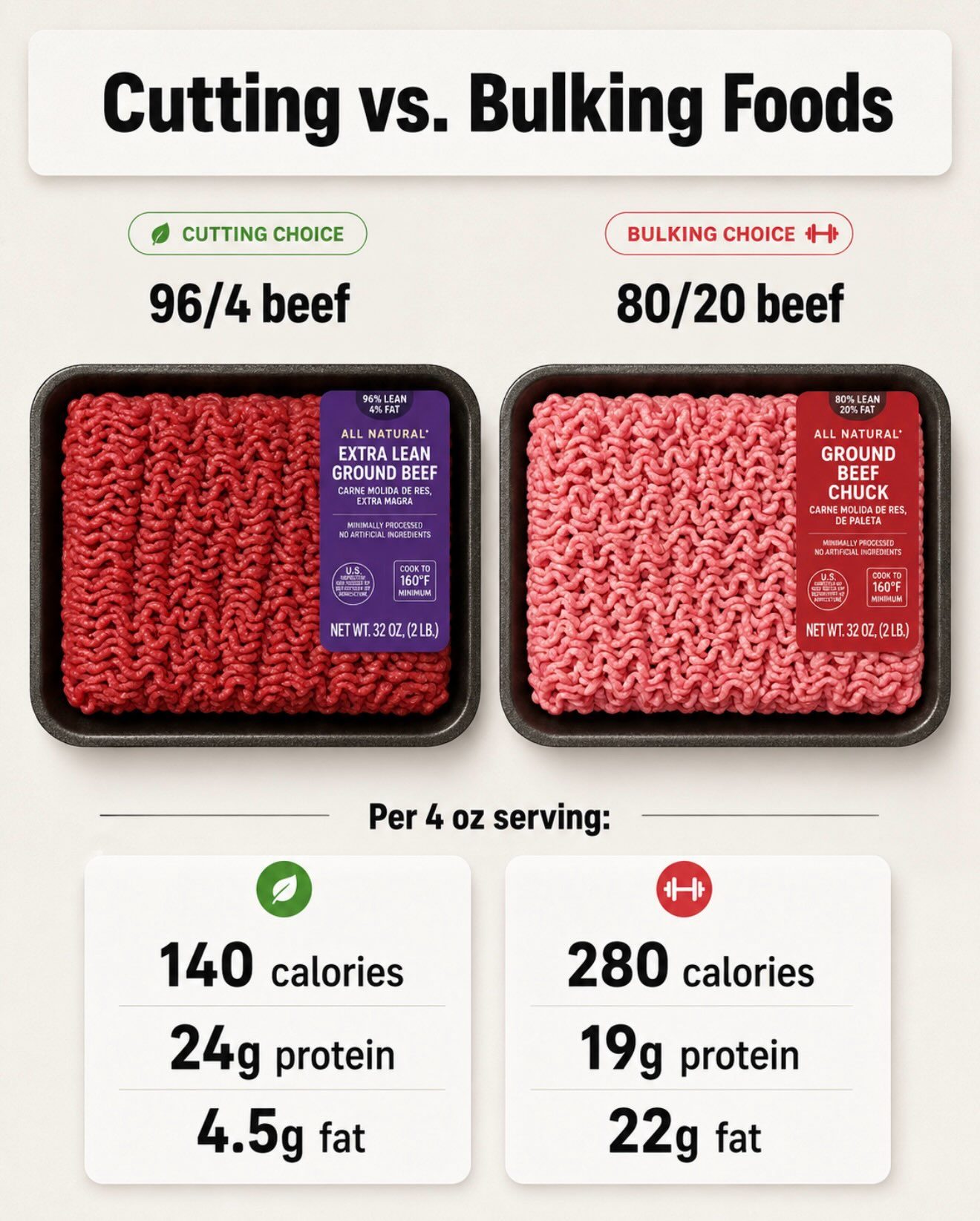
When it comes to beef, the leaner 96/4 ground beef is excellent for cutting. It has 140 calories, 24 grams of protein, and only 4.5 grams of fat per 4-ounce serving. This makes it an ideal choice for those looking to reduce calorie intake while maintaining protein levels. In contrast, 80/20 ground beef, which contains 280 calories, 19 grams of protein, and 22 grams of fat per 4-ounce serving, is better suited for bulking. The higher calorie and fat content provide the energy needed for intense workouts and muscle recovery.
Fish and Pork
For fish, Tilapia is a lean option with just 90 calories, 20 grams of protein, and 2 grams of fat per 4-ounce serving, making it perfect for cutting. On the other hand, NY strip steak offers 260 calories, 23 grams of protein, and 18 grams of fat per 4-ounce serving, providing the necessary calories and protein for bulking. For pork, pork chops are leaner with 170 calories, 24 grams of protein, and 8 grams of fat per 4-ounce serving, ideal for cutting. Conversely, pork ribs offer 210 calories, 22 grams of protein, and 13 grams of fat per 4-ounce serving, suitable for bulking.
Chicken
Chicken breast is a staple in cutting diets due to its high protein content and low calories. Chicken thighs, which contain more calories and healthy fats, are better for bulking. The higher calorie and fat content in chicken thighs support the increased energy demands of muscle-building phases.
Eggs
Whole eggs provide more nutrients, healthy fats, and calories, making them a better choice for bulking. Egg whites or egg beaters are better for cutting due to their high protein content with fewer calories.
Practical Tips
- Meal Planning: Plan meals based on your fitness goals. Choose foods that align with your calorie and protein needs.
- Portion Control: Pay attention to portion sizes to ensure you're meeting your calorie and macronutrient goals.
- Balanced Diet: Incorporate a variety of foods to ensure you're getting all the necessary nutrients.
- Tracking: Use a fitness app or journal to track your food intake and progress.
Important Takeaways
- Food choices should align with your fitness goals.
- Lean proteins and low-calorie options are best for cutting.
- Calorie-dense foods support muscle growth and recovery, making them ideal for bulking.
- The same food can be beneficial or detrimental depending on your goals and overall diet.
Conclusion
Nutrition is a key component of any fitness journey, and understanding how to tailor your diet to your goals can make a significant difference in your results. Use this guide to make informed food choices that support your fitness aspirations.
Watch the Reel
Questions readers ask
What are the best foods for a cutting diet?
For a cutting diet, focus on foods that are high in protein and low in calories. Lean proteins like chicken breast, turkey, and lean ground beef are great choices. Fish, such as salmon and tuna, are also excellent due to their high protein content and healthy fats. Vegetables and whole grains can complement your meals, providing essential nutrients without excess calories.
Which foods are ideal for bulking?
When bulking, you need calorie-dense foods that support muscle growth. Foods like beef (80/20 ground beef), pork, and fatty fish (like salmon) are beneficial. Whole milk, nuts, and whole grains can also help increase your calorie intake. These foods provide a good balance of protein, healthy fats, and carbohydrates necessary for muscle recovery and growth.
How does the fat content in beef affect cutting and bulking?
The fat content in beef plays a significant role in both cutting and bulking. For cutting, opt for leaner cuts like 96/4 ground beef, which has lower fat content (4.5 grams per 4-ounce serving) and is better for maintaining a calorie deficit. For bulking, higher-fat cuts like 80/20 ground beef provide more calories and healthy fats, aiding in muscle growth and recovery.
What are some budget-friendly foods for bulking?
Bulking doesn't have to break the bank. Budget-friendly options include canned tuna and chicken, eggs, whole milk, and rice. These foods are high in protein or calories and can be incorporated into various meals to support muscle gain. Pork is another affordable option that provides both protein and healthy fats.
How can fish be incorporated into a cutting diet?
Fish is a versatile and healthy option for a cutting diet. Opt for lean fish like tilapia or cod, which are low in calories and high in protein. Fatty fish like salmon can also be included due to their healthy fats, which support overall health. These fish can be grilled, baked, or poached to keep meals low in fat and calories.
What makes chicken breast a good choice for bulking?
Chicken breast is a versatile protein source for bulking due to its high protein content and low fat. It can be prepared in various ways to fit different meal plans. However, for bulking, consider adding healthy fats through cooking methods like pan-searing with olive oil or combining it with high-calorie sides like whole grains and vegetables.
Recent articles
Fresh deep dives from the latest Reels we unpacked.




Comments
Be the first to comment.