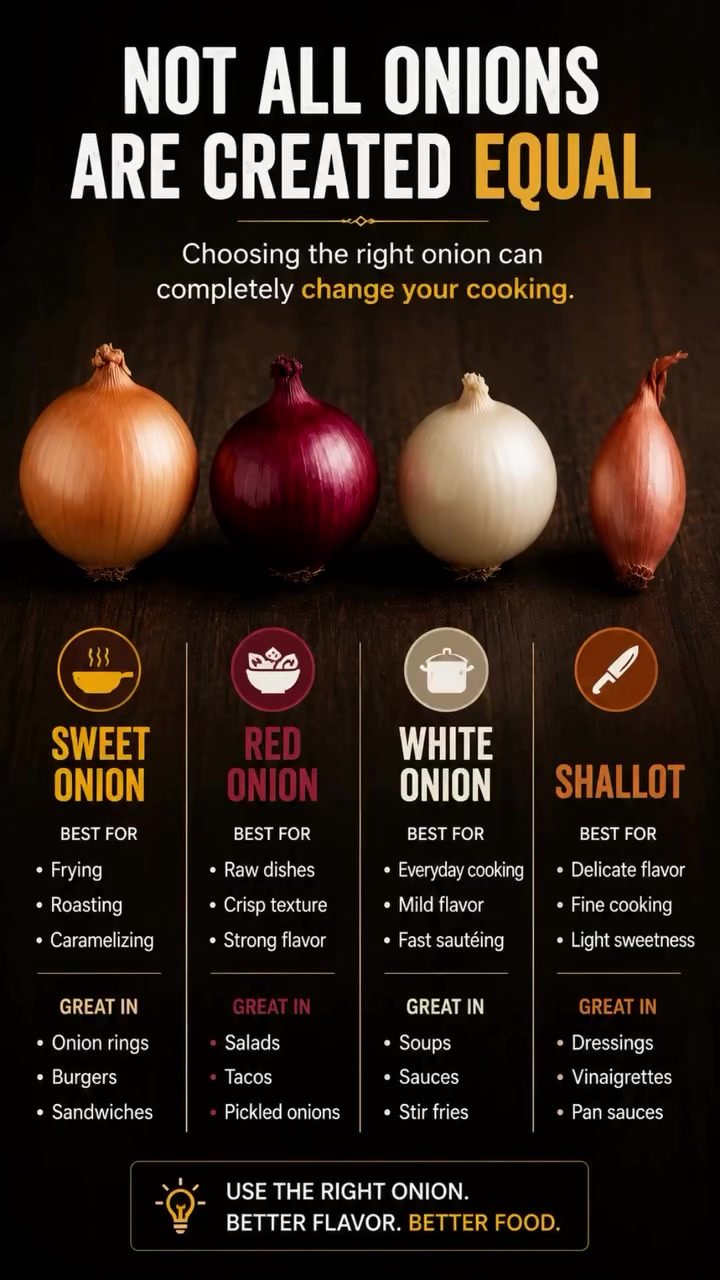
Choosing the Right Onion for Your Recipe
When you're in the kitchen, the type of onion you choose can significantly impact the flavor, texture, and overall quality of your dish. Whether you're sautéing, caramelizing, or adding a slight kick to a raw salad, knowing which onion to use can transform your cooking experience. Here’s a comprehensive guide to help you select the best onion for your culinary adventures.
Why This Matters
Onions are a staple in many kitchens, but not all onions are created equal. Each variety has a unique flavor profile, texture, and best-use cases. Understanding these differences can elevate your cooking, making your dishes more flavorful and enjoyable. By choosing the right onion, you can enhance the overall taste and quality of your meals, whether you're preparing a simple salad or a complex stew.
Onion Types and Uses
Sweet Onions
Sweet onions are known for their mild, sweet flavor, making them a versatile choice for many dishes. They are best for:
- Frying: Their sweetness adds a unique flavor when fried.
- Roasting: Roasting sweet onions brings out their natural sugars, creating a caramelized, delicious taste.
- Caramelizing: Ideal for dishes that require caramelization, such as French onion soup.
- Onion Rings: Perfect for making crispy onion rings.
- Burgers and Sandwiches: Adds a subtle sweetness and crispiness to your favorite sandwiches and burgers.
Red Onions
Red onions have a vibrant color and a crisp, sharp flavor that adds a delightful crunch to dishes. They are perfect for:
- Raw Dishes: Their crisp texture and mild pungency make them great for salads and salsas.
- Salads: Perfect for adding a crisp bite and a pop of color to any salad.
- Tacos and Sandwiches: Adds a nice crunch and a bit of heat.
- Pickled Onions: Ideal for pickling, as their flavor profile complements the pickling process beautifully.
White Onions
White onions are known for their pungent flavor, which mellows out with cooking. They are excellent for:
- Everyday Cooking: Versatile and commonly used in a variety of dishes.
- Soups and Sauces: Adds a robust flavor to soups and sauces.
- Stir-Fries: Provides a nice bite and flavor to stir-fried dishes.
- Curries and Stews: Enhances the depth of flavor in curries and stews.
Shallots
Shallots have a milder, more delicate flavor compared to other onions. They are often preferred for:
- Fine Cooking: Excellent for dishes where a subtle onion flavor is desired.
- Dressings and Vinaigrettes: Adds a rich, mild onion flavor.
- Pan Sauces and Gourmet Sauces: Perfect for sauces where a delicate onion note is needed.
Practical Tips
How to Choose the Best Onion
When shopping for onions, consider the following tips to ensure you get the best quality:
- Color and Firmness: Look for onions that are firm and free of blemishes. A slight sheen on the skin is a good indicator of freshness.
- Smell and Texture: Smell the onions gently. They should have a mild, onion-y aroma but not be overpowering. Avoid onions with a strong, pungent smell, as they may be old or damaged.
Storing Onions for Maximum Freshness
Proper storage can extend the shelf life of your onions. Follow these tips:
- Room Temperature: Store onions in a cool, dry, well-ventilated area, away from direct sunlight.
- Avoid Moisture: Keep them away from moisture to prevent mold growth.
- Refrigerate: If you must refrigerate (not recommended for long-term storage), use a perforated plastic bag to maintain airflow.
Preparing Onions for Cooking
Onions can be prepared in various ways, depending on the dish. Here are some common methods:
- Chopping: Use a sharp knife and chop the onions finely for a uniform texture.
- Slicing: Slicing onions thinly is ideal for dishes like salads and stir-fries.
- Grating: Grated onions can add a fine texture and distribute flavor evenly.
- Peeled Whole: For roasting or caramelizing, remove the outer skin to expose the inner layers.
Important Takeaways
Choosing the right onion can significantly enhance the flavors and textures in your cooking. Each type of onion has its unique characteristics and best-use cases:
- Sweet onions are versatile for frying, roasting, and caramelizing.
- Red onions add a crisp, vibrant flavor to raw dishes and salads.
- White onions are ideal for everyday cooking, soups, and sauces.
- Shallots are perfect for fine cooking, dressings, and sauces.
By understanding these differences, you can select the best onion for your recipe, ensuring optimal flavor and texture.
Conclusion
Onions are a kitchen staple, but choosing the right type can significantly impact the outcome of your dish. Whether you're making a simple salad or a complex stew, selecting the appropriate onion will enhance the overall taste and quality of your meal. With this guide, you’ll be well-equipped to make informed decisions in the kitchen, transforming your cooking experience one onion at a time.
Watch the Reel
Questions readers ask
What are the main types of onions available for cooking?
There are several main types of onions available for cooking, including sweet onions, red onions, white onions, yellow onions, and shallots. Each type offers a unique flavor profile and texture, making them suitable for different culinary uses.
Which onion is best for caramelizing?
Sweet onions, such as Vidalia or Walla Walla, are excellent for caramelizing due to their high sugar content. They develop a rich, sweet flavor when cooked slowly over low heat, making them ideal for dishes like French onions or caramelized onion jam.
What is the difference between shallots and onions?
Shallots have a milder, more delicate flavor compared to regular onions, and a slightly sweet taste. They are often used in sauces and vinaigrettes, and are also great if sautéing for a shorter period. Onions, on the other hand, have a stronger, more pungent flavor and are more versatile in a wide range of dishes.
Which onions are best for adding a sharp bite to salads?
Red onions are perfect for adding a crisp, sharp bite to salads. Their vibrant color also adds visual appeal to dishes. To mellow out their sharpness, you can soak them in cold water or mix them with vinegar before adding to your salad.
What are the best onions for frying?
Yellow or white onions are typically the best for frying due to their strong flavor and ability to hold up well when cooked at high temperatures. They develop a nice golden color and crispy texture when fried, making them great for dishes like onion rings or fried onions as a topping.
Which onions should I use for soups and stews?
For soups and stews, yellow or white onions are usually the best choice. They have a robust flavor that stands up well to long cooking times and blends nicely with other ingredients. Their pungent flavor adds depth to hearty dishes.
What is the best onion to use in sandwiches?
Red onions are often the best choice for sandwiches due to their crisp texture and mild, sweet flavor when thinly sliced. Shallots can also be used for a more subtle, milder flavor. Both options can be marinated with vinegar or lemon juice to reduce their pungency and add extra freshness to your sandwich.
Related deep dives
Similar reads based on topic and creator.

Recent articles
Fresh deep dives from the latest Reels we unpacked.




Comments
Be the first to comment.