Internet Cost Comparison
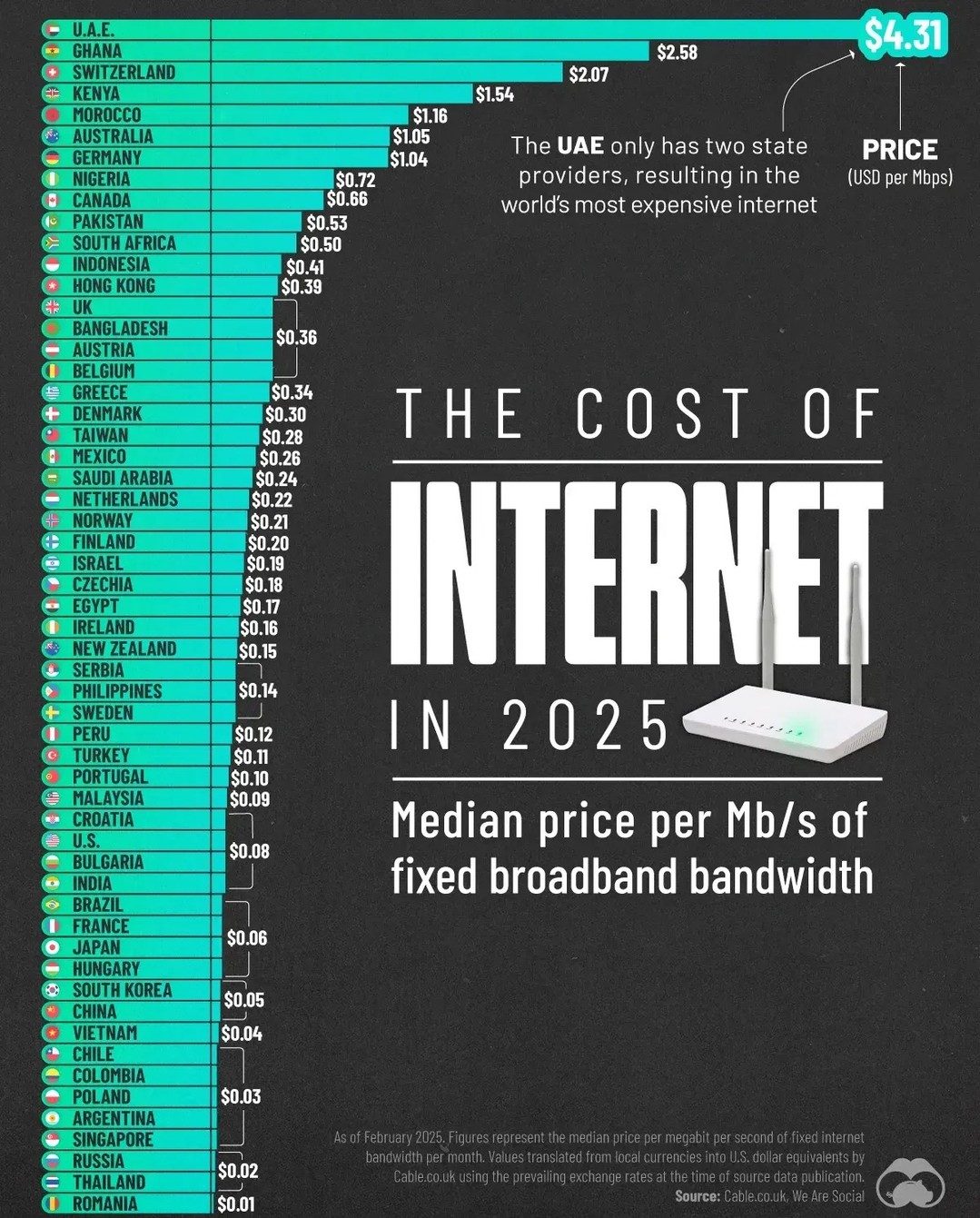
Fixed broadband internet costs vary dramatically around the world, with the United Arab Emirates (UAE) leading as the most expensive at $4.31 per Mbps in 2025. Conversely, Romania offers one of the most affordable options at just $0.01 per Mbps. This significant disparity underscores the global inequality in access to digital infrastructure.
Why This Matters
The cost of internet access is a critical factor in digital inclusion. High costs can limit access to essential online services, such as education, healthcare, and employment opportunities. Understanding the global landscape of internet costs helps identify areas where improvements are needed and where investments in digital infrastructure could have the most significant impact.
Main Discussion
Global Internet Cost Landscape
Most Expensive Countries
UAE: With internet costs reaching $4.31 per Mbps, the UAE tops the list of the most expensive countries for fixed broadband. This high cost can be attributed to factors such as limited competition, high taxes, and regulatory constraints.
Switzerland: Known for its high standard of living, Switzerland also has high internet costs, at $2.58 per Mbps. The country's stringent regulations and high operational costs contribute to this expense.
Ghana: Ghana's internet cost of $2.07 per Mbps is surprising, given its lower cost of living compared to Switzerland. However, the country's infrastructure challenges and limited competition in the telecommunications sector contribute to this high cost.
Most Affordable Countries
Romania: At just $0.01 per Mbps, Romania offers some of the cheapest internet access in the world. Eastern Europe, in general, leads in affordability, with countries like Bulgaria, Czechia, and Turkey also offering low internet costs.
Vietnam: Vietnam's internet cost of $0.04 per Mbps makes it one of the most affordable countries for internet access. The government's investment in digital infrastructure and competition among internet service providers have driven down costs.
Bangladesh: With internet costs at $0.36 per Mbps, Bangladesh is another affordable option. The country's focus on digital inclusion and government initiatives to improve internet access have contributed to this affordability.
Factors Influencing Internet Costs
Several factors influence the cost of internet access around the world. These include:
Infrastructure Development: Countries with well-developed digital infrastructure tend to offer more affordable internet access. Investment in fiber optic cables, data centers, and other necessary infrastructure can significantly reduce costs.
Competition: In countries with high competition among internet service providers, costs tend to be lower. Service providers compete on price and quality, driving down costs for consumers.
Regulation and Taxation: Regulatory policies and taxation also play a significant role in internet costs. Countries with stringent regulations and high taxes on internet services tend to have higher costs.
Economic Factors: The overall economic status of a country can influence internet costs. Countries with higher disposable income may be able to afford more expensive internet services, while those with lower incomes may rely on more affordable options.
Regional Trends
Eastern Europe
Eastern Europe leads in internet affordability, with countries like Romania, Bulgaria, and Czechia offering some of the lowest costs in the world. This affordability can be attributed to government initiatives to improve digital inclusion, competition among service providers, and investment in digital infrastructure.
Middle East and North Africa
The Middle East and North Africa (MENA) region, particularly the UAE and Saudi Arabia, have some of the highest internet costs. Factors such as limited competition, regulatory constraints, and high operational costs contribute to these high expenses.
Asia
Asia presents a mixed landscape of internet costs. Countries like Vietnam and Bangladesh offer affordable internet access, while others, such as Hong Kong and Singapore, have higher costs. Infrastructure development, competition, and regulatory policies influence these variations.
Africa
Africa's internet costs vary widely, with countries like Ghana and South Africa facing higher costs. Limited competition, infrastructure challenges, and regulatory constraints contribute to these high expenses. However, countries like Kenya and Egypt have made significant strides in improving internet affordability through government initiatives and infrastructure development.
Practical Tips
For individuals and businesses looking to optimize internet costs, consider the following tips:
- Compare Providers: Regularly compare different internet service providers to ensure you are getting the best deal. Look for promotions, discounts, and bundle offers.
- Bundle Services: Bundling internet with other services, such as cable TV or mobile plans, can often result in significant savings.
- Check for Government Subsidies: Many countries offer government subsidies or programs to help lower-income individuals or families afford internet access. Research available options in your area.
- Monitor Data Usage: Keep track of your data usage to avoid overage charges. Many service providers offer tools and notifications to help you stay within your data limits.
- Consider Alternative Services: If traditional broadband is too expensive, consider alternative services like mobile broadband or satellite internet. These options may offer more affordable plans.
- Invest in Infrastructure: For businesses, investing in your own digital infrastructure, such as fiber optic cables or data centers, can reduce long-term internet costs.
Important Takeaways
The Digital Divide
The significant disparity in internet costs highlights the digital divide, where some regions have access to affordable, high-speed internet, while others struggle with high costs and limited access. Addressing this divide is crucial for ensuring equal opportunities in education, employment, and economic growth.
Investment in Digital Infrastructure
Investing in digital infrastructure can significantly reduce internet costs. Governments, businesses, and international organizations should prioritize infrastructure development to improve digital inclusion and affordability.
Role of Regulation and Competition
Regulatory policies and competition among service providers play a critical role in determining internet costs. Governments should implement policies that promote competition and reduce regulatory barriers to lower internet costs.
Global Collaboration
Addressing the global disparity in internet costs requires collaboration among countries. Sharing best practices, technology, and resources can help bridge the digital divide and ensure that everyone has access to affordable internet.
Conclusion
The cost of fixed broadband internet varies dramatically around the world, with the UAE having the most expensive access and Romania offering some of the cheapest. Understanding the factors that influence these costs and the regional trends can help identify areas for improvement and investment. By promoting competition, investing in infrastructure, and implementing supportive regulatory policies, countries can work towards more affordable and accessible internet for all.
Watch the Reel
Related deep dives
Similar reads based on topic and creator.


Recent articles
Fresh deep dives from the latest Reels we unpacked.




Comments
Be the first to comment.