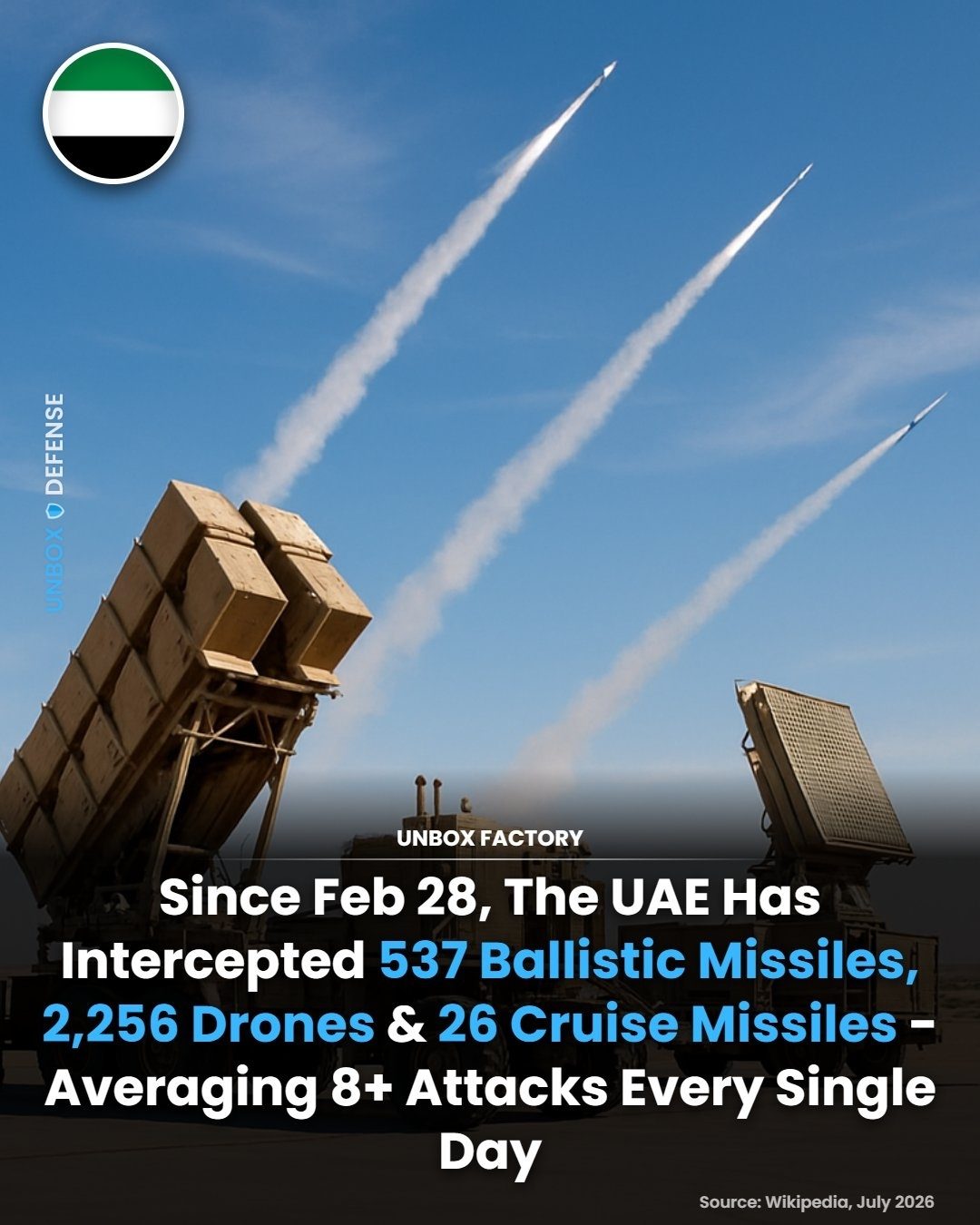
Ballistic Missile Interception in the UAE: A Growing Aerial Threat
The United Arab Emirates (UAE) has been at the forefront of ballistic missile interception, with a significant number of intercepted missiles and drones highlighting the escalating aerial threats in the region. The sustained attacks, averaging more than eight attempts per day, make the UAE one of the most active environments for missile defense operations.
Context / Why this matters
The UAE's active missile defense environment is a critical point of interest for military strategists and defense analysts worldwide. The country's layered air-defense network, which includes systems like Patriot and THAAD, along with advanced radar and interceptor technologies, is designed to engage a variety of threats, including ballistic missiles, cruise missiles, and unmanned aerial vehicles (UAVs). Understanding the UAE's experience provides valuable insights into the evolving nature of modern military operations and the increasing significance of drone and missile warfare.
The Scope of the Threat
Since February 28, 2026, the UAE has intercepted a staggering 537 ballistic missiles, 2,256 drones, and 26 cruise missiles. These numbers underscore the intensity and frequency of aerial attacks the country faces. The average of 8+ attacks per day highlights the relentless nature of these threats, requiring a robust and adaptable defense strategy.
Missile Defense Systems in the UAE
The UAE employs a multi-layered defense approach to counteract the diverse range of aerial threats. Key components of this system include:
Patriot Missile Defense System
The Patriot system is a surface-to-air missile (SAM) system designed to intercept tactical ballistic missiles, cruise missiles, and advanced aircraft. It plays a crucial role in the UAE's defense strategy by providing a high-altitude interception capability.
Terminal High Altitude Area Defense (THAAD)
THAAD is a long-range, high-altitude missile defense system designed to intercept ballistic missiles during their terminal phase. Its deployment in the UAE enhances the country's ability to defend against both short and medium-range ballistic missiles.
Advanced Radar and Interceptor Technologies
In addition to the Patriot and THAAD systems, the UAE utilizes advanced radar and interceptor technologies to detect and engage threats. These systems provide early warning and tracking capabilities, enabling timely responses to incoming threats.
The Role of Drones in Modern Warfare
Drones, or unmanned aerial vehicles (UAVs), have become a defining feature of modern military operations. Their use in warfare has evolved significantly, from reconnaissance and surveillance to offensive operations. The UAE's experience with intercepting 2,256 drones underscores the growing threat posed by UAVs in contemporary conflicts.
Practical Tips for Enhancing Missile Defense Capabilities
Integration of Advanced Technologies
To enhance missile defense capabilities, it is essential to integrate advanced technologies such as artificial intelligence (AI) and machine learning (ML). These technologies can improve threat detection, tracking, and interception by analyzing vast amounts of data in real-time.
Multi-Layered Defense Approach
A multi-layered defense approach, as employed by the UAE, is crucial for effective missile defense. This strategy involves deploying a combination of short, medium, and long-range interceptors, along with advanced radar systems. The integration of these systems ensures comprehensive coverage against a wide range of aerial threats.
Collaboration and Information Sharing
Collaboration and information sharing among nations and defense agencies are vital for effective missile defense. Sharing intelligence, best practices, and technological advancements can significantly enhance the collective ability to counter aerial threats.
Continuous Training and Simulation
Regular training and simulation exercises are essential for maintaining a high level of readiness and proficiency among defense personnel. These exercises help in identifying and addressing potential vulnerabilities in the defense system.
Investment in Research and Development
Investing in research and development (R&D) is crucial for staying ahead of evolving threats. Continuous innovation in missile defense technologies ensures that defense systems remain effective against emerging challenges.
Important Takeaways
The UAE's experience with ballistic missile interception highlights several critical takeaways for the defense community:
- The Growing Threat of Drones: Drones have become a significant threat in modern warfare, requiring robust and adaptable defense strategies.
- The Importance of Multi-Layered Defense: A multi-layered defense approach, integrating short, medium, and long-range interceptors, is essential for comprehensive threat coverage.
- The Role of Advanced Technologies: Advanced technologies, such as AI and ML, play a crucial role in enhancing missile defense capabilities.
- The Need for Collaboration and Information Sharing: Collaboration and information sharing among nations and defense agencies are vital for effective missile defense.
Conclusion
The UAE's active missile defense environment serves as a stark reminder of the growing aerial threats in the region. The country's multi-layered defense approach, integrating advanced systems like Patriot and THAAD, provides a robust framework for countering these threats. As drone and missile warfare continue to evolve, it is essential to stay vigilant and adaptable, investing in advanced technologies and fostering collaboration to ensure effective defense against emerging challenges.
Watch the Reel
Questions readers ask
Why is the UAE a hotspot for ballistic missile intercepts?
The UAE's strategic location and geopolitical situation make it a frequent target of aerial threats. Since 2026, the country has intercepted over 537 ballistic missiles and thousands of drones, averaging more than eight interception attempts per day.
What types of missile defense systems does the UAE employ?
The UAE utilizes a multi-layered defense strategy, including advanced systems like the Patriot and THAAD. These systems, along with other cutting-edge radar and interceptor technologies, are designed to counter a wide range of threats, from ballistic missiles to cruise missiles and drones.
How does the UAE's missile defense strategy help in protecting the country?
The UAE's defense strategy is crucial for safeguarding the country against the escalating aerial threats. By employing a layered approach with systems like Patriot and THAAD, the UAE can effectively engage and intercept various types of incoming threats, providing comprehensive protection.
What role do systems like Patriot and THAAD play in the UAE's defense?
Patriot and THAAD systems are integral to the UAE's missile defense. The Patriot system is designed to intercept tactical ballistic missiles, cruise missiles, and advanced aircraft, while the THAAD system specializes in high-altitude interception of ballistic missiles, providing a robust defense against a variety of aerial threats.
How does the UAE handle the daily missile intercepts?
The UAE's advanced air-defense network is designed to handle the high frequency of daily intercepts. The country's defense strategy includes a combination of early warning radar, interceptor missiles, and a coordinated response system that allows for effective and efficient interception of incoming threats.
What other types of aerial threats does the UAE's defense strategy counter?
In addition to ballistic missiles, the UAE's defense strategy is equipped to counter a variety of aerial threats, including drones and cruise missiles. The multi-layered approach ensures that the country is well-prepared to handle diverse and evolving threats in the region.
What makes the UAE's missile defense strategy unique?
The UAE's missile defense strategy stands out due to its multi-layered approach and the integration of advanced technologies. The combination of systems like Patriot and THAAD, along with advanced radar and interceptor technologies, enables the UAE to engage and intercept a wide range of threats effectively.
Recent articles
Fresh deep dives from the latest Reels we unpacked.




Comments
Be the first to comment.