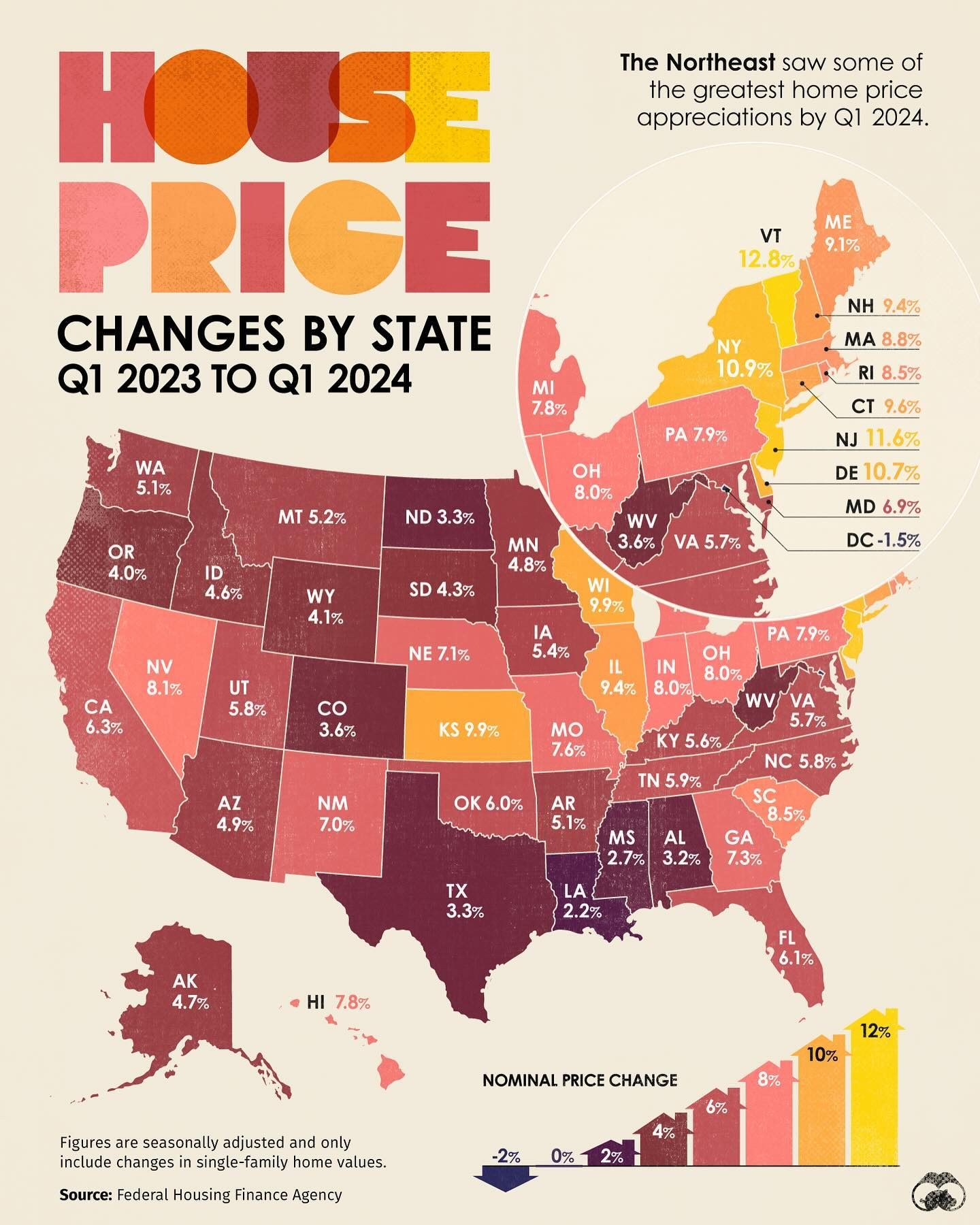
U.S. Home Price Appreciation in 2024: State-by-State Breakdown
The housing market in the U.S. has seen significant shifts in 2024, with home prices rising by 6.6% annually in the first quarter. This marks the fastest rate of increase since the fourth quarter of 2022. Vermont led the way with a staggering 12.8% increase in home prices, driven in part by a dramatic drop in home inventory to its lowest point in over a decade. This dynamic shift in the housing market has been vividly documented by the Federal Housing Finance Agency (FHFA).
Why This Matters
Understanding the fluctuations in home prices is crucial for homeowners, buyers, and investors. These changes can impact mortgage rates, housing affordability, and overall economic stability. The latest data from the FHFA provides valuable insights into which states are experiencing the most significant growth and which are lagging behind. This information can guide decisions about where to buy, sell, or invest in real estate.
State-by-State Analysis
The Northeast: Leading the Charge
The Northeast region has seen some of the most substantial home price appreciations. New Jersey took the top spot with an impressive 11.6% increase, followed closely by Connecticut at 9.6% and Maine at 9.1%. The Northeast's appeal, fueled by its robust job market, cultural attractions, and high-quality education systems, has made it a hotspot for homebuyers.
The West: Mixed Results
The Western states present a mixed bag of results. States like Washington saw a 5.1% increase, while others like Oregon and Nevada experienced more moderate gains of 4.0% and 6.3% respectively. California, known for its volatile housing market, saw a more modest 4.7% increase. This variability reflects the diverse economic conditions and housing demands across the region.
The South and Midwest: Steady Growth
Southern States
In the South, states like Florida, Georgia, and North Carolina saw steady growth, with Florida leading the way at 8.1%. These states have benefited from an influx of new residents, driven by factors such as mild weather, lower taxes, and a growing job market. The South's affordability and quality of life continue to attract new homebuyers, contributing to a steady rise in home prices.
Midwest
The Midwest also showed steady growth, with states like Minnesota, Iowa, and Kansas seeing increases ranging from 5.4% to 9.9%. This region's stability and affordability have made it an attractive option for both first-time homebuyers and those looking to downsize. The Midwest's strong job market, particularly in sectors like healthcare, technology, and manufacturing, has also contributed to the rise in home prices.
Notable Decreases and Stability
Washington, D.C.
Washington, D.C., bucked the national trend with a 1.5% decrease in home prices. This decline could be attributed to a variety of factors, including changes in federal policies, economic fluctuations, and shifts in the local job market. Despite the decrease, D.C. remains a desirable location for many, thanks to its vibrant cultural scene, strong job market, and high standard of living.
Other Areas
Other states, such as Alaska, Hawaii, and Montana, saw modest increases ranging from 4.7% to 7.8%. While these increases are lower than some other regions, they still reflect a growing demand for housing in these areas. Factors such as natural beauty, outdoor recreation, and unique cultural experiences continue to attract new residents to these states.
Practical Tips for Navigating the Market
Stay Informed
Regularly review reports from the FHFA and other reliable sources to stay updated on market trends. Understanding the specific dynamics of your target area can help you make better-informed decisions.
Work with Local Experts
Local real estate agents and financial advisors have invaluable insights into the nuances of the market. Partnering with these experts can provide you with a deeper understanding of the factors driving price changes in your area.
Consider Long-Term Goals
When buying a home, think beyond immediate needs and consider long-term goals. Factors such as job security, family growth, and future market trends can significantly impact your decision.
Important Takeaways
Regional Variability
Home prices in the U.S. are highly variable by region. States in the Northeast and South saw the most significant increases, while areas like the Midwest and West experienced more modest growth. Understanding these regional differences is key to navigating the market effectively.
Data-Driven Decisions
Rely on reliable data sources, such as the FHFA, to make informed decisions. This data can provide valuable insights into market trends, helping you identify opportunities and avoid potential pitfalls.
Market Dynamics
Economic conditions, job markets, and regional attractiveness all play crucial roles in home price appreciation. Staying attuned to these factors can help you anticipate market changes and make strategic decisions.
Conclusion
The U.S. housing market in 2024 shows a complex landscape of growth and stability. States like Vermont, New Jersey, and Florida are experiencing significant increases, while others, like Washington, D.C., are seeing declines. Understanding these trends can help homeowners, buyers, and investors make informed decisions. By staying informed, working with local experts, and considering long-term goals, you can navigate the market with greater confidence and success.
Watch the Reel
Questions readers ask
Which state experienced the highest home price increase in 2024?
Vermont led the nation with a 12.8% increase in home prices in 2024. This significant rise was partly due to a sharp decrease in housing inventory, which reached its lowest point in over a decade.
How did the Northeast region fare in terms of home price growth in 2024?
The Northeast showed robust growth in 2024, with home prices increasing steadily. This regional trend contributed to the overall national increase of 6.6% in home prices.
What were the trends in the West and the South/Midwest regions in 2024?
The West and the South/Midwest regions exhibited diverse and steady trends in home price changes. While some states in these regions saw notable increases, others experienced more modest growth, contributing to the varied landscape of the 2024 housing market.
Why is it important to track annual home price changes?
Tracking annual home price changes is essential for understanding mortgage rates, housing affordability, and economic stability. These changes can greatly influence decisions made by homeowners, buyers, and investors.
What drove the 12.8% increase in home prices in Vermont?
The 12.8% increase in Vermont's home prices was driven by a significant drop in housing inventory, which reached its lowest point in over a decade. This limited supply led to higher demand and subsequently higher prices.
What does the 6.6% annual increase in U.S. home prices mean for buyers and sellers?
The 6.6% annual increase in U.S. home prices indicates a strong market for sellers, who may see higher returns on their investments. For buyers, this means increased competition and potentially higher costs, making it crucial to stay informed about local trends.
How does the 2024 home price increase compare to previous years?
The 6.6% increase in 2024 marked the fastest rate of growth since the fourth quarter of 2022. This acceleration highlights the dynamic nature of the housing market and the need for up-to-date analysis.
Recent articles
Fresh deep dives from the latest Reels we unpacked.




Comments
Be the first to comment.