U.S. Uranium Imports and Energy Dependence
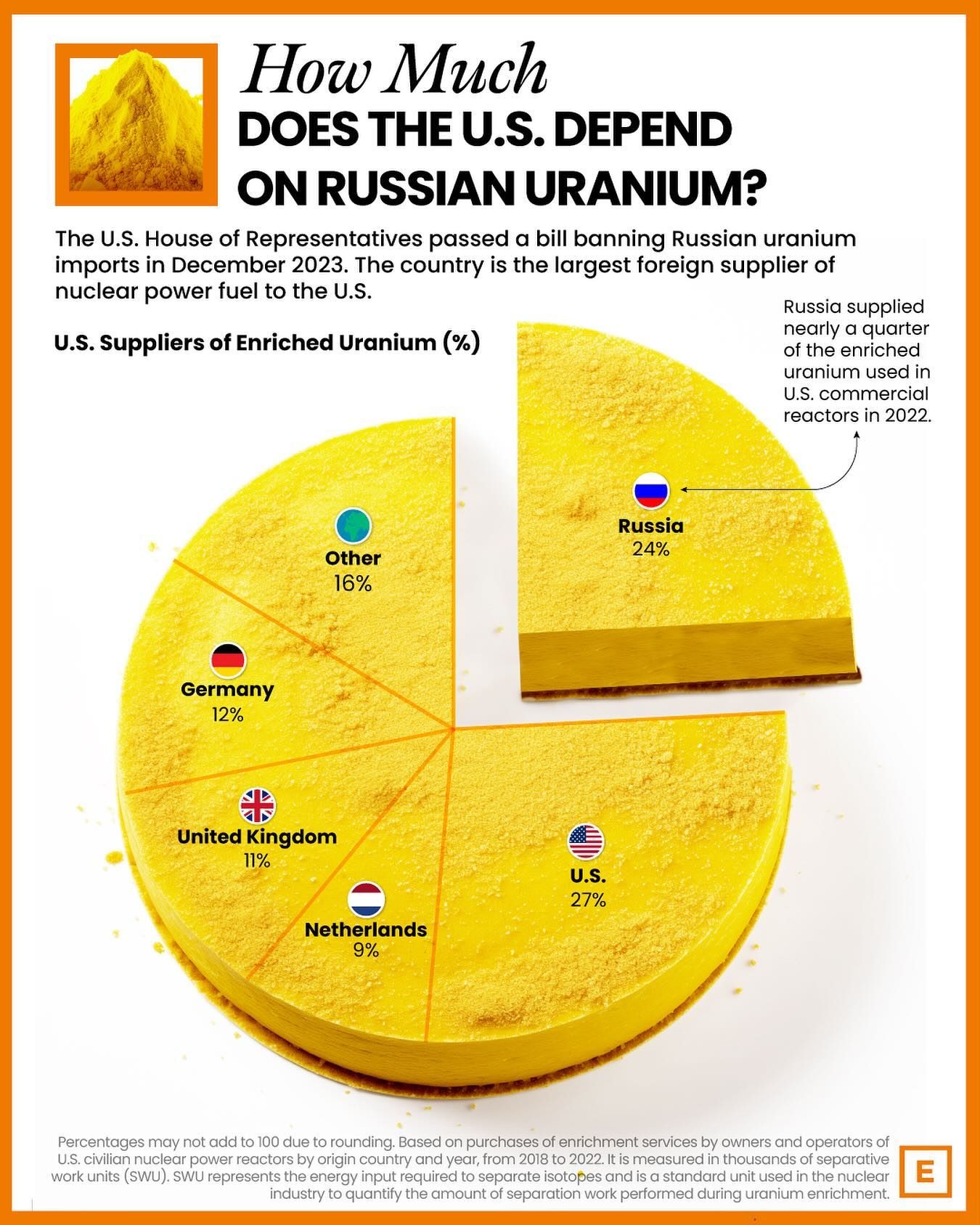
Nineteen percent of electricity in the United States is generated by nuclear power plants, which rely on enriched uranium as fuel. A significant portion of this uranium is sourced from Russia. In 2022, Russia supplied nearly a quarter of the enriched uranium used in U.S. commercial nuclear reactors. This dependency raises critical questions about energy security and the potential impact of geopolitical tensions.
Context / Why This Matters
The U.S. energy landscape is complex, with various sources contributing to the nation's power grid. Nuclear energy plays a crucial role in this mix, providing a steady, low-emission source of power. However, the reliance on foreign suppliers, particularly Russia, introduces vulnerabilities. Geopolitical tensions, trade disputes, and potential bans on Russian uranium imports can disrupt the supply chain, affecting the stability of the U.S. energy sector. Understanding the extent of this dependency is essential for policymakers and energy stakeholders as they navigate future decisions.
Main Discussion
The Current State of Uranium Imports
The U.S. relies on foreign suppliers for a substantial portion of its enriched uranium. According to data from the United States Energy Information Administration (EIA), Russia was the largest foreign supplier in 2022, providing 24% of the enriched uranium used in U.S. commercial reactors. Other significant suppliers include Germany (12%), the United Kingdom (11%), and the Netherlands (9%). Domestically, the U.S. produced 27% of the uranium it used.
Geopolitical Implications
The dependency on Russian uranium is a sensitive issue, especially in the context of ongoing geopolitical tensions. The U.S. House of Representatives has passed a bill aimed at banning foreign uranium imports, highlighting the potential risks associated with reliance on foreign suppliers. Such a ban could force the U.S. to diversify its uranium sources or increase domestic production to ensure a stable supply.
Domestic Production and Alternatives
Increasing domestic uranium production is one potential solution to reduce reliance on foreign suppliers. The U.S. has significant uranium reserves, and boosting domestic production could enhance energy security. However, this approach comes with its own set of challenges, including environmental concerns, regulatory hurdles, and the cost of developing new mining and processing facilities.
Another alternative is to diversify uranium imports by sourcing from other countries. This strategy could mitigate the risks associated with reliance on a single supplier. However, it requires establishing new trade agreements and infrastructure to facilitate the import process.
Technological Advancements
Technological advancements in nuclear energy could also play a role in reducing dependency on foreign uranium. Innovations in nuclear reactor designs, fuel efficiency, and waste management could make nuclear power more sustainable and less reliant on imported uranium. Research and development in these areas are crucial for the future of nuclear energy in the U.S.
Practical Tips
For Policymakers
- Diversify Suppliers: Encourage trade agreements with multiple countries to diversify uranium imports and reduce reliance on any single supplier.
- Incentivize Domestic Production: Provide incentives for domestic uranium mining and processing to boost production and reduce import dependency.
- Invest in Research and Development: Support technological advancements in nuclear energy to enhance sustainability and efficiency.
For Energy Stakeholders
- Assess Supply Chain Risks: Evaluate the risks associated with current supply chains and develop contingency plans for potential disruptions.
- Explore Alternative Energy Sources: Consider diversifying energy portfolios to include a mix of renewable and non-renewable sources, reducing reliance on nuclear power.
- Engage in Policy Discussions: Participate in policy discussions to influence decisions that affect the energy sector and ensure a stable supply of uranium.
Important Takeaways
- The U.S. relies on foreign suppliers for a significant portion of its enriched uranium, with Russia being the largest supplier.
- Geopolitical tensions and potential bans on Russian uranium imports highlight the vulnerabilities in the U.S. energy supply chain.
- Diversifying uranium imports, increasing domestic production, and investing in technological advancements are key strategies to enhance energy security.
- Policymakers and energy stakeholders must collaborate to address these challenges and ensure a stable and sustainable energy future.
Conclusion
The U.S. energy landscape is undergoing significant changes, driven by geopolitical tensions and the need for energy security. The reliance on Russian uranium for nuclear power plants underscores the importance of diversifying supply chains and boosting domestic production. By taking proactive measures, policymakers and energy stakeholders can navigate these challenges and ensure a stable and sustainable energy future.
Watch the Reel
Questions readers ask
Why does the U.S. rely on Russia for a significant portion of its nuclear fuel?
The U.S. relies on Russia for 24% of its nuclear fuel due to the strategic importance of enriched uranium in powering nuclear reactors, and Russia's substantial production and export capabilities. This dependency is a result of global uranium market dynamics and the specific needs of U.S. nuclear reactors.
How does the U.S. dependence on Russian uranium impact its energy security?
The U.S. dependence on Russian uranium introduces vulnerabilities, as geopolitical tensions can disrupt the supply chain. This could lead to potential shortages or price fluctuations, affecting the stability and reliability of the U.S. energy grid, which relies on nuclear power for nearly 20% of its electricity.
What are the alternatives to Russian uranium for U.S. nuclear reactors?
The U.S. can explore several alternatives, including expanding domestic uranium production, enhancing recycling programs for nuclear fuel, and diversifying imports from other countries with significant uranium reserves, such as Kazakhstan and Canada. Additionally, investing in advanced nuclear technologies could reduce the reliance on enriched uranium altogether.
What steps can the U.S. take to reduce its reliance on Russian uranium?
The U.S. can implement policies to incentivize domestic uranium mining and processing, invest in nuclear fuel recycling technologies, and strengthen international partnerships for uranium supply. Diversifying the supply chain and reducing dependence on any single source can enhance energy security and resilience.
How does the current geopolitical climate affect U.S. uranium imports from Russia?
The current geopolitical climate, marked by tensions between the U.S. and Russia, creates uncertainty in the uranium supply chain. This can lead to potential disruptions, as seen in recent years, making it crucial for the U.S. to explore alternative sources and strategies to ensure a stable supply of nuclear fuel.
What role do nuclear power plants play in the U.S. energy landscape?
Nuclear power plants generate 19% of the electricity in the United States, making them a vital component of the U.S. energy landscape. They provide a steady, low-emission source of power, contributing to the stability and reliability of the nation's power grid, which is essential for daily life and economic activities.
What is enriched uranium, and why is it essential for nuclear reactors?
Enriched uranium is a type of uranium in which the percentage of the isotope uranium-235 has been increased through an enrichment process. It is essential for nuclear reactors because it facilitates a sustained nuclear chain reaction, generating heat that is converted into electricity. The specific requirements of U.S. nuclear reactors necessitate a reliable supply of enriched uranium.
Related deep dives
Similar reads based on topic and creator.


Recent articles
Fresh deep dives from the latest Reels we unpacked.




Comments
Be the first to comment.