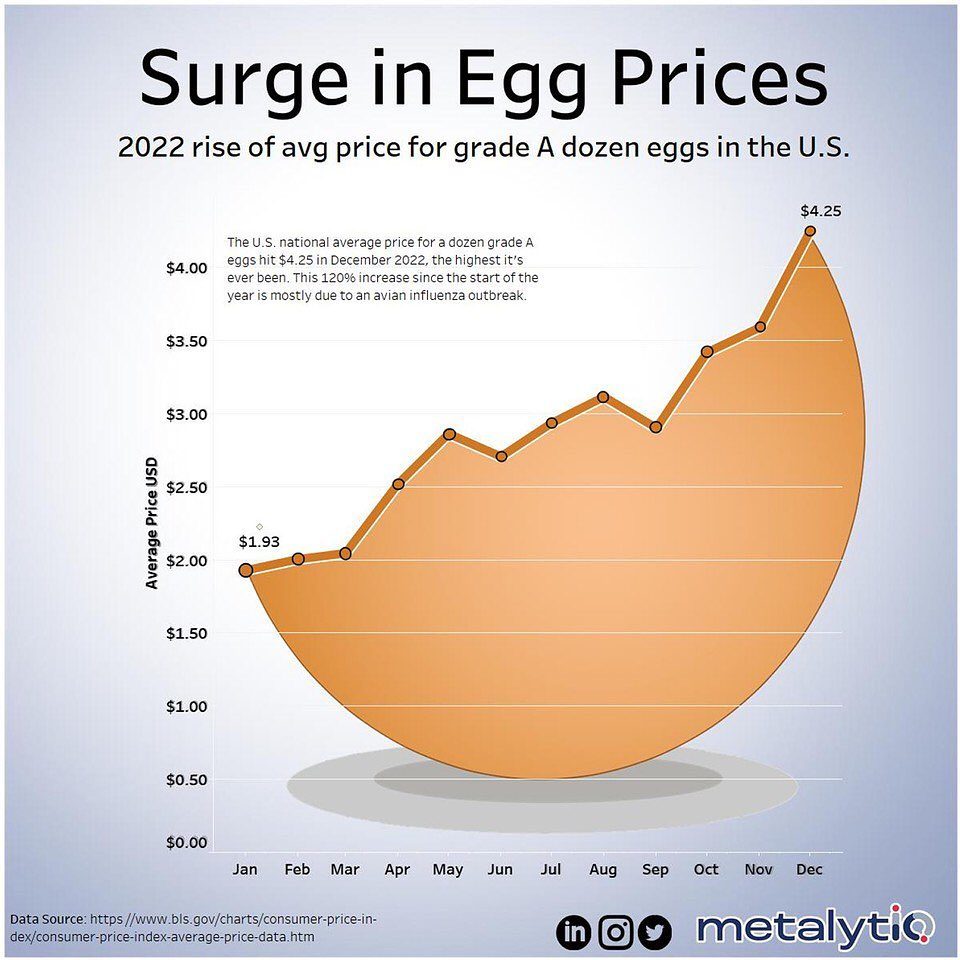
Egg Price Surge in the U.S.
Eggs are a staple in the American diet, with the average person consuming between 250 and 280 eggs per year. This popularity is due in part to their versatility, nutritional value, and affordability. However, recent data shows a significant surge in egg prices throughout 2022, peaking at $4.25 per dozen in December. This increase has been a notable topic of concern for many consumers and economists alike.
Why this Matters
Understanding the factors behind this price surge is crucial for several reasons. Eggs are a primary source of protein for many households, and a sharp increase in their cost can significantly impact family budgets. Additionally, egg prices are often used as an indicator of broader economic trends, making them a key metric for economic analysis.
Main Discussion
Historical Price Trends
To grasp the magnitude of the recent price surge, it's helpful to look at historical data. Before 2022, the average price of a dozen grade A eggs had remained relatively stable, hovering around $1.50 to $2.00. The sudden jump to $4.25 in December represents a more than 100% increase from the typical price range. This dramatic shift highlights the unprecedented nature of the 2022 price surge.
Factors Contributing to the Price Increase
Several factors contributed to the rise in egg prices. One of the most significant was the outbreak of avian influenza, which led to a sharp decrease in the egg-laying hen population. According to the U.S. Department of Agriculture, the avian influenza outbreak resulted in the culling of millions of hens, leading to a significant reduction in egg supply. This supply shortage drove up prices as demand remained steady.
Another contributing factor was the increase in production costs. The rising cost of feed, labor, and other operational expenses put additional financial pressure on egg producers. These higher costs were inevitably passed on to consumers in the form of increased prices.
Economic Implications
The surge in egg prices has broader economic implications beyond the impact on household budgets. For instance, it can influence inflation rates. Since eggs are a common and essential item, their price fluctuations can affect the Consumer Price Index (CPI), a key measure of inflation. The significant rise in egg prices contributed to the overall increase in the CPI, reflecting broader trends in inflation during 2022.
Consumer Behavior
Consumers have responded to the price surge in various ways. Some have opted for cheaper protein sources or reduced their overall egg consumption. Others have sought out sales, discounts, or bulk purchases to mitigate the financial impact. The price increase has also led to more scrutiny of grocery bills and a general shift in consumer behavior towards more budget-conscious purchasing.
Practical Tips
Efficient Egg Cooking
To make the most of your egg purchases, consider cooking methods that stretch your eggs further. For example, an omelet can be a versatile meal that includes a variety of vegetables and other protein sources, making it a more substantial dish. Similarly, hard-boiled eggs can be a convenient and economical snack.
Buying in Bulk
When possible, buying eggs in bulk can help you save money in the long run. Look for promotions or sales at your local grocery store, and consider purchasing multiple dozens at once. This can also reduce the number of trips to the store, saving time and transportation costs.
Alternative Protein Sources
If egg prices remain high, explore alternative protein sources such as canned tuna, beans, lentils, or tofu. These options are often more affordable and can be incorporated into a variety of meals, providing a good balance of nutrients.
Important Takeaways
The surge in egg prices in 2022 highlights the complex interplay of supply and demand in the food market. Factors such as avian influenza outbreaks and rising production costs play a significant role in determining prices. Consumers should be aware of these factors and adapt their purchasing habits accordingly. Additionally, monitoring egg prices can provide valuable insights into broader economic trends, making them an important metric for both consumers and economists.
Conclusion
The recent surge in egg prices in the U.S. has been a notable event with far-reaching implications. From influencing household budgets to affecting inflation rates, understanding the underlying factors and their impact is crucial. By staying informed and adopting practical strategies, consumers can navigate the changing economic landscape and make the most of their food budgets.
Watch the Reel
Questions readers ask
What caused the sudden increase in egg prices in the U.S. during 2022?
The egg price surge in 2022 can be attributed to several factors, including the outbreak of avian influenza, which led to the culling of millions of laying hens, and increased production costs due to higher feed prices and transportation expenses. These factors combined led to a significant decrease in supply and an increase in demand, driving up the price of eggs.
How does the 2022 egg price increase compare to previous years?
The 2022 egg price increase is unprecedented, with prices reaching $4.25 per dozen by December, marking a more than 100% increase from the usual price. This surge is notably higher than fluctuations seen in previous years, making it a significant outlier in recent U.S. egg price history.
Why are eggs considered a key indicator of economic trends?
Eggs are a staple food item in the American diet, and their pricing trends can provide valuable insights into broader economic trends. Changes in egg prices can reflect shifts in consumer spending, inflation rates, and overall economic health. Economists often use the cost of eggs to gauge the impact of economic trends on household budgets.
How has the egg price increase impacted household budgets?
The dramatic increase in egg prices has had a noticeable impact on household budgets, particularly for lower-income families that rely on eggs as an affordable source of protein. With egg prices more than doubling in a short period, many households have had to reallocate their spending or adjust their diets to accommodate the higher costs.
What is the international comparison of the 2022 U.S. egg price surge?
The 2022 egg price surge in the U.S. is particularly notable when compared to international prices. In many other countries, eggs are often less expensive, and price increases have not been as drastic. This comparison highlights the unique challenges faced by American consumers and the specific factors driving up egg prices in the U.S.
What can consumers expect from egg prices in the future?
Predicting future egg prices involves considering various factors, including the recovery of the poultry industry from avian influenza, fluctuations in feed and production costs, and overall economic trends. While it is difficult to forecast exact prices, experts suggest that prices may stabilize as the industry recovers and supply chains normalize.
How can visualizing egg price trends help in understanding the 2022 surge?
Visualizing egg price trends provides a clear perspective on the magnitude and rapidity of the 2022 price surge. Graphs and charts can illustrate the sharp increase, making it easier to understand the impact on consumers and the broader economic implications. These visuals can also help in comparing the 2022 trends with historical data, offering a comprehensive view of the situation.
Recent articles
Fresh deep dives from the latest Reels we unpacked.




Comments
Be the first to comment.