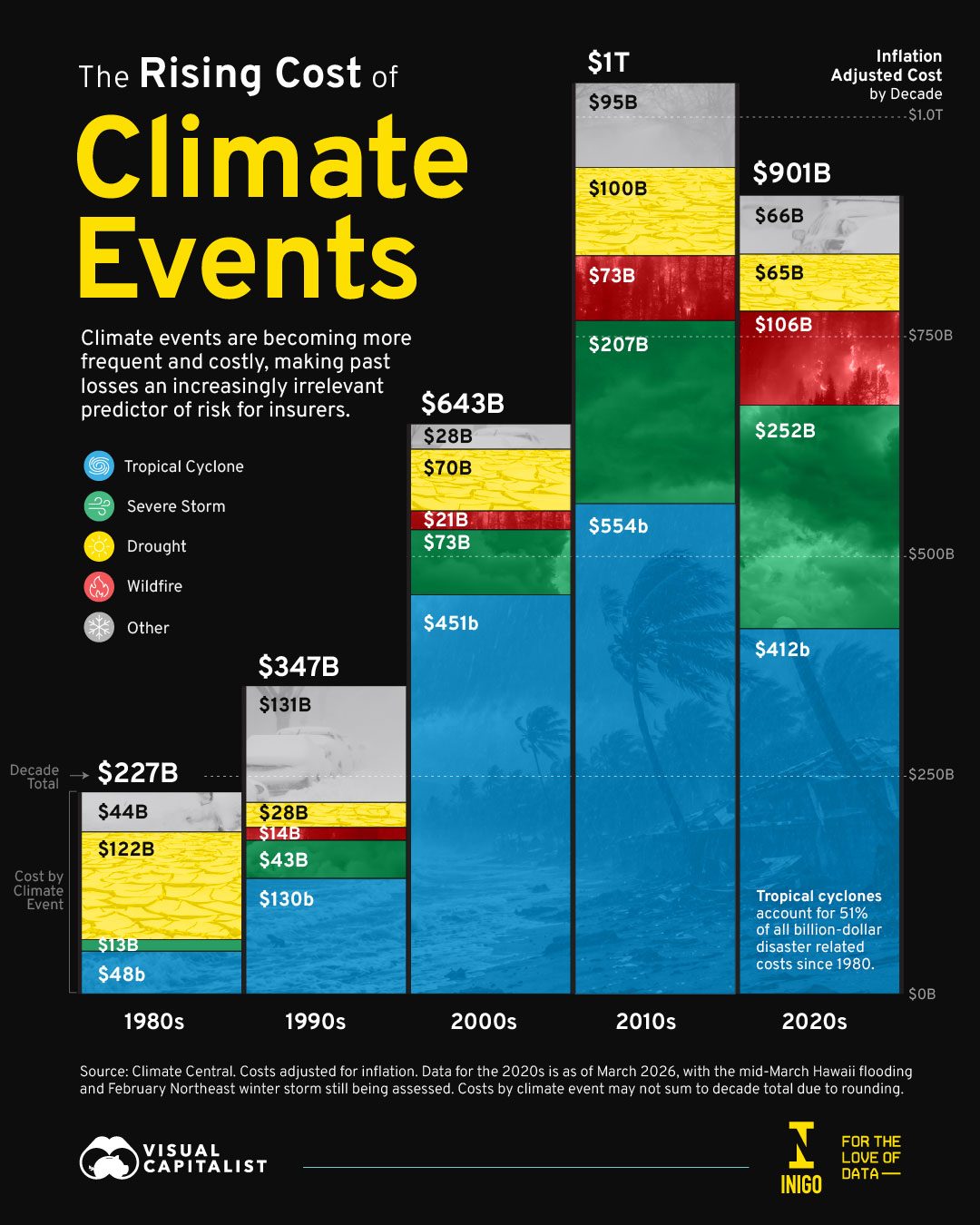
U.S. climate disasters are on track to cost nearly $1 trillion this decade alone. This staggering figure underscores the escalating financial impact of climate-driven natural disasters, which have been increasing since 1980. Understanding this trend is crucial for policymakers, insurance companies, and the public to prepare for future events and mitigate their impacts.
Context/Why this matters
The financial toll of climate disasters is not just a number; it represents the collective cost of damage to infrastructure, loss of productivity, and the personal hardships faced by millions of people. As these disasters become more frequent and severe, their economic impact will likely continue to rise, straining public resources and private finances.
Main discussion
The escalating costs of climate events
The visual breakdown of costs shows a clear upward trend over the decades. In the 1980s, the total cost of climate disasters was just over $70 billion, adjusted for inflation. By the 2020s, the total cost had risen to nearly $1 trillion, with the costs for the 2020s already approaching the total seen over the entire 2010s.
Wildfires
Wildfires have been a significant contributor to the rising costs. In the 2020s, wildfires alone cost over $554 billion. This trend is likely driven by factors such as prolonged droughts and higher temperatures, which create ideal conditions for wildfires to start and spread.
Tropical cyclones
Tropical cyclones, including hurricanes and typhoons, have also taken a heavy toll. The costs for these events have been significant, particularly in coastal regions. In the 2020s, tropical cyclones accounted for over $131 billion in costs.
Severe storms
Severe storms, which include thunderstorms, tornadoes, and other extreme weather events, have also been costly. The financial impact of these storms has been substantial, with costs in the 2020s reaching over $412 billion. These events are often unpredictable and can cause widespread damage in a short period.
Droughts
Droughts, while less immediately visible than other disasters, have a lasting impact on agriculture, water supplies, and economies. The costs associated with droughts have been significant, with over $122 billion in costs for the 2020s.
Other events
The "other" category includes a variety of climate-related events such as floods, heatwaves, and blizzards. These events, while varied, have collectively cost over $130 billion in the 2020s.
Practical tips
Understanding the data
The costs provided are adjusted for inflation, which means they reflect the actual purchasing power of the money lost. This adjustment is crucial for understanding the true financial impact of these events over time. It is also important to note that the data for the 2020s is as of March 2026, with some events still being assessed.
Preparing for future disasters
Given the rising costs, it is essential to invest in resilience measures. This includes strengthening infrastructure, improving early warning systems, and enhancing emergency response capabilities. Insurance companies, such as Inigo, play a crucial role in helping individuals and businesses recover from these events.
Policy implications
Policymakers need to consider the long-term financial impact of climate disasters when allocating resources. This includes investing in climate mitigation strategies, such as renewable energy and carbon reduction, as well as adaptation measures to protect vulnerable communities.
Important takeaways
Rising trend
The data shows a clear and alarming trend of increasing costs associated with climate disasters. This trend is likely to continue, driven by factors such as rising temperatures, changing weather patterns, and increased frequency of extreme weather events.
Individual and collective costs
The costs of climate disasters are not just financial; they also have significant social and economic impacts. These events disrupt livelihoods, displace communities, and strain public resources. Understanding these broader impacts is crucial for developing effective response and mitigation strategies.
Conclusion
The escalating costs of climate disasters in the U.S. highlight the urgent need for action. By understanding the financial impact of these events, we can better prepare for future disasters, invest in resilience, and develop policies that protect communities and economies. The data provided by Climate Central and organizations like Visual Capitalist offer valuable insights into this critical issue, guiding us toward a more resilient and sustainable future.
Watch the Reel
Questions readers ask
What factors are contributing to the projected $1 trillion cost of climate disasters in the U.S. this decade?
The projected cost is driven by an increase in the frequency and intensity of wildfires, tropical cyclones, and severe storms. These events cause significant damage to infrastructure, homes, and businesses, leading to substantial financial losses. Additionally, the growing population in disaster-prone areas exacerbates these costs.
How has the trend in climate disaster costs changed since 1980?
Since 1980, the financial impact of climate-driven natural disasters in the U.S. has been increasing. This trend is expected to continue, with costs potentially reaching $1 trillion by the end of this decade. The rising trend is due to more frequent and severe weather events, as well as increased exposure of people and property to these hazards.
What are the main challenges posed by the rising costs of climate disasters?
The escalating costs pose significant challenges for economic stability and public safety. They strain public resources, impact private finances, and require robust preparedness and mitigation strategies. Policymakers, insurance companies, and the public must work together to address these challenges effectively.
What can be done to mitigate the impacts of climate disasters in the U.S.?
Mitigation strategies include investing in infrastructure that can withstand extreme weather events, implementing early warning systems, and enhancing emergency response capabilities. Additionally, reducing greenhouse gas emissions can help slow the rate of climate change and decrease the severity of future disasters.
What role do wildfires, tropical cyclones, and severe storms play in the projected $1 trillion cost?
Wildfires, tropical cyclones, and severe storms are the primary drivers of the projected cost. They cause extensive damage to property, disrupt livelihoods, and strain social services. The increasing frequency and intensity of these events are key contributors to the overall financial impact of climate disasters in the U.S.
How do climate disasters impact the economy beyond direct financial losses?
Beyond direct financial losses, climate disasters impact the economy through loss of productivity, disruption of supply chains, and reduced economic activity. They can also lead to long-term impacts such as decreased property values, increased insurance premiums, and the need for costly infrastructure repairs and replacements.
Why is it important for the public to be aware of climate disaster trends and costs?
Awareness of climate disaster trends and costs empowers the public to advocate for effective policies and preparedness measures. It also encourages individual preparedness, such as obtaining adequate insurance, creating emergency plans, and building resilient homes and communities. This collective effort can help mitigate the impacts of future disasters.
Related deep dives
Similar reads based on topic and creator.


Recent articles
Fresh deep dives from the latest Reels we unpacked.




Comments
Be the first to comment.