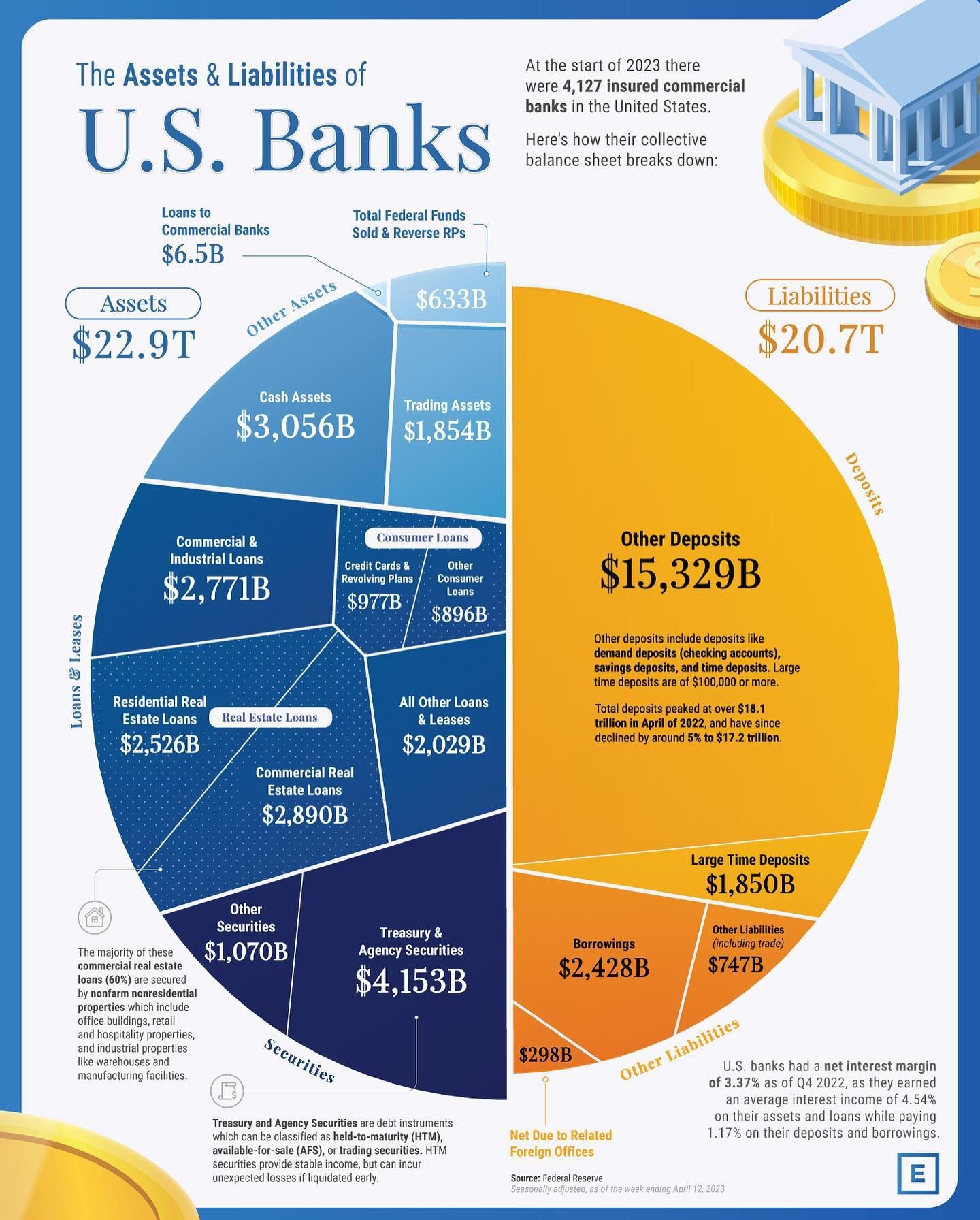
U.S. Bank Assets and Liabilities: Understanding the Balance Sheet
The U.S. banking sector, comprised of over 4,000 FDIC-insured banks, is a linchpin of the nation's economy, managing deposits and extending credit through loans. Delving into the assets and liabilities that make up the balance sheets of these banks provides valuable insights into their operations and potential vulnerabilities.
Context: Why This Matters
The recent collapses of Signature Bank, Silicon Valley Bank, and First Republic Bank have shone a spotlight on the banking sector. Understanding the composition of bank balance sheets—including assets like loans and securities, and liabilities such as deposits and borrowings—can offer clarity on how banks function and why they sometimes fail. This knowledge is crucial for stakeholders, including investors, regulators, and the general public, to navigate the complexities of the banking industry.
Main Discussion
The Balance Sheet Breakdown
The balance sheet of a bank is a snapshot of its financial health, detailing what the bank owns (assets) and owes (liabilities). Here's a closer look at the key components:
Assets
Assets are resources owned by the bank that generate revenue. For U.S. banks, these include:
-
Loans: This is a significant portion of a bank's assets. As of the start of 2023, loans to commercial businesses totaled $6.5 billion. Residential real estate loans amounted to $2,526 billion, and consumer loans reached $977 billion. These loans generate interest income, which is a primary revenue source for banks.
-
Securities: Banks hold various securities, including Treasury and agency securities, which totaled $4,153 billion. These investments provide a stable return and help manage liquidity.
-
Cash and Cash Equivalents: Cash assets and trading assets, totaling $1,854 billion, ensure that banks can meet short-term obligations and facilitate daily operations.
-
Other Assets: This category includes commercial and agency leases, other assets, and net due to related foreign offices, amounting to $2,771 billion, $3,056 billion, and other specified amounts, respectively.
Liabilities
Liabilities represent the bank's financial obligations. Key liabilities for U.S. banks include:
-
Deposits: Deposits are a crucial liability, totaling $20.2 trillion. This includes other deposits ($15,329 billion) and large time deposits ($1,850 billion). Deposits are a primary source of funding for banks, enabling them to extend loans and invest in securities.
-
Borrowings: Banks also borrow funds, with total borrowings amounting to $2,428 billion. This includes federal funds sold and reverse repurchase agreements, totaling $633 billion.
-
Other Liabilities: This category includes other specified liabilities, totaling $747 billion.
Net Interest Margin
The net interest margin is a critical metric for banks, reflecting the difference between the interest income earned on assets and the interest paid on liabilities. As of Q4 2022, U.S. banks had a net interest margin of 3.37%, earning an average interest income of 4.54% on their assets while paying 1.17% on their deposits and borrowings. This margin is essential for understanding a bank's profitability and financial health.
Practical Tips
For Investors
When evaluating banks as investment opportunities, consider the following:
-
Asset Quality: Assess the composition and quality of the bank's assets. A healthy mix of loans and securities, alongside sufficient cash reserves, indicates a well-managed bank.
-
Liability Structure: Examine the bank's liability structure, focusing on the stability and reliability of its deposit base. A diversified deposit base reduces reliance on short-term funding.
-
Net Interest Margin: Monitor the net interest margin. A higher margin suggests better profitability and financial health.
For Regulators
Regulators should:
-
Enforce Strong Risk Management: Ensure banks maintain robust risk management practices to safeguard their asset portfolios.
-
Promote Transparency: Encourage banks to disclose detailed information about their assets and liabilities, fostering transparency and accountability.
-
Monitor Interest Rate Risks: Keep a close eye on interest rate risks and ensure banks have adequate hedging strategies in place.
Important Takeaways
Understanding the assets and liabilities of U.S. banks is vital for grasping their financial health and operational dynamics. Key takeaways include:
-
Diversification: A diversified portfolio of assets and liabilities helps banks manage risks and maintain liquidity.
-
Net Interest Margin: The net interest margin is a crucial indicator of a bank's profitability and financial stability.
-
Transparency: Detailed disclosure of assets and liabilities fosters trust and accountability in the banking sector.
Conclusion
The U.S. banking sector's stability and performance hinge on a comprehensive understanding of its balance sheets. By examining the composition of assets and liabilities, stakeholders can better navigate the complexities of the banking industry. Whether you're an investor, regulator, or simply curious about the inner workings of banks, this knowledge equips you with the tools to make informed decisions.
Watch the Reel
Questions readers ask
What are the primary assets of U.S. banks?
The primary assets of U.S. banks include loans, such as commercial and personal loans, and securities like bonds and stocks. These assets generate income for the banks, with loans contributing to net interest income and securities offering returns through interest and dividends.
How do bank deposits fit into the liabilities of a bank?
Bank deposits are a significant liability for banks. They represent the money that customers have placed in the bank, which the bank is obligated to repay on demand. Deposits are a crucial source of funds that banks use to make loans and invest in securities.
What are bank borrowings and why are they important?
Bank borrowings refer to funds that banks acquire from other financial institutions or through issuing debt securities. These borrowings are important because they provide additional capital for lending and investing, but they also add to the bank's debt obligations and potential default risk.
What are the risks associated with the bank's assets and liabilities?
The primary risks associated with a bank’s assets and liabilities include credit risk (the possibility of borrowers defaulting on loans), market risk (fluctuations in the value of securities), and liquidity risk (the inability to meet short-term obligations). Understanding these risks helps stakeholders evaluate a bank's stability and potential vulnerabilities.
Why did the recent collapses of banks like Silicon Valley Bank and First Republic Bank happen?
The recent collapses of banks like Silicon Valley Bank and First Republic Bank were largely due to a combination of factors, including significant exposure to uninsured deposits, a high concentration of assets in securities that lost value, and liquidity mismatches. These issues highlighted the need for a deeper understanding of the balance sheets and risk profiles of banks.
What is the role of the FDIC in the U.S. banking industry?
The FDIC (Federal Deposit Insurance Corporation) is a critical component of the U.S. banking industry, insuring deposits up to $250,000 in FDIC-insured banks. This insurance protects depositors and helps maintain public confidence in the banking system, even in the face of bank collapses.
How do banks generate net interest income?
Banks generate net interest income by lending money at interest rates higher than the rates they pay on deposits and borrowings. This difference, known as the net interest margin, is a key component of a bank's profitability. Effective management of interest rate risk is crucial for maintaining this income stream.
Related deep dives
Similar reads based on topic and creator.


Recent articles
Fresh deep dives from the latest Reels we unpacked.




Comments
Be the first to comment.