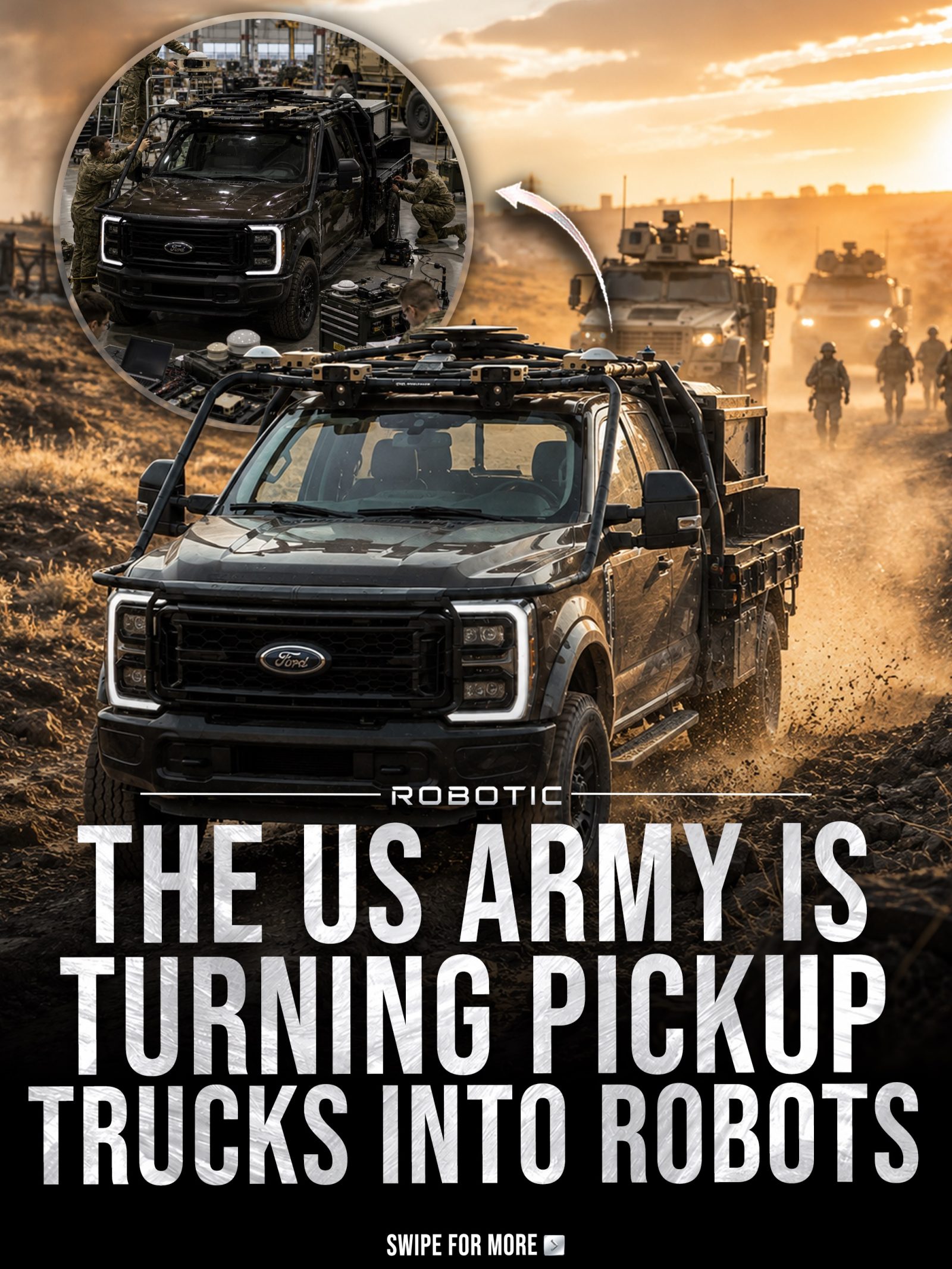
Autonomous Ford Pickup Trucks: The U.S. Army's New Robotic Support Vehicles
The U.S. Army is revolutionizing its support missions by equipping Ford F-250 pickup trucks with autonomous capabilities. These trucks, powered by Forterra’s AI-driven AutoDrive system, are designed to tackle some of the military’s most hazardous tasks. By leveraging commercial vehicles, the Army aims to enhance safety, reduce costs, and expedite the deployment of robotic support.
Context: Why This Matters
The integration of autonomous vehicles into military operations represents a significant shift in how support tasks are handled. Traditionally, these roles have been performed by human-driven vehicles, exposing personnel to considerable risks in dangerous environments. The advent of AI autonomy in military vehicles offers a solution that can significantly enhance operational efficiency and safety.
Main Discussion
Autonomous Capabilities and AI Integration
Ford F-250 pickup trucks are being outfitted with Forterra’s AutoDrive system, which enables them to navigate both roads and rough terrain with minimal human intervention. This AI-powered system allows the trucks to perform a variety of support missions, including route clearance, breaching, mine support, and logistics. The ability to operate autonomously reduces the need for human drivers in high-risk areas, thereby lowering the potential for casualties.
Use of Commercial Vehicles
The decision to use commercial Ford F-250 trucks for military applications is strategic. By utilizing vehicles that are already widely available and maintained in civilian markets, the Army can simplify maintenance processes and lower overall operating costs. This approach ensures that the trucks are reliable and that replacement parts are readily available, minimizing downtime and enhancing operational readiness.
Environmental Testing and Evaluation
The XVIII Airborne Corps is currently evaluating four autonomous Ford F-250 trucks in various environments, including desert landscapes and off-road terrains. These tests are crucial for assessing the trucks' capabilities and reliability in real-world conditions. The diverse nature of these tests highlights the versatility of the AI autonomy system in adapting to different terrains and mission requirements.
Unique Robotic Content and Military Applications
The robotic content showcased in these tests is unique and not typically shared with the public, making these developments particularly intriguing. The integration of AI autonomy in military vehicles opens up new possibilities for unmanned operations, allowing for more precise and efficient execution of tasks. This technology could revolutionize how military support missions are carried out, making them safer and more effective.
Benefits of AI Autonomy
The use of AI autonomy in military vehicles offers several key benefits. It enables the trucks to navigate complex environments with precision, reducing the risk of accidents and enhancing mission success. Additionally, the ability to perform tasks without human input allows for continuous operation, ensuring that critical support functions are maintained even in high-stress situations.
Practical Tips
Utilizing Commercial Vehicles for Military Use
When considering the integration of commercial vehicles for military applications, it is essential to select models that are robust, reliable, and widely available. The Ford F-250, for example, is known for its durability and versatility, making it an ideal choice for military use. Ensuring that the selected vehicles are well-maintained and supported by a wide network of service providers is crucial.
Implementing AI Autonomy Systems
The integration of AI autonomy systems in military vehicles requires careful planning and testing. It is essential to work with specialized companies like Forterra, which have the expertise and technology to develop reliable autonomy systems. Ensuring that these systems are thoroughly tested in various environments and scenarios is key to their successful deployment.
Maintaining Operational Readiness
Regular maintenance and updates of both the vehicles and their AI systems are vital for maintaining operational readiness. Ensuring that the vehicles are equipped with the latest software and hardware updates can enhance their performance and reliability. Additionally, providing ongoing training for personnel who will be involved in the maintenance and operation of these vehicles is essential.
Important Takeaways
- The U.S. Army’s use of autonomous Ford F-250 trucks represents a significant advancement in military support operations.
- AI autonomy enables these trucks to navigate complex terrains and perform dangerous tasks with minimal human input, reducing the risk to soldiers.
- Utilizing commercial vehicles for military applications simplifies maintenance and lowers operating costs.
- The integration of AI autonomy in military vehicles has the potential to revolutionize how support missions are carried out, enhancing efficiency and safety.
- Regular maintenance and updates of both the vehicles and their AI systems are crucial for maintaining operational readiness.
Conclusion
Ford F-250 pickup trucks equipped with AI autonomy are transforming the way the U.S. Army handles support missions. By leveraging commercial vehicles and cutting-edge technology, the Army is paving the way for safer, more efficient, and cost-effective military operations. The unique capabilities of these autonomous trucks, combined with the strategic benefits of using commercial vehicles, make this an exciting development in military technology. As the evaluation and deployment of these vehicles continue, their impact on military support operations will become increasingly evident, setting new standards for operational excellence.
Watch the Reel
Questions readers ask
What specific tasks can the U.S. Army's autonomous Ford F-250s perform?
The autonomous Ford F-250s can handle a range of support tasks, including route clearance, logistics, and other missions that require navigating various terrains. These tasks are particularly hazardous when performed by human-driven vehicles, making the autonomous capability a significant advantage.
How does the U.S. Army's use of autonomous vehicles enhance safety and efficiency?
By employing autonomous vehicles for dangerous support tasks, the Army reduces the need for human personnel to operate in high-risk environments, thereby minimizing casualties and enhancing overall safety. Additionally, these AI-driven trucks can operate continuously, improving mission efficiency and speeding up deployment processes.
What technology powers the autonomous capabilities of the Ford F-250s?
The autonomous capabilities of the Ford F-250s are powered by Forterra’s AI-driven AutoDrive system. This technology enables the trucks to navigate complex terrains and perform various missions autonomously, leveraging advanced AI for decision-making and control.
What are the benefits of using Ford F-250s as military autonomous vehicles?
Utilizing Ford F-250s allows the Army to leverage robust, commercially available vehicles that are well-suited for military applications. This approach not only reduces costs associated with developing new vehicles but also expedites the deployment of autonomous support capabilities.
How do these autonomous vehicles navigate military terrains?
The Ford F-250s are equipped with advanced AI systems that enable them to navigate various terrains effectively. These systems use sensors and algorithms to perceive the environment, make real-time decisions, and adapt to changing conditions, ensuring reliable performance in diverse military settings.
What is the significance of the Army's shift towards autonomous support vehicles?
The U.S. Army's adoption of autonomous support vehicles marks a strategic shift in military operations. By transitioning from human-driven to autonomous vehicles, the Army can significantly reduce risks to personnel, optimize resource allocation, and enhance overall mission effectiveness in challenging environments.
Recent articles
Fresh deep dives from the latest Reels we unpacked.




Comments
Be the first to comment.