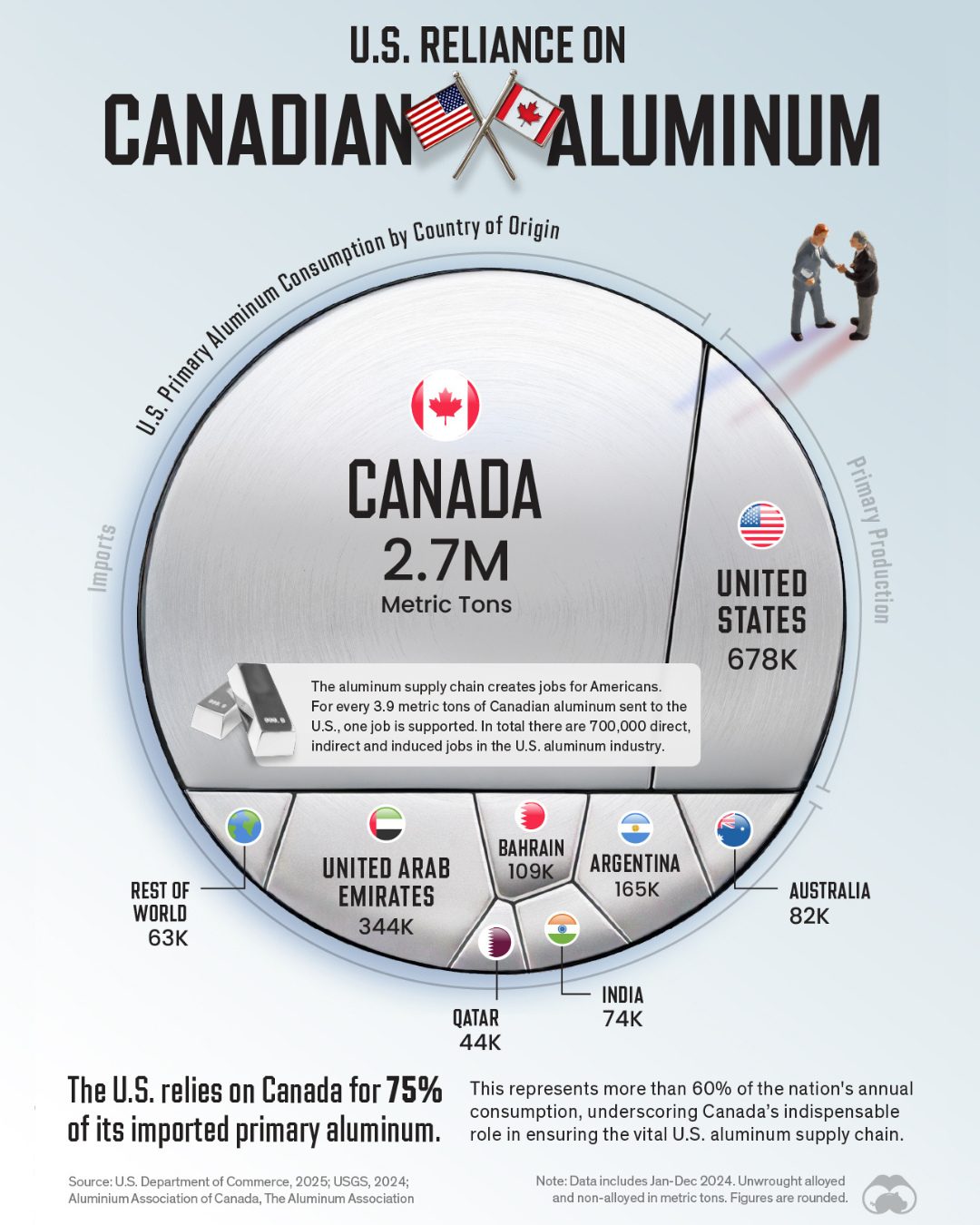
Aluminum Imports: The United States' Dependence on Canada
The United States relies heavily on Canada for its aluminum imports, with 75% of its imported primary aluminum coming from its northern neighbor. This reliance is driven by several factors, including Canada's proximity, strong trade ties, and specialized infrastructure. This article explores the landscape of U.S. aluminum imports, highlighting Canada's crucial role in the supply chain.
Context: Why This Matters
Aluminum is a critical material for various industries, including manufacturing, construction, and transportation. Its lightweight, durable, and corrosion-resistant properties make it indispensable for modern applications. The U.S. relies on imported aluminum to meet its annual consumption, and Canada's contribution is vital to ensuring a stable supply.
Main Discussion
U.S. Aluminum Imports: The Big Picture
The U.S. imported a total of 3.6 million metric tons of primary aluminum in 2024, with Canada being the largest supplier at 2.7 million metric tons. This represents more than 60% of the nation’s annual consumption, underscoring Canada’s indispensable role in ensuring the vital U.S. aluminum supply chain.
Canada provides 2.7 million metric tons of aluminum to the U.S. (Source: U.S. Department of Commerce, USGS, 2024)
Canada: The Dominant Supplier
Canada's dominance in the U.S. aluminum import market is due to several factors. The country has a well-developed aluminum industry with a strong focus on exporting to the U.S. The proximity of Canada to the U.S. also makes it a cost-effective source of aluminum, reducing transportation costs and increasing efficiency. Additionally, Canada’s specialized infrastructure and strong trade ties make it an ideal partner for the U.S. in the aluminum supply chain.
Canada provides 75% of the U.S.’s imported primary aluminum, making it the largest supplier by far. (Source: U.S. Department of Commerce, USGS, 2024)
Other Aluminum Suppliers
While Canada is the dominant supplier, the U.S. also imports aluminum from other countries. The United Arab Emirates, for instance, contributed 344,000 metric tons, making it the second-largest supplier. Other significant suppliers include Argentina (165,000 metric tons), Bahrain (44,000 metric tons), India (74,000 metric tons), Qatar (44,000 metric tons), and Australia (82,000 metric tons).
The Role of the United Arab Emirates
The United Arab Emirates (UAE) is a significant player in the global aluminum market, and its contributions to the U.S. supply are noteworthy. The UAE's aluminum production is driven by its abundant natural resources and advanced industrial capabilities, making it a reliable supplier for the U.S. market. The UAE's strategic location also facilitates efficient transportation and logistics, further enhancing its role as a key aluminum supplier.
Other Countries: Contributions and Context
While the UAE and Canada are the primary suppliers, other countries also play essential roles in the U.S. aluminum import landscape. Argentina, for example, contributes 165,000 metric tons, making it the third-largest supplier. This country’s aluminum production is driven by its rich bauxite deposits and well-established refining and smelting facilities. Similarly, India and Australia contribute 74,000 and 82,000 metric tons, respectively, leveraging their industrial capabilities to meet the U.S. demand.
Practical Tips
For businesses and policymakers interested in understanding the dynamics of the aluminum import market, it’s crucial to consider the following:
-
Supplier Diversification: While Canada is the dominant supplier, diversifying sources can mitigate risks associated with supply chain disruptions. Businesses should explore opportunities to import from other reliable countries like the UAE, Argentina, and Australia.
-
Trade Policies: Understanding trade policies and agreements between the U.S. and its aluminum suppliers can provide insights into tariffs, quotas, and other regulatory measures that may impact the import process. Policies that foster strong trade relations can ensure a steady supply of aluminum.
-
Market Trends: Staying updated on global aluminum market trends and forecasts can help in planning and adjusting import strategies. Factors such as fluctuating aluminum prices, geopolitical events, and changes in production capacities can influence the supply and demand dynamics.
-
Infrastructure and Logistics: Assessing the infrastructure and logistics capabilities of potential suppliers is essential. Efficient transportation and logistics networks can reduce costs and ensure timely delivery of aluminum to U.S. manufacturing facilities.
Important Takeaways
-
Canada's Dominance: Canada remains the most significant supplier of primary aluminum to the U.S., contributing 75% of the total imported quantity. This dominance is driven by proximity, strong trade ties, and specialized infrastructure.
-
Supply Chain Stability: Diversifying aluminum imports can enhance supply chain stability and resilience, reducing the reliance on a single supplier.
-
Global Market Dynamics: The aluminum import market is influenced by various factors, including geopolitical events, trade policies, and market trends. Understanding these dynamics is crucial for effective strategic planning.
Conclusion
The U.S. reliance on Canada for 75% of its imported primary aluminum highlights the critical role that Canada plays in the U.S. aluminum supply chain. This relationship is underpinned by strong trade ties, geographical proximity, and specialized infrastructure. However, diversifying import sources and staying abreast of global market dynamics can further stabilize the supply chain and ensure a steady flow of this vital material for various industrial applications. By understanding and navigating these complexities, the U.S. can continue to leverage aluminum as a key component in its manufacturing and construction sectors.
Watch the Reel
Questions readers ask
Who are the biggest partners in the U.S. aluminum supply chain?
Canada is the largest partner, accounting for 75% of the United States' primary aluminum imports. Other partners include countries that offer competitive pricing, but Canada's proximity and strong trade ties make it the most significant.
What makes Canada the primary aluminum imports supplier to the U.S.?
Canada's proximity to the U.S. significantly reduces transportation costs for aluminum imports. This is further complemented by Canada's specialized infrastructure and strong trade ties, making it a vital partner in the U.S. aluminum supply chain.
How much aluminum does the United States import from Canada annually?
The exact amount can fluctuate, but in recent years, Canada has consistently supplied around 75% of the U.S.'s primary aluminum imports. This equates to a significant portion of the U.S.'s total aluminum consumption, given the country's reliance on imported aluminum.
What are the main industries that use imported aluminum in the U.S.?
Key sectors include manufacturing, construction, and transportation. These industries rely on aluminum for its lightweight, durable, and corrosion-resistant properties, making it indispensable for modern applications in the United States.
Why is the proximity of aluminum importing partners important to the U.S.?
Proximity reduces transportation costs and times for aluminum imports. This is particularly crucial in the U.S.-Canada aluminum trade, where the shared border and efficient transportation infrastructure make the supply chain more efficient and cost-effective.
What are the key factors that drive the aluminum trade between the U.S. and Canada?
Key factors include the strong trade ties between the two countries, cost-effective transportation, and Canada's specialized infrastructure for aluminum production and export. These elements collectively support a robust and efficient aluminum supply chain.
How does the U.S. determine its aluminum import partners?
The U.S. selects its aluminum import partners based on factors such as cost, reliability, and proximity. For instance, the 2024 aluminum imports data highlights the significant role of Canada, which meets these criteria, making it the primary supplier.
Related deep dives
Similar reads based on topic and creator.



Recent articles
Fresh deep dives from the latest Reels we unpacked.




Comments
Be the first to comment.