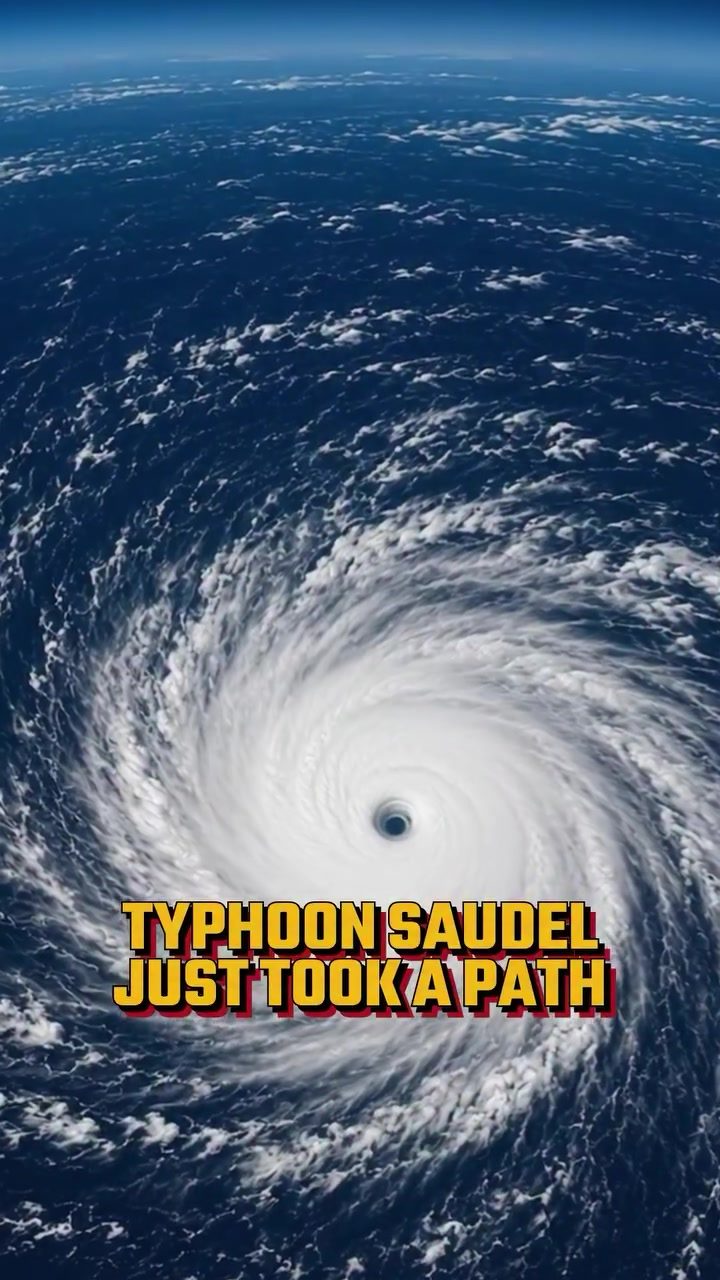
Typhoon Saudel's Unusual Path
Meteorologists haven't seen a path like Saudel's before. September’s typhoon didn't follow the typical trajectory. Instead of fizzling out after striking mainland China, it revived over the South China Sea then returned and hit the same region — in Zhangzhou — again. Such a storm track is anything but common. The storm first hit China, weakened, then crossed into southern China and weakened further. A common sense progression that’s incorrect. 2,500 people trapped inside a school compound needed to be rescued by drone. Flash floods, landslides, and mudslides are expected. Saudel's path defied typical behavior. Saudel crashed into Fujian's coast, then made a U-turn over the South China Sea. Instead of ending its life cycle in southern China, it regenerated over the sea and returned. On September 3rd, Saudel struck Zhangzhou — three times over the same area. The floods and debris were so severe that the water kept rising as rescuers dropped food and water in by drone. Such behavior is the rarity of such an event. Typhoons usually weaken over land and dissipate. The most impactful outcome for such over-activity would likely be flash floods, landslides, and mudslides."
Meteorological Anomalies
Such a scenario is highly unusual. The typhoon regenerated, not just once, but twice — "regenerated and struck the same region again. Three times". The Zhejiang province faces the risk of further flash floods, landslides, and mudslides. It defied standard meteorological patterns. Little wonder that authorities are bracing for potential flash floods, landslides, and mudslides. If the concept of a typhoon taking three different approaches and striking China three times seems extreme, it is. The typhoon also demonstrated a high degree of unpredictability. Meteorologists and disaster-management teams often face situations. Renewed efforts are needed to map and predict the storm paths. There is intriguing damage.
The Human Toll
Tragic outcomes often accompany storms. Over 2,500 teachers and students were trapped inside a school compound. That is a terrifying scenario. Schools are designed to be safe havens, and the water kept rising as rescuers dropped food and water in by drone. Such a scenario shows a dangerous lack of infrastructure. Rescue operations were further complicated by the rising water levels. Rising waters prove the risk of flash floods, landslides, and mudslides. When schools are designed to be safety shelters and they can’t protect the kids. Why? Urban infrastructure needs to adapt. Infrastructure needs to withstand 2500 trapped people who need to be resupplied by drone. Such activities provide a sobering reminder of the vulnerability of densely populated areas.
Watch the Reel
Related deep dives
Similar reads based on topic and creator.



Recent articles
Fresh deep dives from the latest Reels we unpacked.




Comments
Be the first to comment.