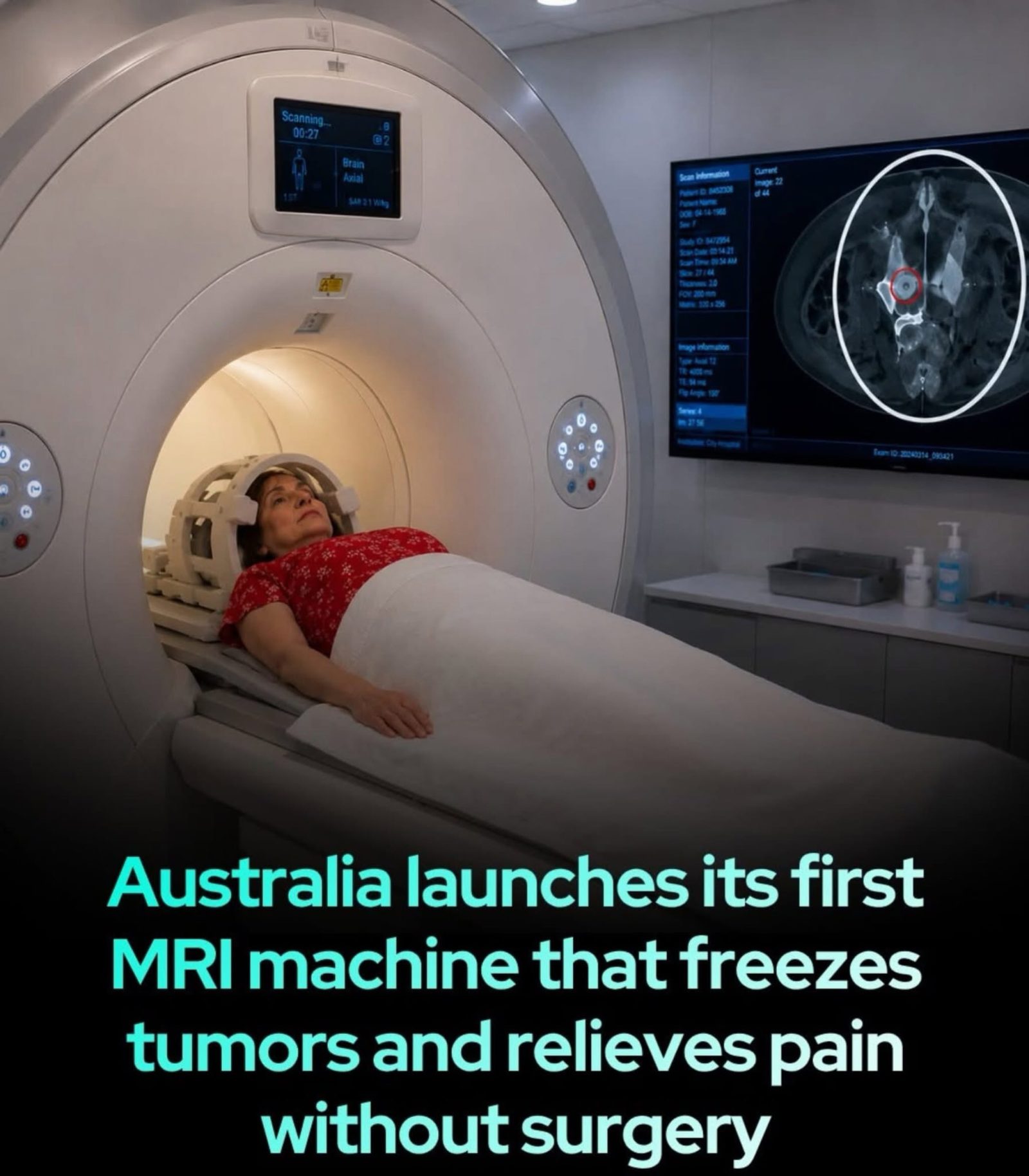
MRI-guided Cryoablation: A Revolutionary Approach to Tumor Treatment
The advancement of MRI-guided cryoablation technology is transforming how certain tumors are treated, offering a less invasive alternative to traditional surgery. Liverpool Hospital in Sydney has become a pioneer in this field, utilizing Australia's first MRI-guided cryoablation system to treat patients with remarkable results.
Why This Matters
Cryoablation technology is making waves in the medical community due to its ability to freeze and destroy tumors without the need for invasive surgical procedures. This innovation marks a significant shift in how we approach cancer treatment, particularly for patients who may not be suitable for traditional surgeries or who seek quicker recovery times.
Main Discussion
The Technology Behind Cryoablation
MRI-guided cryoablation works by inserting a thin needle directly into the tumor. The needle's tip is then rapidly cooled using gas, forming an "ice ball" that envelops the tumor. This freezing process kills the unwanted cells while minimizing damage to the surrounding healthy tissue. The entire procedure can be monitored in real time using MRI scans, allowing doctors to track the ice ball's growth and target the tumor with exceptional precision.
How It Works
- Needle Insertion: A thin needle is carefully inserted into the tumor. This process is minimally invasive and does not require large incisions.
- Cooling Process: The needle tip is cooled rapidly using gas, creating an ice ball that expands around the tumor.
- Real-Time Monitoring: MRI scans provide real-time imaging, enabling doctors to monitor the freezing process and ensure that the ice ball accurately targets the tumor while sparing healthy tissue.
- Cell Destruction: As the tissue freezes, it destroys the tumor cells.
Benefits of Cryoablation
Cryoablation offers several advantages over traditional surgery:
- Less Invasive: The procedure involves only a small needle insertion, reducing the risk of complications and speeding up recovery.
- Quick Recovery: Patients often return home the same day, experiencing less pain and a shorter recovery period compared to traditional surgeries.
- Reduced Risks: By avoiding large incisions and extensive tissue manipulation, cryoablation minimizes the risks associated with major operations, such as infection and prolonged hospitalization.
- Effective for Multiple Tumor Types: This technology can be used to treat various types of tumors, including those in the liver, kidneys, and spine.
Patient Success Stories
One of the first patients to benefit from this groundbreaking technology was 64-year-old Josephine Cordina. She suffered severe pain from a nine-millimeter tumor on her spine. Traditional surgery for this condition would have involved removing part of the bone and inserting screws for support, a procedure that could have led to prolonged pain and a longer recovery period.
Cordina opted for cryoablation. The results were almost immediate. "The next day I had no pain, it was all gone and I’m back to normal," she said. Her experience underscores the potential of cryoablation to significantly improve patients' quality of life.
Practical Tips
For Patients
If you or a loved one is considering treatment options for certain tumors, it's worth exploring whether cryoablation is a viable option. Consult with your healthcare provider to discuss the benefits and potential risks associated with this procedure.
For Healthcare Professionals
Understanding the capabilities and limitations of MRI-guided cryoablation is crucial for providing the best possible care. Training and experience in this technology can open up new avenues for treating a variety of tumors, particularly for patients who may not be candidates for traditional surgery.
Important Takeaways
- MRI-guided cryoablation offers a less invasive alternative to traditional surgery for treating certain tumors.
- The procedure involves inserting a thin needle into the tumor and using gas to rapidly cool its tip, forming an "ice ball" that kills the unwanted cells.
- Real-time MRI scans allow doctors to monitor the process and ensure precise targeting, minimizing damage to healthy tissue.
- Benefits include quicker recovery, reduced pain, and fewer risks associated with major operations.
- Patients like Josephine Cordina have experienced significant relief and improved quality of life with this treatment.
Conclusion
The introduction of MRI-guided cryoablation at Liverpool Hospital in Sydney is a significant milestone in cancer treatment. This innovative technology offers a less invasive, more efficient, and often more comfortable alternative to traditional surgery. As more hospitals adopt this technology, patients can look forward to improved treatment outcomes and a higher quality of life.
Watch the Reel
Questions readers ask
What exactly is MRI-guided cryoablation and how does it work?
MRI-guided cryoablation is a non-invasive tumor removal procedure. It uses magnetic resonance imaging (MRI) for precise guidance while a thin needle, known as a cryoprobe, is inserted into the tumor. The cryoprobe freezes the tumor, destroying cancerous cells, and the procedure is guided in real-time with MRI scans. This allows for targeted treatment of tumors, ensuring surrounding healthy tissues are left unharmed.
Who is a suitable candidate for MRI-guided cryoablation?
MRI-guided cryoablation is often suitable for those who are not good candidates for traditional surgeries, such as elderly patients or those with other health conditions. It is also an option for patients with tumors that are difficult to access surgically. However, suitability depends on the location, size, and type of tumor, as well as the overall health of the patient, so it's important to consult with a healthcare professional.
What are the benefits of MRI-guided cryoablation over traditional surgery?
MRI-guided cryoablation offers several benefits. It is a minimally invasive procedure, which means less pain and shorter recovery times. Additionally, it provides real-time visualization of the tumor and surrounding tissues, allowing for precise treatment. This approach also reduces the risk of complications and infection, and can be performed on an outpatient basis, meaning patients can often go home the same day.
How does MRI-guided cryoablation compare to other non-invasive tumor treatments?
MRI-guided cryoablation is unique in its use of extreme cold to destroy tumors. Other non-invasive treatments, such as radiation therapy, use heat or radiation to achieve similar results. Cryoablation's benefits are that it can be completed in a single session, and patients often experience less pain and faster recovery compared to other treatments.
What should I expect during the recovery process after MRI-guided cryoablation?
Recovery from MRI-guided cryoablation is typically quicker than from traditional surgery. Most patients experience some soreness and swelling at the treatment site, but this can usually be managed with over-the-counter pain medication. Patients are often able to resume normal activities within a few days, and follow-up appointments will be scheduled to monitor progress. Specific post-procedure instructions will be provided by the healthcare team.
What types of tumors can be treated with MRI-guided cryoablation?
MRI-guided cryoablation can be used to treat a variety of tumors, including those in the liver, kidney, lung, and bone. It is particularly effective for tumors that are small to medium in size and can be accessed with the cryoprobe. The suitability of the procedure depends on the specific characteristics of the tumor, so a healthcare professional will assess each case individually.
Recent articles
Fresh deep dives from the latest Reels we unpacked.




Comments
Be the first to comment.