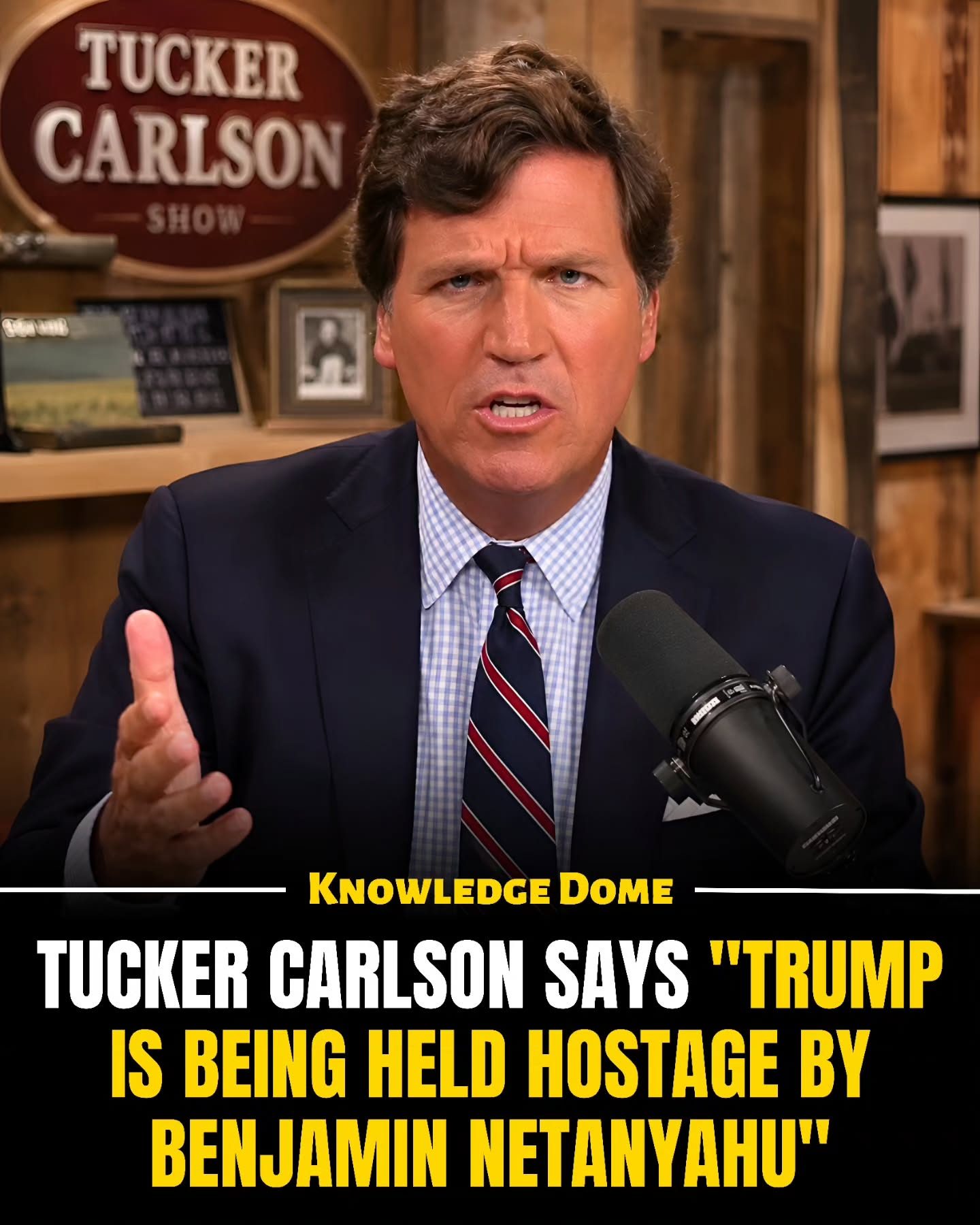
Tucker Carlson's Claims About Trump and Foreign Policy
Tucker Carlson has made a strong claim about U.S. President Donald Trump's handling of the Iran conflict, asserting that Trump is not acting independently. Carlson believes that Trump has been more like a "hostage" to both foreign and domestic influences, rather than making his own decisions.
Context / Why This Matters
The Iran conflict is a critical issue with significant geopolitical implications. Carlson's comments underscore the complex interplay between domestic politics, foreign diplomacy, and leadership decisions in the United States. By highlighting the potential influence of external and internal pressures, Carlson has sparked a significant debate about the nature of U.S. foreign policy and the autonomy of the American president.
Main Discussion
Carlson's Claims About Trump
Carlson's assertion that Trump has been behaving as a "hostage" is a powerful allegation. It suggests that powerful interests, both within and outside the United States, have undue influence over Trump's decisions. Carlson specifically mentions that Trump originally sought a negotiated solution and a ceasefire in the Iran conflict but faced pressure that prevented him from achieving these goals. This pressure, according to Carlson, comes from both foreign and domestic sources.
The Role of Benjamin Netanyahu
One of the most controversial aspects of Carlson's remarks is his claim that Benjamin Netanyahu, the Prime Minister of Israel, has a significant influence over Trump's actions. Carlson's assertion that Trump is "being held hostage" by Netanyahu implies a high degree of control and manipulation by the Israeli leader. This claim is supported by the on-screen text, which clearly states, "Tucker Carlson says 'Trump is being held hostage by Benjamin Netanyahu'." Carlson’s suggestion raises questions about the relationship between the U.S. and Israel, and how much influence foreign leaders have over American foreign policy.
Washington's Alleged Prioritization of Israel's Interests
Carlson also argues that Washington often prioritizes Israel's interests over its own. This claim is noteworthy because it challenges the traditional notion of American foreign policy, which is supposed to be guided by the principles of national interest and strategic autonomy. By suggesting that U.S. policy makers favor Israel's interests, Carlson is criticizing the underlying motivations and priorities of U.S. foreign policy.
Political Backlash and White House Response
Carlson's remarks have not been without controversy. The White House has strongly rejected his claims, labeling them as fake news. This response from the White House underscores the political sensitivity of the issue. The backlash from the White House also highlights the ongoing tension between the Trump administration and critics who question the president's independence in decision-making.
Tensions Between U.S. and Israeli Leadership
The growing tensions between U.S. and Israeli leadership over military action in the Middle East have added even more heat to the debate. This conflict reflects deeper issues within the relationship between the two countries. Carlson's claims about Trump being a "hostage" to external interests are particularly relevant in this context, as they raise questions about the extent to which U.S. foreign policy is driven by external pressures.
Practical Tips
For those interested in understanding the complexities of U.S. foreign policy, it is essential to:
- Stay Informed About Geopolitical Dynamics: Keeping up with the latest developments in international relations and foreign policy can help provide context for the decisions made by world leaders.
- Follow Multiple Sources: Relying on a variety of news sources can provide a more comprehensive view of the issues and debates surrounding foreign policy.
- Consider Multiple Perspectives: Understanding that different stakeholders, both domestic and foreign, have different interests and motivations can help in analyzing political actions and claims.
Important Takeaways
The U.S. foreign policy towards the Middle East, particularly in relation to Iran and Israel, is fraught with complexity. Carlson's claims about Trump's leadership and the influence of external powers raise critical questions about the nature of U.S. decision-making. The ongoing debate between Carlson and the White House highlights the importance of free speech and the role of the media in shaping public perceptions of government actions.
Conclusion
The debate surrounding Carlson's claims about President Trump and the Iranian conflict underscores the intricate nature of U.S. foreign policy. Whether one agrees with Carlson's assertions or not, the discussion underscores the importance of critical analysis and open discourse in understanding the dynamics of international relations.
Watch the Reel
Questions readers ask
What specific external pressures does Tucker Carlson believe influence Trump's Iran policy?
Tucker Carlson argues the primary external pressure on Trump’s Iran policy comes from Israeli Prime Minister Benjamin Netanyahu. Carlson suggests that Netanyahu's strong position against Iran has a significant impact on Trump's decision-making process on this specific issue.
How does Carlson describe Trump's decision-making process regarding Iran?
Tucker Carlson describes Trump as being like a 'hostage' to both foreign and domestic influences when making decisions about Iran. He believes that Trump's actions are not made independently, but rather are heavily steered by external pressures.
Why does Carlson believe that domestic interests affect Trump’s Iran policy?
Carlson suggests that various domestic interest groups within the United States also play a role in shaping Trump's Iran policy. These groups may exert pressure on Trump to adopt specific stances or actions, thereby limiting his autonomy in decision-making.
What are the geopolitical implications of Trump's Iran policy, according to Carlson?
Carlson’s comments underscore the significant geopolitical implications of Trump's Iran policy. The decisions made by the U.S. in this regard can have wide-ranging effects on global politics, international relations, and security dynamics in the Middle East and beyond.
How does Tucker Carlson’s argument challenge the notion of U.S. foreign policy autonomy?
By asserting that Trump's Iran policy is influenced by external and internal interests, Carlson challenges the idea that U.S. foreign policy is entirely driven by independent decision-making. Instead, Carlson suggests that various pressures and influences significantly shape the policy, raising questions about the U.S.'s autonomy in its foreign policy.
Who is Benjamin Netanyahu, and why is he significant in Carlson’s argument?
Benjamin Netanyahu is the Prime Minister of Israel. Carlson's argument highlights Netanyahu’s significance as a key external influencer on Trump’s Iran policy. Carlson believes that Netanyahu's stance on Iran has a direct impact on Trump's decisions, making Netanyahu a pivotal figure in understanding the dynamics of Trump's approach to Iran.
Why does Carlson believe that Trump's Iran strategy merits close examination?
Carlson contends that Trump's Iran strategy is underpinned by a complex interplay of domestic and foreign interests. This makes it crucial to examine closely to understand the true motivation behind the U.S. actions. Carlson's argument encourages a deeper look at the factors driving Trump's approach to Iran, beyond the surface-level decisions.
Recent articles
Fresh deep dives from the latest Reels we unpacked.




Comments
Be the first to comment.