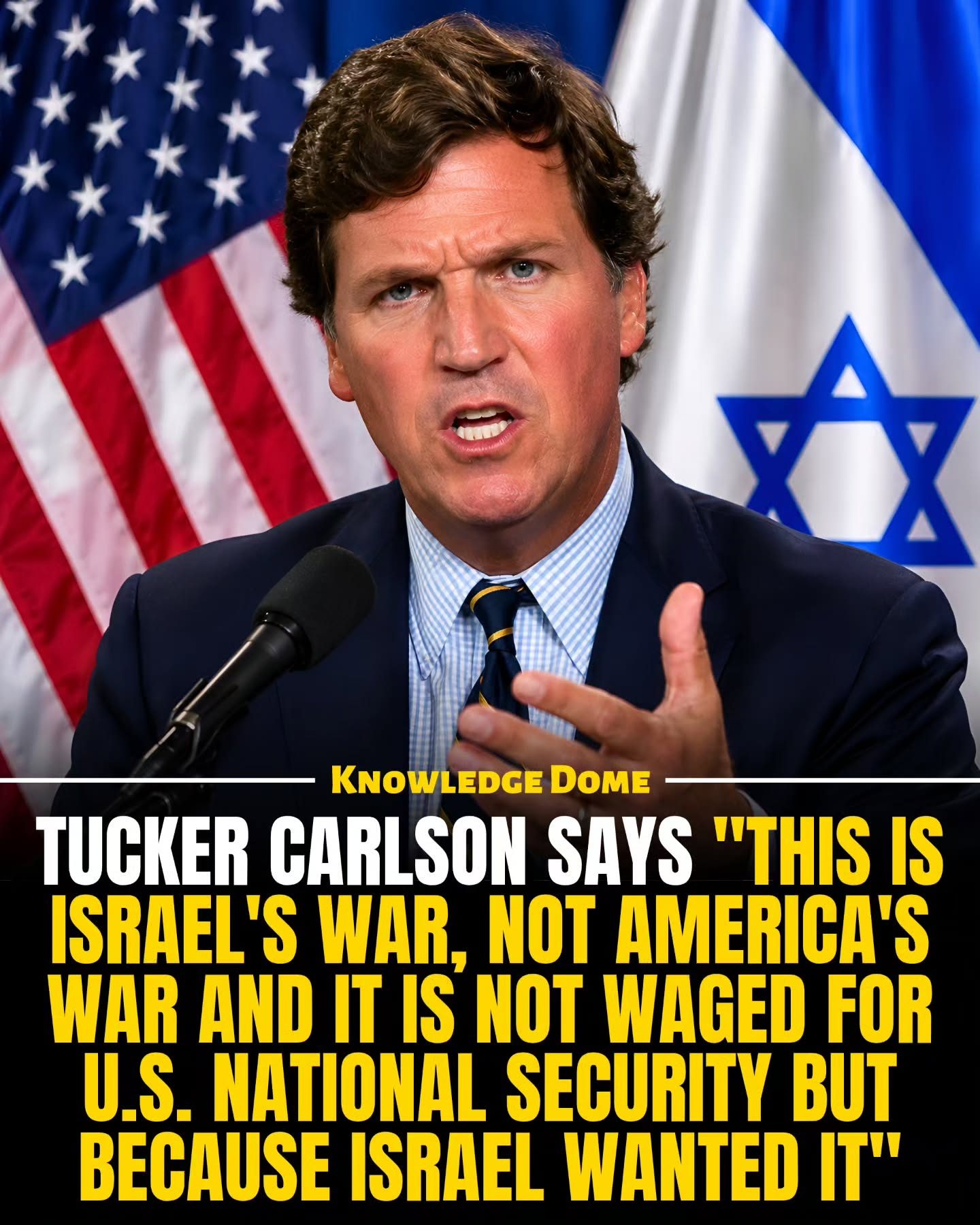
Tucker Carlson's Stance on the Israel-Iran Conflict
Tucker Carlson's assertion that "This is Israel’s war, not America’s war" sparked a significant uproar, particularly during the U.S. and Israeli military campaign against Iran in early 2026. His viewpoints challenged the traditional Republican stance on foreign policy, leading to a deep division within the conservative movement.
Context and Impact
Carlson's comments came at a critical juncture, during a period of heightened tensions between the U.S. and Iran. His assertion that the conflict was not primarily about U.S. national security but rather driven by Israeli interests was seen as a significant departure from the usual Republican foreign policy viewpoint. Carlson claimed that the war was fueled by deception and that Israeli Prime Minister Benjamin Netanyahu had pressured the U.S. into the conflict for regional objectives.
Carlson also suggested that Israel sought to draw America into the war to compel Iran to strike U.S. assets in neighboring countries like Saudi Arabia, Qatar, and the UAE. His statements went as far as labeling Israel as the largest foreign burden on America, warning that the war could cause substantial harm and potentially signify the end of the American empire.
Key Points of Carlson’s Perspective
Carlson's views can be broken down into several key points:
-
Israeli Interests vs. U.S. Security: Carlson emphasized that the conflict was more about Israeli interests than U.S. national security. He argued that the U.S. was involved primarily because of Israel's agenda, not because it was crucial for American safety.
-
Deception and Manipulation: Carlson claimed that the conflict was rooted in lies. He suggested that the U.S. was deceived into involvement, with Israeli leaders pushing for the war to achieve their own goals.
-
Regional Dynamics: He highlighted that Israel's motivations included drawing the U.S. into the conflict to provoke Iran into attacking U.S. assets in the region. This would potentially lead to a broader regional war, which Carlson argued would be detrimental to U.S. interests.
-
U.S. Foreign Policy: Carlson's comments marked a significant break from traditional Republican foreign policy, which has historically been supportive of Israel. His stance on pulling back from the conflict and focusing more on American interests has sparked a deep divide within the conservative movement.
Carlson vs. Trump
The fallout from Carlson's remarks was significant. Reports indicate that there was a clash between Carlson and President Donald Trump over the conflict. Trump openly criticized Carlson and other isolationist voices, leading to a public disagreement that highlighted the divide within the Republican Party. Carlson eventually announced the end of his 35-year affiliation with the Republican Party in April 2026, citing the party's support for Israel as immoral and a betrayal of American interests.
The Broader Impact
Carlson’s comments not only sparked a public debate but also exposed a deep split within the conservative movement. On one side, supporters of Carlson's "America First" perspective saw his views as a necessary correction to U.S. foreign policy. On the other side, those who defend Israel and U.S. intervention saw Carlson’s remarks as a misguided and detrimental stance.
Practical Tips for Understanding the Conflict
For those seeking to understand the complexities of the Israel-Iran conflict and the U.S. role in it, consider the following:
-
Follow Multiple Sources: Rely on a variety of news sources to get a well-rounded perspective on the conflict. Understand the different motives and viewpoints at play.
-
Examine Historical Context: Look into the historical context of U.S. involvement in the Middle East. Understanding past interventions can provide valuable insights into current policies.
-
Consider Regional Dynamics: Learn about the regional dynamics and the interests of countries like Saudi Arabia, Qatar, and the UAE. These countries play a significant role in the broader conflict.
-
Evaluate Political Rhetoric: Be cautious of political rhetoric and understand the motivations behind public statements. Politicians often have underlying agendas that may not align with the public interest.
Important Takeaways
-
U.S. Foreign Policy: Carlson's comments highlight a significant shift in U.S. foreign policy, emphasizing the need to reevaluate the country's involvement in international conflicts.
-
Regional Conflicts: The Israel-Iran conflict underscores the complexities and dangers of regional conflicts, particularly when major powers get involved.
-
Public Debate: Public figures like Carlson can significantly influence the national debate and shape public opinion. Understanding their motivations and the impact of their statements is crucial.
Conclusion
Tucker Carlson's assertion that the Israel-Iran conflict is primarily Israel’s war and not America’s has sparked a significant debate and exposed deep divisions within the conservative movement. His comments challenge traditional Republican foreign policy and highlight the need for a reevaluation of U.S. involvement in international conflicts. Understanding the complexities of regional dynamics and the motivations behind public statements can provide valuable insights into the broader conflict and its implications for U.S. foreign policy.
Watch the Reel
Questions readers ask
What does Tucker Carlson mean when he says the U.S.-Iran conflict is 'Israel's war'?
By stating that the U.S.-Iran conflict is 'Israel's war,' Tucker Carlson suggests that the primary beneficiary and driver of the conflict are Israeli interests rather than America's national security. He implies that U.S. involvement is largely influenced by Israel, rather than being driven by direct threats to the United States.
How has Tucker Carlson's stance on the Iran conflict impacted the conservative movement?
Tucker Carlson's views on the Iran conflict have caused a significant rift within the conservative movement. His assertions challenge traditional Republican foreign policy stances, leading to contentious debates and divisions among conservatives.
Why did Carlson's comments about the Iran conflict spark controversy in 2026?
Carlson's comments sparked controversy during the 2026 U.S. and Israeli military campaign against Iran because they departed from the typical Republican foreign policy narrative. He suggested that the conflict was not primarily about U.S. national security, which contradicted the prevailing views of many Republicans.
What is the main argument Tucker Carlson presents about the U.S. involvement in the Iran conflict?
Tucker Carlson argues that the U.S. has been manipulated or misled into the Iran conflict, primarily to serve Israeli interests. He believes that the conflict is not centered around immediate threats to the United States but rather is driven by external influences.
How does Carlson view the role of Israel in the U.S.-Iran conflict?
Carlson sees Israel as the key beneficiary and driver of the U.S.-Iran conflict. He suggests that Israeli interests are the primary motivation behind U.S. involvement, implying that the U.S. is acting more in support of Israel's goals rather than its own.
What is the significance of the timing of Carlson's comments about the Iran conflict?
The timing of Carlson's comments is significant because they came during a period of heightened tensions between the U.S. and Iran. His remarks during the 2026 U.S. and Israeli military campaign added fuel to an already contentious debate, challenging the mainstream narrative and prompting a re-evaluation of U.S. foreign policy.
How does Carlson's perspective differ from the traditional Republican view on the Iran conflict?
Carlson's perspective differs from the traditional Republican view by emphasizing that the conflict is not about U.S. national security but rather about Israel's interests. This stance contradicts the typical Republican approach, which often prioritizes American security and global leadership in foreign policy decisions.
Recent articles
Fresh deep dives from the latest Reels we unpacked.




Comments
Be the first to comment.