Trust in the United Nations
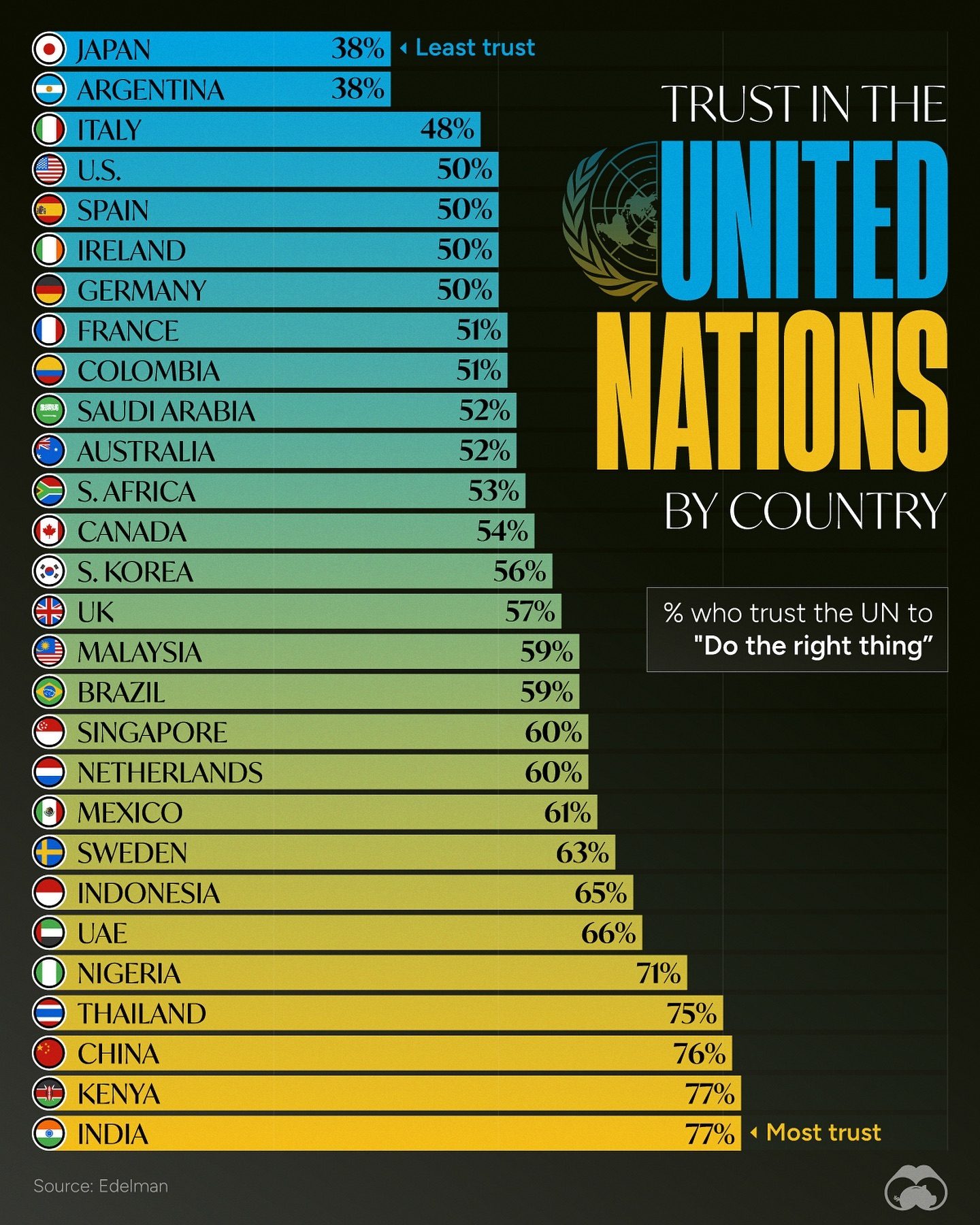
The United Nations (UN) is a global organization tasked with maintaining peace and security, protecting human rights, and upholding international law. Trust in the UN varies widely across different countries, with significant differences in public opinion on whether the organization is effectively "doing the right thing." According to data from Edelman, public trust in the UN ranges from a low of 38% in Japan and Italy to a high of 77% in India and Kenya.
Context / Why this matters
Understanding public trust in the UN is crucial because it reflects the organization's perceived effectiveness and legitimacy. High levels of trust can indicate strong support for the UN's missions and initiatives, while low trust levels may signal skepticism or dissatisfaction with its performance. This trust can influence global diplomacy, international cooperation, and the UN's ability to address pressing global issues.
Main discussion
Global Trust in the UN
The Edelman data reveals a stark contrast in public trust levels across various countries. India and Kenya lead with 77% trust in the UN, followed closely by China at 76%. These high levels of trust suggest strong support for the UN's objectives and initiatives in these countries.
On the other end of the spectrum, Japan and Italy show the lowest trust levels at 38%. This significant disparity highlights the varying perceptions of the UN's effectiveness and reliability. Other countries with relatively low trust levels include the United States, Spain, Ireland, and Germany, all at 50%.
Factors Influencing Trust
Several factors influence public trust in the UN, including national policies, media portrayal, and personal experiences. For instance, countries with historical ties to the UN or those that have benefited from UN interventions may have higher trust levels. Conversely, countries with less direct engagement or negative experiences with the UN might exhibit lower trust.
Regional Trust Differences
The data shows notable regional differences in trust levels. Countries in Asia and Africa generally exhibit higher trust in the UN, while European nations and the United States show more skepticism. This regional variation can be attributed to differing geopolitical dynamics, historical contexts, and the UN's involvement in specific regions.
The Role of Media and Information
Media coverage and the dissemination of information play a pivotal role in shaping public opinion about the UN. Positive media portrayals and transparent communication can enhance trust, while negative coverage or lack of information can erode it. Edelman's data underscores the importance of effective communication strategies in building and maintaining public trust.
Practical tips
For Individuals
- Stay Informed: Keep up with the latest developments and initiatives by the UN. Reliable sources of information can help form a balanced view of the organization's activities.
- Engage in Discussions: Participate in discussions about the UN's role in global affairs. Sharing perspectives and listening to others can broaden understanding and foster a more informed opinion.
- Seek Multiple Perspectives: Different countries have varying experiences with the UN. Seeking out diverse viewpoints can provide a more comprehensive understanding of the organization's impact.
For Policymakers and Organizations
- Transparency and Accountability: Enhance transparency in operations and decision-making processes. Clear and accessible information can build trust and confidence.
- Effective Communication: Develop and implement effective communication strategies to explain the UN's missions, achievements, and challenges. Use multiple channels to reach a broad audience.
- Collaborate with Media: Work closely with media outlets to ensure accurate and balanced reporting on the UN's activities. Positive media portrayals can significantly boost public trust.
Important takeaways
- Global Variation in Trust: Public trust in the UN varies significantly across different countries, with India and Kenya showing the highest levels and Japan and Italy the lowest.
- Factors Influencing Trust: National policies, media portrayal, and personal experiences significantly impact public trust in the UN.
- Regional Differences: Trust levels differ regionally, with higher trust in Asia and Africa and lower trust in Europe and the United States.
- Importance of Information: Effective communication and media coverage play a crucial role in shaping public opinion about the UN.
Conclusion
Public trust in the United Nations is a multifaceted issue influenced by various factors, including national policies, media portrayal, and regional dynamics. Understanding these factors can help address concerns and enhance the UN's effectiveness in achieving its global objectives. Whether through individual efforts to stay informed or organizational strategies to improve communication, building and maintaining trust in the UN is essential for its continued success in promoting peace, security, and human rights.
Watch the Reel
Questions readers ask
Why is public trust in the UN so different from one country to another?
Public trust in the UN varies by country due to differing experiences and perceptions of the organization's impact. Factors influencing trust levels include a nation's historical interactions with the UN, the effectiveness of UN interventions in the region, and local media portrayals of the organization.
Which countries have the highest levels of confidence in the UN?
Countries like India and Kenya show high levels of trust in the UN, with confidence levels reaching up to 77%. This indicates strong support for the UN's missions and initiatives in these regions.
Which countries express the most skepticism toward the UN?
Japan and Italy exhibit significant skepticism, with public trust levels as low as 38%. This low confidence may reflect dissatisfaction with the UN's effectiveness or its role in addressing global issues.
How does the perception of the UN's effectiveness relate to public trust?
Public trust in the UN is closely tied to perceptions of its effectiveness. High trust levels often correlate with a belief that the UN is successfully addressing key global challenges, while low trust may indicate skepticism about its ability to make a meaningful impact.
What role do media and local contexts play in shaping public opinion about the UN?
Media portrayals and local contexts significantly influence public opinion. Positive media coverage of UN initiatives can enhance trust, while criticism or negative experiences can diminish it. Local contexts, including regional conflicts and humanitarian efforts, also shape how the UN is perceived.
How does China's public trust in the UN compare to other countries?
China's public trust levels in the UN aren't explicitly detailed in the article but understanding China's unique relationship with the UN can provide insights. China's strategic interests and its role within the UN Security Council may influence its citizens' perceptions. China often advocates for a multi-polar world and might view the UN with a mix of support and skepticism, depending on specific issues.
Recent articles
Fresh deep dives from the latest Reels we unpacked.




Comments
Be the first to comment.