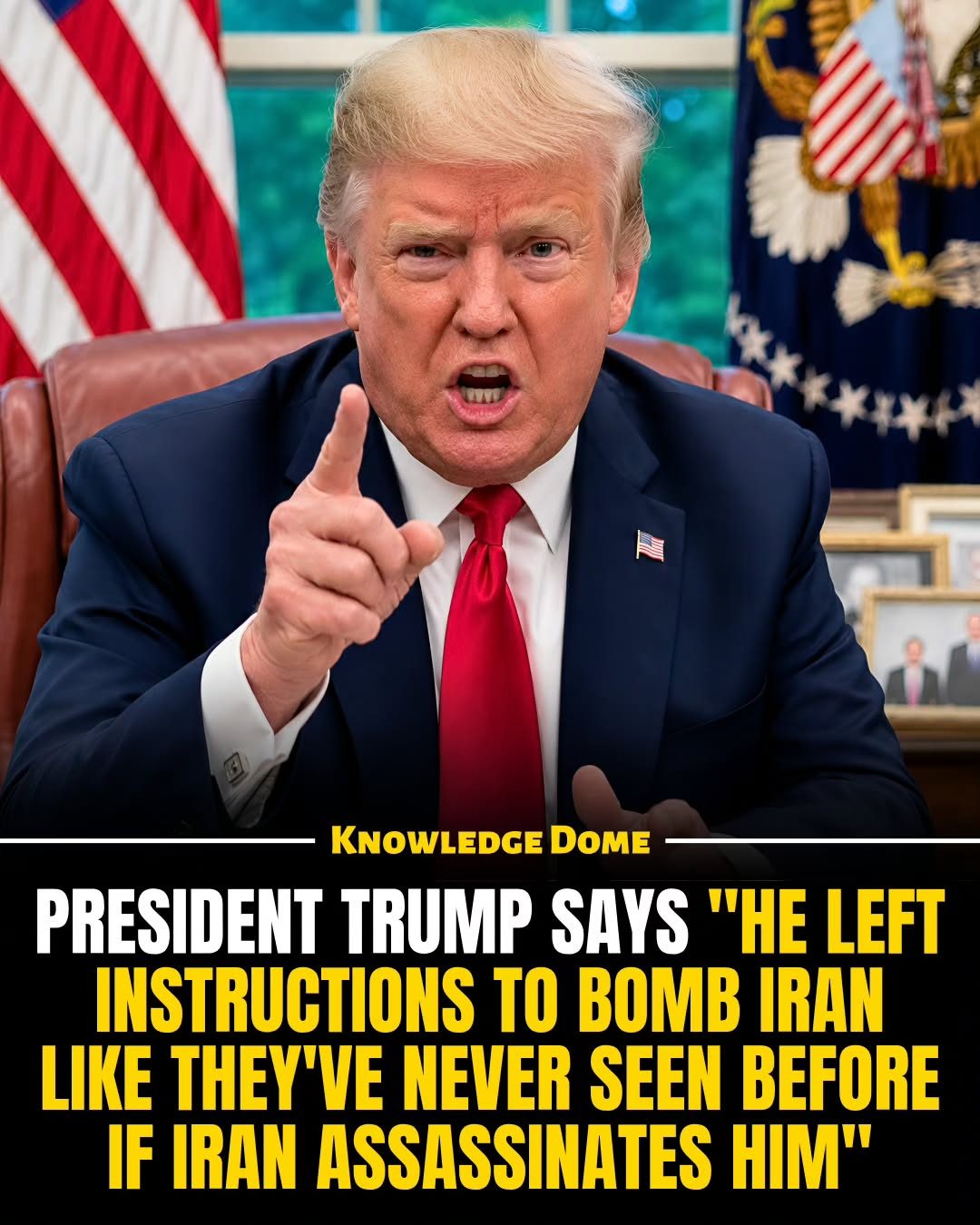
The Tense U.S.-Iran Relations: Trump's Public Remarks
President Donald Trump's recent public statements about Iran have intensified the already tense relations between the U.S. and Iran. Trump revealed that he has left explicit instructions for the U.S. military in the event of his assassination by Iran. If Iran were to succeed in killing him, the U.S. military is instructed to carry out extremely strong and powerful attacks to ensure that Iran "would never forget." This revelation has sparked fears, debates, and questions about the potential escalation of conflict.
Context/ Why This Matters
Trump's remarks come in the wake of heightened tensions between the U.S. and Iran, which have been ongoing since 2020. The tensions escalated significantly when Trump ordered a drone strike that resulted in the death of Iranian General Qasem Soleimani. This action has been a focal point of the ongoing conflict between the two nations. Trump’s latest statements have further exacerbated the situation, raising concerns about potential military retaliation and the broader implications for global security.
Trump’s Statements
The Instructions
Trump’s instructions to the U.S. military are clear: if he is assassinated by Iranian forces, the military is to respond with overwhelming force. The specifics of these instructions are not publicly detailed, but the message is unambiguous—a retaliatory strike so powerful that Iran would face unmistakable consequences.
The Historical Context
The backdrop to these instructions is the 2020 drone strike that killed Iranian General Qasem Soleimani. Soleimani was a high-ranking military commander in Iran, and his death was seen as a significant blow to Iranian military leadership. Since then, the U.S. and Iran have engaged in a series of escalating disputes, with each side taking actions that have only served to heighten tensions.
The Current Situation
Trump’s remarks have further escalated tensions, particularly in the context of ongoing concerns about Trump’s safety. Reports suggest that there are growing conflict and security worries, as well as the immediate threat perceived by Trump that Iran is ready and capable of carrying out an assassination. Trump’s subsequent posts, where he stated that missiles were ready and aimed at Iran, have only added to the sense of urgency and danger.
Expert Views
While Trump’s statements have drawn significant attention, some experts have pointed out the complexity of the situation. There is no automatic “dead man’s switch” for war. If a president were to be assassinated, the next in line, the Vice President, would still have to make the final decision on any retaliatory action. This means that while Trump’s instructions are public and alarming, they do not constitute an automatic trigger for military action. The decision would ultimately lie with the Vice President, taking into account a range of factors, including the broader geopolitical landscape and the potential repercussions of such a move.
Practical Tips
For those interested in understanding the current tensions and their implications, it's important to stay informed about the latest developments. Here are a few tips to navigate the complex landscape:
-
Keep Updated: Follow reliable news sources to stay informed about the latest developments in U.S.-Iran relations. The situation can change rapidly, and staying updated can help in understanding the broader context.
-
Consider Multiple Perspectives: Understand that both the U.S. and Iran have valid viewpoints. Considering multiple perspectives can provide a more nuanced understanding of the conflict.
-
Stay Calm and Analytical: While the situation is tense, it's important to remain calm and analytical. Avoid sensationalism and try to assess the situation based on factual information.
-
Understand the Historical Context: The current tensions are rooted in a history of conflicts and disputes. Understanding the historical context can help in making sense of the current situation.
Important Takeaways
-
Escalating Tensions: The U.S.-Iran relations are at a critical juncture, with Trump’s statements further escalating tensions that have been ongoing since 2020.
-
No Automatic Response: Despite Trump’s instructions, there is no automatic “dead man’s switch” for war. The final decision would lie with the Vice President, who would need to consider a range of factors.
-
Importance of Staying Informed: The situation is complex and evolving. Staying informed and considering multiple perspectives can help in navigating the current landscape.
Conclusion
In an already volatile geopolitical environment, President Donald Trump's recent statements about potential military action against Iran have added a new layer of complexity and tension. These remarks, along with the broader context of U.S.-Iran relations, underscore the importance of staying informed and understanding the nuances of international politics. As the situation continues to evolve, it is essential to remain vigilant and consider multiple perspectives to gain a comprehensive understanding of the current landscape.
Watch the Reel
Questions readers ask
What specific instructions did Trump leave for the U.S. military in case of his assassination by Iran?
Trump instructed the U.S. military to launch extremely strong and powerful attacks on Iran, aimed at ensuring that Iran would face severe consequences and 'never forget'.
How have these remarks impacted the relationship between the U.S. and Iran?
Trump's comments have further intensified the already tense relations between the U.S. and Iran, raising concerns about potential military retaliation and broader global security implications.
What event preceded the heightened tensions between the U.S. and Iran mentioned in the article?
The tensions significantly escalated following the 2020 drone strike ordered by Trump that resulted in the death of Iranian General Qasem Soleimani.
Why did Trump's statement mention that Iran would 'never forget' if he were assassinated?
Trump’s statement implies that the U.S. military response would be so severe and impactful that it would leave a lasting impression on Iran, deterring future aggression.
What are the potential global security implications of Trump's warning to Iran?
Trump's warning raises fears of a broader conflict, which could destabilize the region and have far-reaching consequences for global security and international relations.
How has the public and international community reacted to Trump's remarks?
The public and international community have reacted with a mix of concern, debate, and questions, particularly about the potential for military escalation and the broader implications for global security.
What is the significance of the 2020 drone strike on U.S.-Iran relations?
The 2020 drone strike that killed Iranian General Qasem Soleimani marked a critical turning point in U.S.-Iran relations, leading to heightened tensions and ongoing diplomatic and military concerns.
Recent articles
Fresh deep dives from the latest Reels we unpacked.




Comments
Be the first to comment.