Understanding the Impact of Trump's Trade Policies on Global Export Competitiveness
The shift in U.S. trade rules under the Trump administration has significantly altered the global trade landscape. Countries like Mexico and Canada have gained a competitive edge, while others have struggled to keep up. This analysis delves into how Trump's trade policies have reshaped export competitiveness, using data and visualizations to illustrate the winners and losers in this trade shake-up.
Context: Shifting Trade Dynamics
Under the Trump administration, the U.S. implemented a series of tariffs and trade agreements that have had far-reaching effects on global economies. These policies, aimed at protecting domestic industries and reducing trade deficits, have inadvertently created winners and losers among trading partners. Understanding these dynamics is crucial for businesses and governments navigating the complex world of international trade.
Trump Tariff Advantage: Winners and Losers
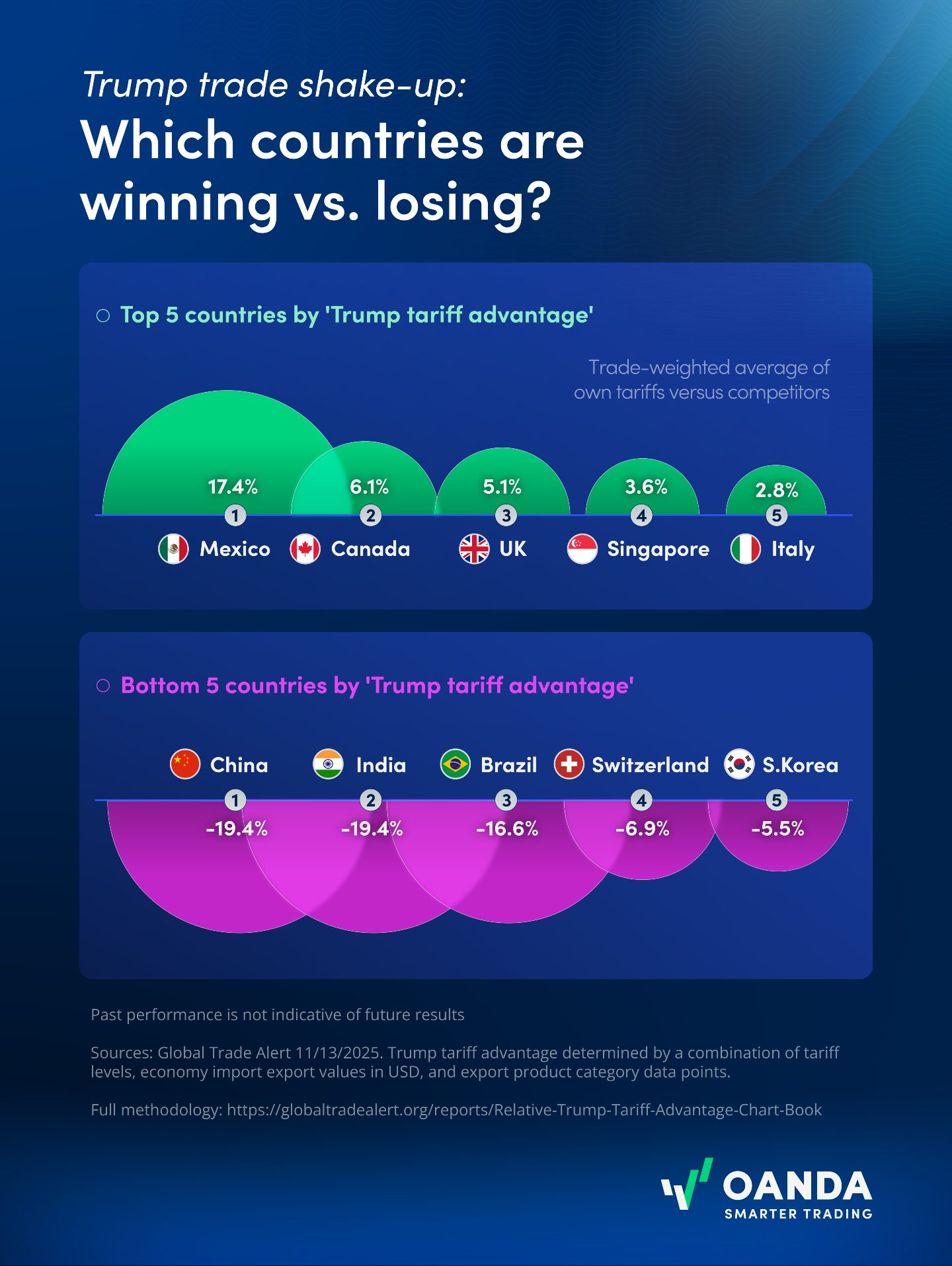
To grasp the impact of Trump's trade policies, it's essential to look at the trade-weighted average of tariffs for different countries. This metric compares a country's own tariffs with those of its competitors, providing a clear picture of who stands to gain or lose from the current trade environment.
Top Performers
Several countries have capitalized on the new trade dynamics, achieving a significant "Trump tariff advantage." These countries have seen their export competitiveness boosted by the shift in U.S. trade policies. The top performers include:
- Mexico (17.4% advantage): Mexico has benefited from renegotiated trade agreements and strategic tariff reductions, making it a formidable competitor in global markets.
- Canada (6.1% advantage): Canada's strong trade relationship with the U.S., bolstered by the United States-Mexico-Canada Agreement (USMCA), has helped it maintain a competitive edge.
- UK (5.1% advantage): Despite Brexit challenges, the UK has managed to leverage trade deals and tariff adjustments to its advantage.
- Singapore (3.6% advantage): Known for its robust financial sector and strategic trade policies, Singapore has continued to thrive under the new trade regime.
- Italy (2.8% advantage): Italy's diverse export sectors and strategic trade agreements have positioned it well in the shifting trade landscape.
Struggling Economies
On the other hand, some countries have found themselves at a disadvantage due to the Trump administration's trade policies. The bottom performers include:
- China (-19.4% disadvantage): China has faced significant tariffs on various goods, affecting its export competitiveness and overall trade balance.
- India (-19.4% disadvantage): India's trade relationship with the U.S. has been strained by tariff disputes and trade restrictions, negatively impacting its export competitiveness.
- Brazil (-16.3% disadvantage): Brazil's exports have been hit hard by tariffs on metals and other key industries, leading to a significant trade disadvantage.
- Switzerland (-6.9% disadvantage): Switzerland's financial sector has been impacted by trade restrictions, affecting its overall export performance.
- South Korea (-5.5% disadvantage): South Korea's automotive and electronics industries have faced tariffs, leading to a competitive disadvantage in global markets.
Methodology and Data Sources
The analysis of "Trump tariff advantage" is based on a comprehensive methodology that combines tariff levels, economy import values, and export product category data points. This approach, as detailed in the Global Trade Alert report, provides a nuanced understanding of how trade policies impact different countries.
- Sources: The data is sourced from Global Trade Alert, a reliable and comprehensive source for trade policy analysis.
- Data Points: The analysis considers tariff levels, import values, and export product categories to determine the relative advantage or disadvantage of each country.
Practical Tips for Navigating the Trade Landscape
For businesses and governments looking to navigate the complex trade environment, here are some practical tips:
Stay Informed
Keep up-to-date with the latest trade policies and tariff changes. Regularly reviewing trade agreements and policy updates can help you anticipate changes and adjust your strategies accordingly.
Diversify Trade Partners
Relying on a single market can be risky. Diversifying your trade partners can help mitigate the impact of tariffs and trade restrictions. Explore new markets and strengthen existing trade relationships to maintain a balanced and resilient trade portfolio.
Leverage Trade Agreements
Take advantage of existing trade agreements and seek new ones. Trade agreements can provide preferential treatment, lower tariffs, and reduce trade barriers, making it easier to do business in foreign markets.
Adapt to Tariff Changes
Be prepared to adapt your pricing and product strategies in response to tariff changes. This may involve adjusting prices, exploring alternative sourcing, or diversifying product offerings to maintain competitiveness.
Engage in Policy Dialogue
Participate in policy discussions and advocacy efforts. Engaging with policymakers and industry groups can help shape trade policies that benefit your business and industry.
Important Takeaways
The shift in U.S. trade policies under the Trump administration has created a dynamic and competitive global trade environment. Countries like Mexico and Canada have gained significant advantages, while others face substantial challenges. Understanding these dynamics and adapting to the changing trade landscape is crucial for businesses and governments alike. By staying informed, diversifying trade partners, leveraging trade agreements, and engaging in policy dialogue, it is possible to navigate the complexities of the current trade environment successfully.
Conclusion
The impact of Trump's trade policies on global export competitiveness is a multifaceted issue with significant implications for countries around the world. By analyzing the trade-weighted average of tariffs and understanding the winners and losers, we gain valuable insights into the current trade dynamics. Whether you are a business leader, policymaker, or trade professional, staying informed and adaptable is key to thriving in this ever-evolving global trade landscape.
Watch the Reel
Questions readers ask
How have Trump's trade policies affected Mexico's export competitiveness?
Mexico has seen a notable increase in export competitiveness due to several factors, including the United States-Mexico-Canada Agreement (USMCA) and the tariffs imposed on Chinese goods. These changes have made Mexico a more attractive destination for foreign direct investment and manufacturing, further boosting its export capabilities. Additionally, Mexico's proximity to the U.S. has allowed it to capture a significant portion of the redirected supply chains.
Which countries have been most negatively impacted by Trump's trade policies?
Countries like China and the European Union have faced significant challenges due to Trump's trade policies. Tariffs imposed on Chinese goods have led to a decrease in exports to the U.S. Similarly, disputes with the EU, particularly over steel and aluminum tariffs, have strained trade relations and negatively impacted export competitiveness for European countries.
How has the USMCA influenced the trade dynamics between the U.S., Mexico, and Canada?
The USMCA (United States-Mexico-Canada Agreement) has strengthened trade ties and provided clear advantages for Mexico and Canada. These countries have seen increased export opportunities to the U.S. market, thanks to more favorable terms and reduced tariffs. The agreement has also facilitated supply chain integration, making North America a more cohesive trading bloc.
What are the key factors driving the global export market analysis under Trump's trade policies?
The global export market analysis under Trump's trade policies involves examining several key factors. These include the implementation of tariffs, changes in trade agreements, shifts in supply chain dynamics, and the competitive advantages or disadvantages faced by different countries. Understanding these elements helps in predicting future trade trends and assessing the overall impact on global export competitiveness.
Which top export countries have benefited the most from Trump's trade shake-up?
Countries like Mexico and Canada have emerged as the top beneficiaries of Trump's trade shake-up. Mexico, in particular, has gained significant tariff advantages, while Canada has secured trade benefits through the USMCA. Both countries have leveraged these opportunities to enhance their export competitiveness and attract more foreign investments, further solidifying their positions in the global market.
How have bottom export countries responded to the changes in international trade dynamics under Trump's policies?
Countries that have seen a decline in export competitiveness under Trump's trade policies have had to adapt quickly. Some have sought to diversify their export markets, while others have negotiated new trade agreements to mitigate the impact of U.S. tariffs. However, adapting to the new trade dynamics has proven challenging for these countries, often requiring significant adjustments in their trade strategies and domestic policies.
Recent articles
Fresh deep dives from the latest Reels we unpacked.




Comments
Be the first to comment.