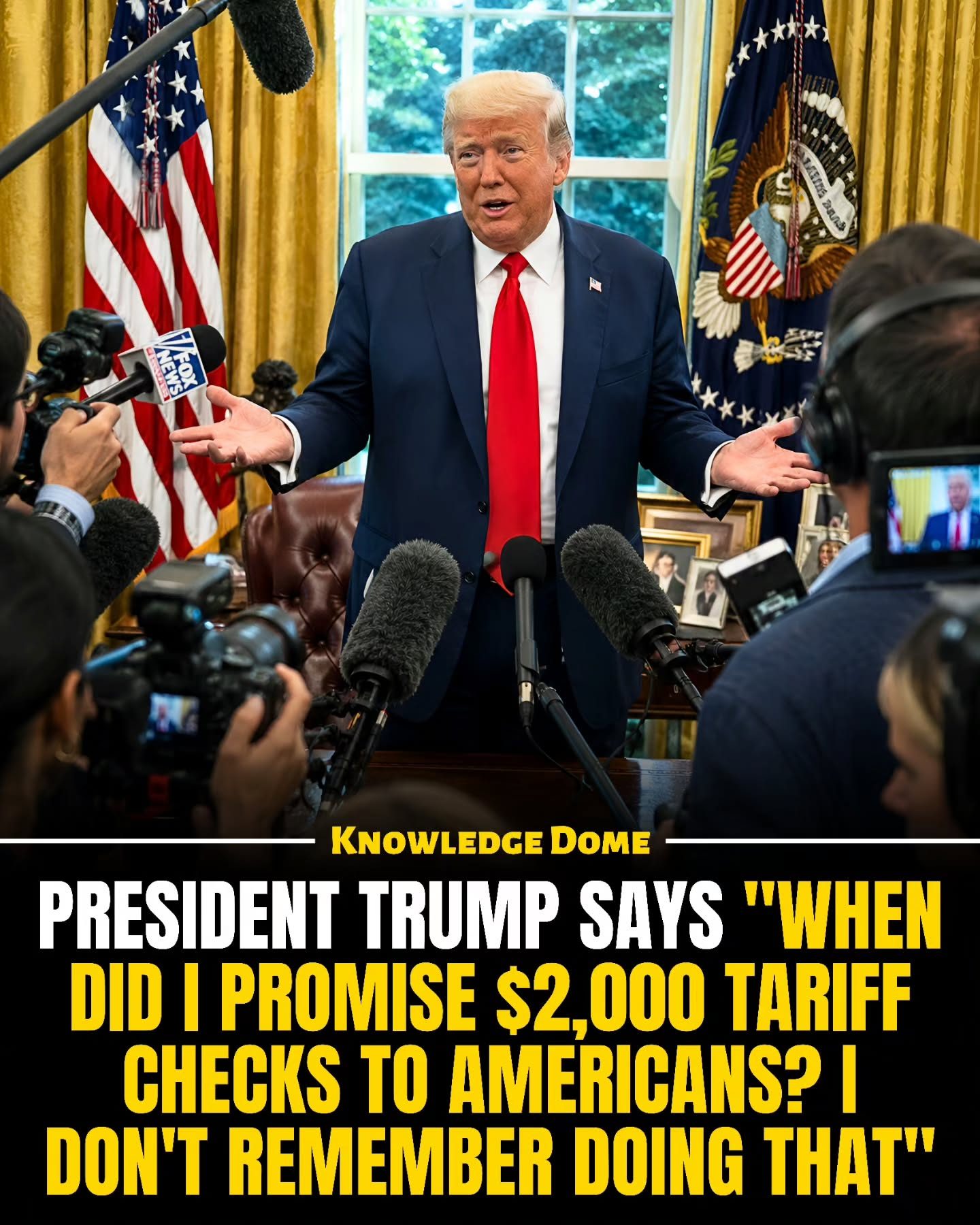
Recent Statements by President Trump Spark Debate on Tariff Checks
The recent remarks by President Trump regarding the proposed $2,000 tariff checks have ignited a significant political debate. This controversy arose during a media interaction where the president was questioned about the idea of distributing money to Americans from tariff revenue. Trump's response—stating that he did not remember promising $2,000 checks—has garnered widespread attention and sparked discussions across social media and news outlets.
Why This Matters
The statement has become a focal point for critics and supporters alike, each offering differing interpretations. Critics argue that this response seems to contradict previous promises, suggesting a shift in policy that could erode public trust. Supporters, on the other hand, contend that the president's primary focus has always been on using tariffs to exert pressure on foreign nations, safeguard American jobs, and bolster U.S. manufacturing.
The Context of the Remark
To fully understand the context, it's essential to look at the broader picture of tariff policies and their implications. Tariffs are taxes imposed on imported goods, and they can serve multiple purposes, including generating revenue, protecting domestic industries, and influencing trade policies. The idea of using tariff revenue to send direct payments to Americans is a novel approach that has both advantages and drawbacks.
The Historical Context
In the past, leaders have used economic promises to rally support, particularly during election campaigns. These promises often focus on tangible benefits, such as financial aid, tax cuts, or economic stimulus packages. However, when such promises are not clearly outlined or implemented, they can lead to a sense of broken trust among the public.
Public Reaction and Criticism
Critics of Trump's statement point out that he has made strong economic promises in the past, which were crucial for securing votes. The idea that a significant promise like $2,000 checks might be forgotten or repurposed raises questions about the reliability of such commitments. Many argue that when leaders make bold promises, they need to follow through on them with clear details to maintain public confidence and trust.
Supporters' Viewpoint
Supporters of the president, however, offer a different perspective. They assert that the primary aim of tariff policies has always been to pressure foreign countries, safeguard American jobs, and support domestic manufacturing. From this viewpoint, the statement was not a reversal of policy but a clarification that the tariffs were never intended as direct cash payments to Americans.
Implications for Policy and Public Trust
Both the critics and the supporters raise valid points that highlight the broader implications of the president's remarks. The debate underscores the delicate balance between making significant economic promises and implementing them effectively.
Economic Policy and Public Trust
Economic policies that involve direct payments to the public can have far-reaching effects. When such policies are introduced, they need to be transparent and consistent. Any perceived wavering or backtracking can undermine public trust, which is essential for the effective functioning of governance.
Political Strategy and Communication
Political strategies often involve making promises that resonate with voters. However, the implementation of these promises requires careful planning and clear communication. Leaders must ensure that their policies are not only feasible but also understandable to the public. This clarity can help avoid misunderstandings and maintain trust.
Practical Tips
Here are some practical tips for understanding and navigating the implications of such policy statements:
- Stay Informed: Keep an eye on official statements and clarifications from the administration regarding economic policies and tariff usage.
- Evaluate Context: Understand the broader context of economic policies and how they align with long-term goals, such as job protection and manufacturing support.
- Seek Clarity: Engage in discussions and seek clarifications from reliable sources when there are uncertainties about policy changes or promises.
Important Takeaways
The recent debate around President Trump's statement on tariff checks highlights several critical points:
- Policy Consistency: Economic policies, especially those involving direct payments, need to be consistent and clearly communicated to maintain public trust.
- Public Trust: Perceived reversals or inconsistencies in policy can erode public trust, which is vital for governance.
- Economic Strategy: The use of tariffs as a tool for economic policy can have multiple objectives, including job protection and manufacturing support.
Conclusion
The debate surrounding President Trump's remarks about $2,000 tariff checks underscores the intricate relationship between economic policy, public trust, and political communication. While critics and supporters hold differing views, the core issue remains the need for consistent and transparent policy implementation. As the discussion continues, it is essential to stay informed, evaluate the context, and seek clarity to better understand the implications of such policy statements.
Watch the Reel
Questions readers ask
What exactly are Trump's tariff checks?
Trump's tariff checks refer to the proposed direct payments to Americans funded by revenue generated from tariffs. These checks were suggested as a way to distribute a portion of the funds collected from tariffs on imported goods to U.S. citizens, with a reported figure of $2,000 per person.
Why has the tariff check controversy gained so much attention?
The controversy surrounding Trump's tariff checks has gained significant attention due to the President's recent statements and their perceived inconsistency with previous promises. This has sparked debates about the reliability of political commitments and the potential impact on U.S. citizens.
How have critics and supporters reacted to Trump's comments?
Critics of Trump's comments have questioned his consistency and suggested a potential erosion of public trust, while supporters have defended his trade policies. Supporters argue that the implementation of tariffs can be beneficial to American industries, while critics are concerned about the impact on consumers.
What are the potential implications of tariff checks for American citizens?
The potential implications of tariff checks for American citizens are multifaceted. While direct payments could provide financial relief, the broader impact of tariffs on the economy, including potential price increases and industry disruptions, remains a subject of debate.
How do recent statements by President Trump relate to his overall economic policy?
President Trump's statements about tariff checks relate to his broader economic policy by emphasizing his administration's approach to trade and tariffs. The controversy highlights the complex nature of tariffs and their role within his economic strategy, which has been a central theme of his presidency.
What role does the media play in the tariff check debate?
The media has played a significant role in the tariff check debate by amplifying the discussions and providing a platform for various viewpoints. Social media and news outlets have been instrumental in disseminating information and facilitating conversations about the implications of tariff checks and Trump's economic policies.
Recent articles
Fresh deep dives from the latest Reels we unpacked.




Comments
Be the first to comment.