Trade Destruction Analysis
Context: What’s at Stake?
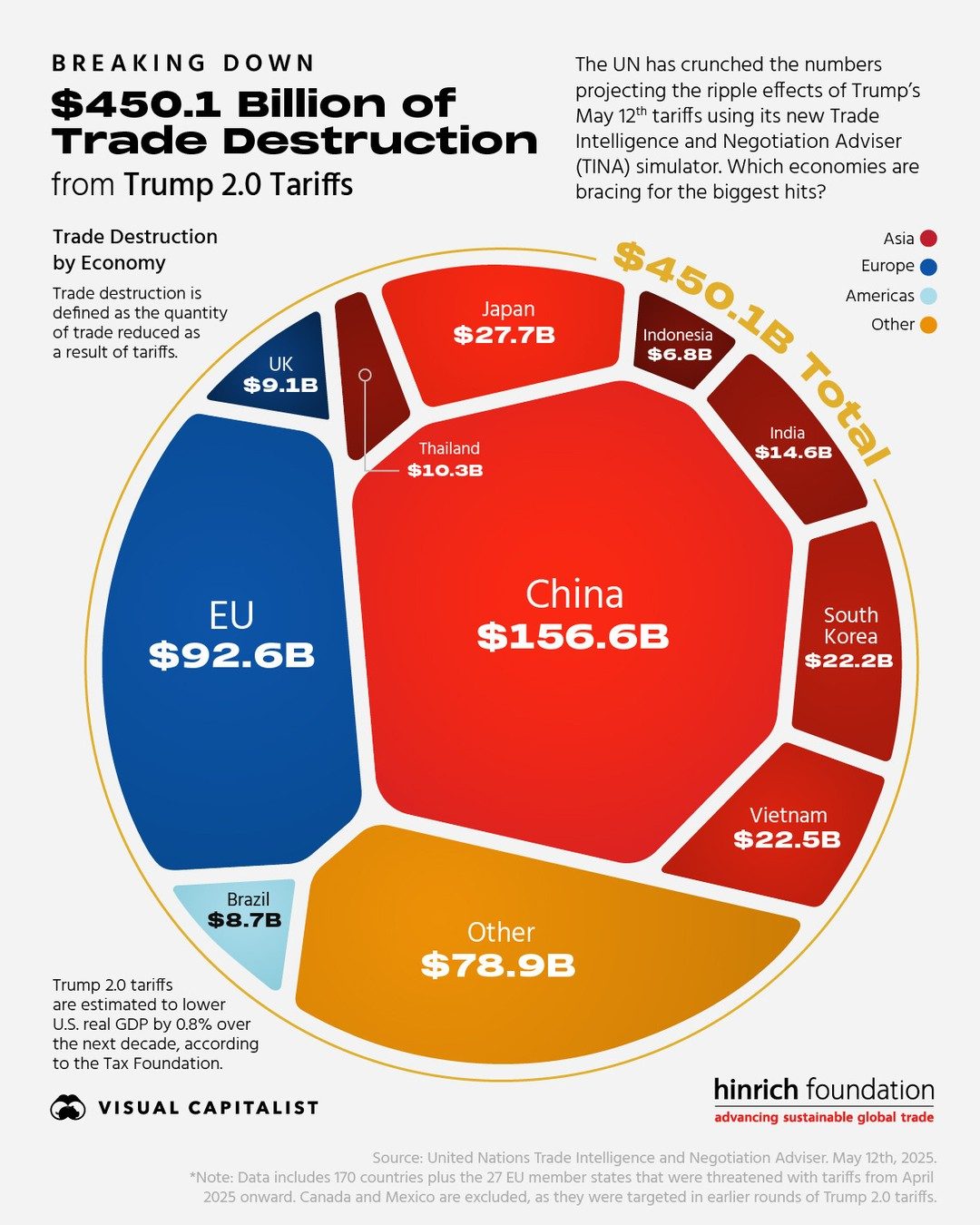
The implementation of tariffs can have far-reaching effects on global trade. On May 12, the United Nations projected the impact of Trump’s tariffs, revealing which economies were expected to experience the most significant trade losses. This analysis is grounded in the findings from the Hinrich Foundation, which utilized the UN’s Trade Intelligence and Negotiation Advisor (TINA) model to predict the impact. The projected trade destruction from these tariffs totals $450.1 billion, affecting regions across the globe.
Main Discussion
Global Trade Destruction Breakdown
The most heavily impacted regions include China, Europe, and the United States. Here’s a look at the projected losses by region:
- China: At $156.6 billion, China faces the largest trade destruction. This is due to its extensive trade ties with the U.S. and its significant role in global supply chains.
- Europe: Europe follows closely with $92.6 billion in projected trade destruction. This includes both the EU and the UK, which are significant trading partners with the U.S.
- Asia: The region as a whole is expected to lose $6.8 billion, with notable amounts in Thailand ($10.3 billion), Indonesia ($8.7 billion), India ($14.6 billion), and Vietnam ($22.5 billion).
- Americas: The Americas region, including countries like Brazil ($8.7 billion), will lose $22.2 billion.
- Other Regions: This diverse category, which includes a variety of smaller economies, is projected to lose $78.9 billion.
Impact on U.S. GDP
The ripple effects of these tariffs are not limited to other countries. The U.S. real GDP is expected to decrease by 0.8% over the next decade, according to The Tax Foundation. This reduction is a result of increased prices for consumers and businesses due to tariffs, affecting the overall economic performance.
Practical Tips
For Businesses
If you operate in any of the affected regions, here are some practical steps to mitigate the impact:
- Diversify Supply Chains: Consider diversifying your supply chains to reduce reliance on any single country or region.
- renegotiate Contracts: Review and renegotiate contracts to accommodate for potential price increases.
- Stay Informed: Keep track of policy changes and economic indicators to anticipate future shifts.
For Policymakers
For those in a position to influence policy, these strategies can help:
- Foster Trade Agreements: Strengthen trade agreements and partnerships to increase economic resilience.
- Provide Support: Implement measures to support businesses and industries that are most affected by tariffs, such as subsidies or tax breaks.
- Promote Diplomacy: Engage in diplomatic efforts to reduce trade tensions and facilitate negotiations for mutual benefits.
Important Takeaways
The projected trade destruction from Trump’s May 12 tariffs underscores the interconnected nature of the global economy. Key takeaways include:
- China and Europe are the most significantly impacted by the tariffs.
- U.S. real GDP is expected to decrease by 0.8% over the next decade.
- Diversification and adaptation are critical for businesses to navigate these challenges.
- Policy measures can help mitigate the adverse effects of tariffs on economic growth.
Conclusion
The projected trade destruction from Trump’s tariffs highlights the importance of understanding the broader economic impact of policy decisions. By leveraging models like the UN’s TINA simulator, we can gain insights into the potential consequences and prepare accordingly. Whether you’re a business leader, policymaker, or economic analyst, being informed about these ripple effects is crucial for navigating the complex landscape of global trade.
Watch the Reel
Questions readers ask
How did Trump's tariffs affect the U.S. GDP?
Trump's tariffs are estimated to cause a 0.8% decrease in the U.S. GDP, the largest impact on any single country. This decline can be attributed to the significant disruption in global trade flows and the subsequent economic ripple effects. The impact on GDP reflects both the direct costs of tariffs and the indirect effects on consumer spending and business investment.
Which countries were most affected by Trump's tariffs?
The most heavily impacted countries by Trump's tariffs were China, Europe, and the United States. China is expected to face the most significant losses at $156.6 billion. The tariffs are anticipated to lead to a substantial decrease in trade volumes and an increase in prices for consumers and businesses in these regions. These countries are major trading partners of the U.S. and therefore, experience significant trade disruption.
How do tariffs affect global trade volumes?
Tariffs significantly reduce global trade volumes by increasing the cost of imports and exports. When tariffs are imposed, the price of goods for consumers and businesses rises, leading to decreased demand. This decline in demand can result in lower production and trade volumes, creating a ripple effect across global supply chains.
What is the projected total global trade loss due to Trump's tariffs?
The total projected global trade loss due to Trump's tariffs is $450.1 billion. This figure highlights the widespread impact of these trade policies on the global economy. The losses are distributed across various regions, with China, Europe, and the United States bearing the brunt of the impact.
How do tariffs impact consumer prices?
Tariffs directly impact consumer prices by increasing the cost of imported goods. When tariffs are imposed, businesses often pass on these additional costs to consumers, resulting in higher prices. This can lead to a decrease in purchasing power and a potential shift in consumer behavior, as people look for more affordable alternatives. Higher prices can also contribute to inflation, further affecting the broader economy.
What is the significance of the UN's TINA model in analyzing trade impacts?
The UN’s Trade Intelligence and Negotiation Advisor (TINA) model is a tool used to predict the impact of trade policies, such as tariffs, on global trade. By utilizing the TINA model, the UN and organizations like the Hinrich Foundation can provide insights into how different regions and economies will be affected by trade policies. This analysis helps policymakers and stakeholders understand the potential economic consequences and make informed decisions.
How do tariffs affect businesses and industries?
Tariffs can have a profound impact on businesses and industries, particularly those that rely on imports or exports. Increased tariffs lead to higher input costs for businesses, which can reduce profitability and competitiveness. Additionally, tariffs can disrupt supply chains, leading to delays and increased operational costs. This can force businesses to adjust their strategies, potentially leading to job losses or relocation to more favorable trading environments.
Related deep dives
Similar reads based on topic and creator.


Recent articles
Fresh deep dives from the latest Reels we unpacked.




Comments
Be the first to comment.