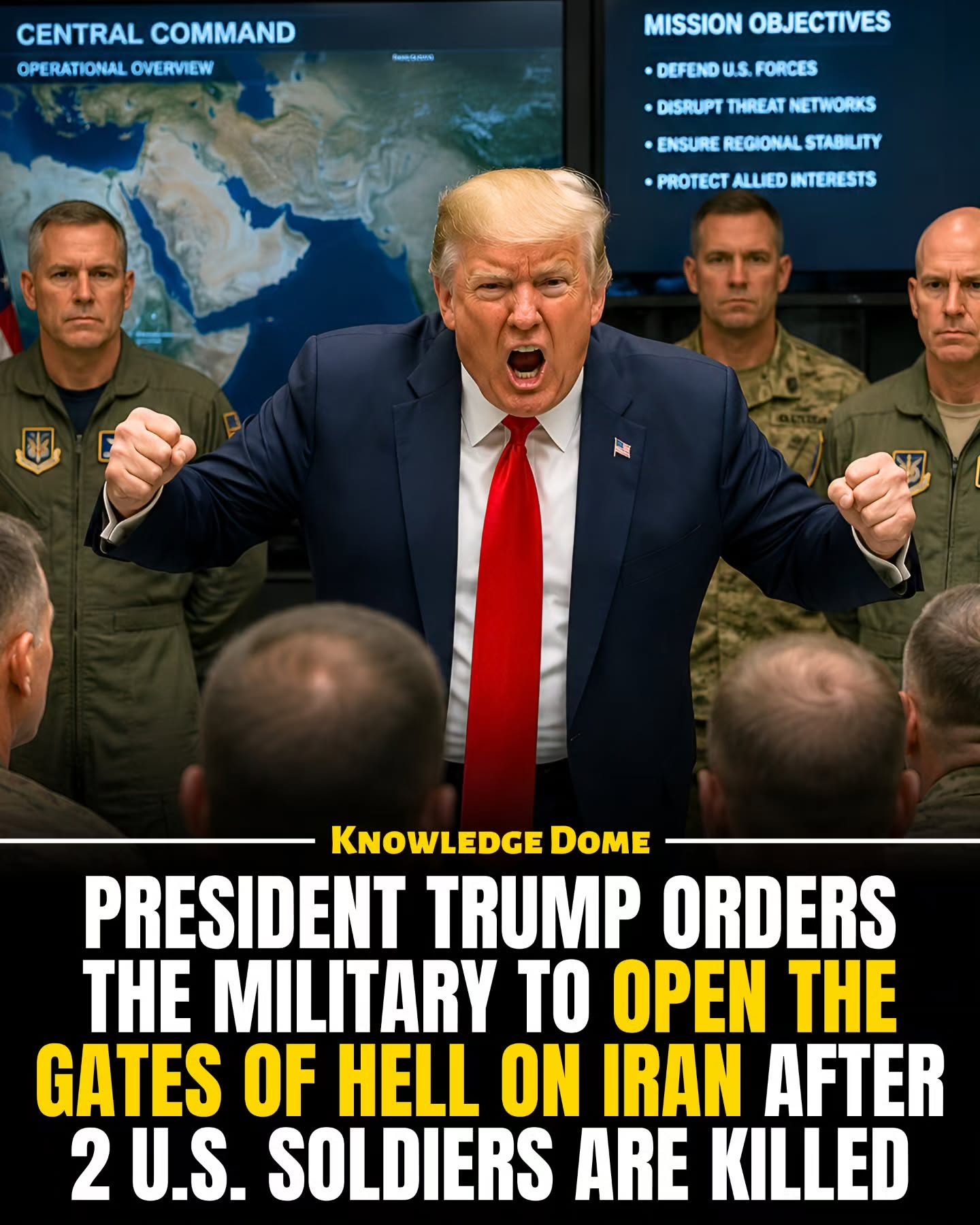
President Donald Trump's Strong Post on Truth Social
Context / Why this matters
The heightened tensions between the United States and Iran have intensified, especially following President Donald Trump's recent post on Truth Social, which claimed that he ordered CENTCOM to "open the gates of hell" on Iran. During this period, four U.S. service members were killed, and the situation has become more serious and emotional for many Americans. This escalation underscores the delicate balance of power in the Middle East and the potential for broader conflict.
The Military Response
In his post, Trump stated that CENTCOM was directed to initiate aggressive measures against Iranian-backed targets. The text appearing on the screen over the digitally altered image of Trump highlighted key objectives, including:
- Defending U.S. Forces
- Disrupting Threat Networks
- Ensuring Regional Stability
These objectives reflect a strategic plan to counter Iranian aggression while maintaining stability in the region. The nightly air strikes, mentioned in the post, suggest a proactive stance in dealing with Iranian-backed forces. The air strikes are part of a broader strategy to disrupt Iranian activities while protecting American interests.
Regional Implications
The Strait of Hormuz and the Red Sea are critical maritime routes for global trade. The U.S. military's actions in Yemen, which include strikes on Houthi forces, aim to safeguard these vital shipping lanes. Iranian-backed forces have been a significant threat to these routes, and the U.S. military's response indicates a strong commitment to maintaining the integrity of these trade routes.
The Risk of Wider War
While the U.S. military has been active in its response, military advisers close to Trump have warned about the potential for a much larger war. The ongoing strikes have so far failed to force Iran to make significant concessions, raising concerns about the effectiveness of current military strategies. This underscores the delicate balance that military leaders must maintain between asserting U.S. power and avoiding a full-scale war.
Personal Impact
The deaths of the four American service members—1st Lt. Tyler James Feehan, Staff Sgt. Michael Emmanuel Swinton, Sgt. Angel S. Rampersad, and Pvt. Isabella Gonzales—have deeply affected many Americans. Their sacrifice highlights the emotional toll of ongoing conflicts and the seriousness of the situation. The narrative of their deaths, interwoven with the military's strategic actions, adds a human element to the broader political and military discourse.
Strategic Considerations
The concept of "opening the gates of hell" on Iran symbolizes a severe escalation of military action. It includes potential strikes on critical Iranian infrastructure, such as bridges and power plants. This approach aims to inflict significant damage on Iran's ability to support its military operations, thereby weakening its position in the conflict.
Public Reaction and Information
The digitally altered image, which depicts Trump in a military briefing room setting, has likely sparked a range of public reactions. The visual representation of military strategy, combined with the strong language used in the post, highlights the emotional and political dimensions of the conflict. This representation aims to rally public support while clearly communicating the severity of the situation to both domestic and international audiences.
Practical Tips for Staying Informed
Staying informed about geopolitical tensions like these requires a balanced approach. Here are some practical tips:
- Reliable Sources: Always seek information from reputable news outlets and official government sources. This ensures that you are getting accurate and up-to-date information.
- Critical Thinking: Be discerning about the information you consume. Consider multiple perspectives and avoid being swayed by emotionally charged rhetoric.
- Background Research: Understanding the historical context and ongoing developments can help you contextualize current events. This includes looking into past conflicts, strategic objectives, and the broader political landscape.
Important Takeaways
- Heightened Tensions: The conflict between the U.S. and Iran has escalated, with significant military actions and heightened rhetoric.
- Strategic Objectives: The U.S. military aims to defend its forces and disrupt Iranian threat networks while ensuring regional stability.
- Human Impact: The deaths of U.S. service members underscore the personal cost of these conflicts.
- Risks and Challenges: The potential for a larger war looms, and military leaders must navigate this complex situation carefully.
Conclusion
The post by Donald Trump on Truth Social, coupled with the ongoing military actions, highlights the critical situation in the Middle East. It underscores the need for a balanced approach to military strategy, the importance of understanding the human cost of conflict, and the necessity of staying informed through reliable sources. As the situation continues to unfold, the focus remains on maintaining stability while protecting American interests.
Watch the Reel
Questions readers ask
What prompted Trump's recent threat to Iran on Truth Social?
Trump's post was a response to escalating tensions and recent attacks that resulted in the deaths of four U.S. service members. The post was an assertion that he would take aggressive action against Iranian-backed forces to protect American interests.
What does 'opening the gates of hell' mean in this context?
This phrase was used by Trump to convey the severity of the expected military response. It suggests an intent to carry out aggressive, retaliatory military actions against Iranian targets and proxies.
How has the U.S. military responded to Trump's directive?
The U.S. military, specifically CENTCOM, has reportedly carried out nightly air strikes against Iranian-backed targets in response to the order. The goal is to protect U.S. interests and maintain stability in the region, but the full extent and impact of these actions are still unfolding.
What are the potential consequences of the escalated tensions between the U.S. and Iran?
The escalation of tensions could lead to a broader conflict in the Middle East, drawing in other regional actors and potentially causing significant loss of life and disruption to regional stability. There are also concerns about the effectiveness and unintended consequences of current military strategies.
Why is the Middle East considered a delicate balance of power?
The Middle East is home to numerous geopolitical tensions and competing interests, with various countries and non-state actors vying for influence. Any significant military action can have widespread and unpredictable repercussions, affecting not only the U.S. and Iran but also other regional players.
How have Iranian forces responded to the U.S. military actions?
While specific details of Iran's military response are not provided, Iranian forces are likely to retaliate in some fashion, potentially through asymmetric warfare or by supporting proxy groups. The situation is fluid, and the potential for further escalation is high.
What are some potential paths to de-escalation and conflict resolution?
Diplomatic efforts, direct negotiations, and international mediation could help mitigate the situation. However, these steps may be challenging given the current escalation of military actions and the political climate. A carefully calibrated approach is needed to avoid further conflict and find a peaceful resolution.
Recent articles
Fresh deep dives from the latest Reels we unpacked.




Comments
Be the first to comment.