Trump's Executive Orders in the First 100 Days of His Second Term
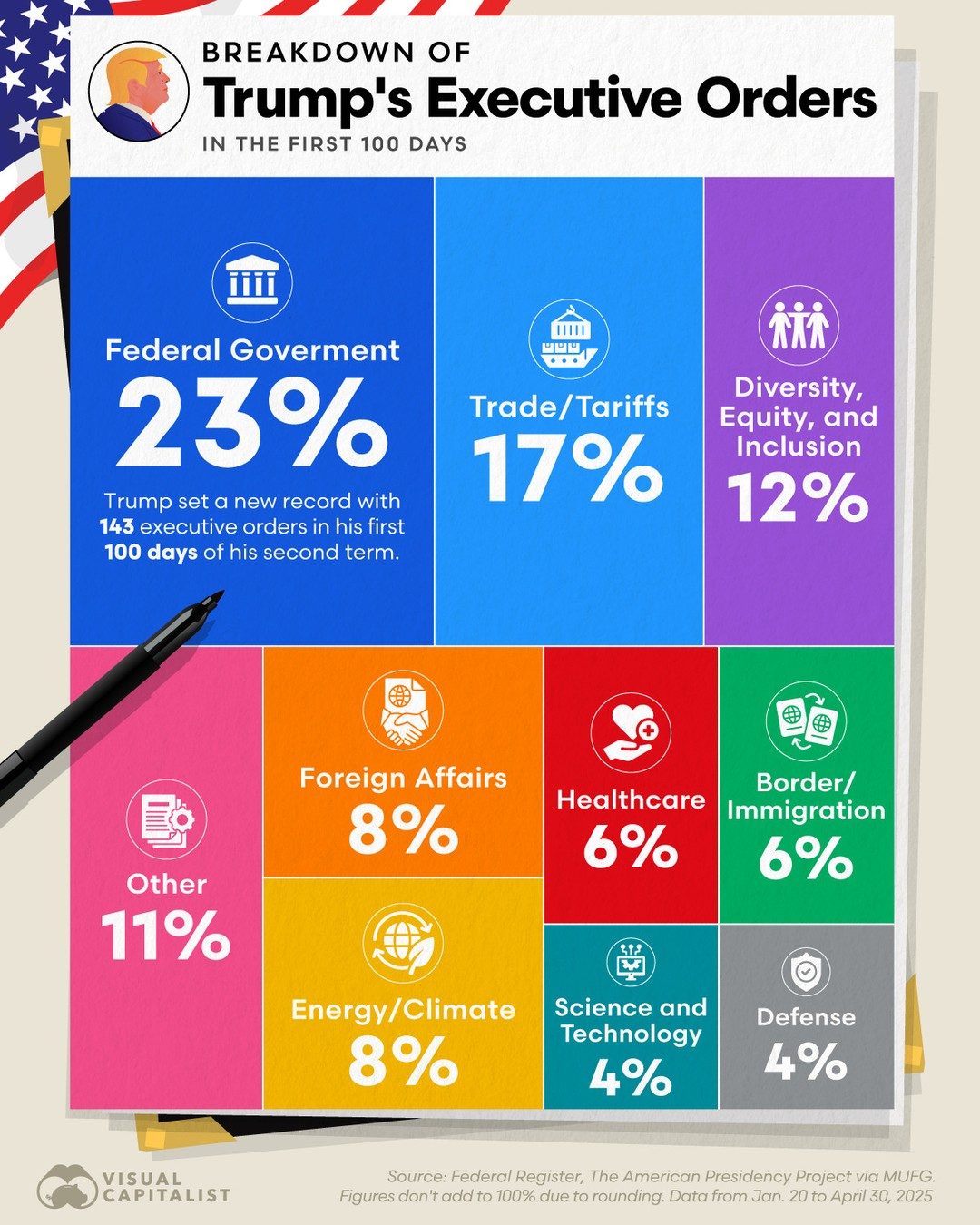
Donald Trump's first 100 days in office during his second term saw a flurry of activity, culminating in the signing of 143 executive orders. This number surpasses any other U.S. president's tally in the same timeframe. This breakdown examines these executive orders by topic, providing a clear picture of his priorities and focus areas.
Why This Matters
Executive orders are a powerful tool for a president to enact policy changes quickly and efficiently. They allow the president to direct government agencies and officials without requiring congressional approval. Therefore, the first 100 days of a presidency are often a critical period for setting the agenda and making immediate impacts.
Understanding the Breakdown
The executive orders issued by Trump during his first 100 days of his second term are divided into several key categories, each representing a significant percentage of the total. These categories provide insight into the administration's priorities and the targeted areas for immediate action.
Federal Government
Federal Government actions accounted for 23% of the executive orders. This includes directives aimed at restructuring government agencies, enhancing efficiency, and implementing new policies within various federal departments. The focus on the Federal Government reflects Trump's intent to streamline and improve the functioning of government agencies, potentially to ensure they align with his administration's goals.
Trade and Tariffs
Trade and Tariffs represented 17% of the executive orders. This category encompasses directives related to international trade policies, tariffs, and economic sanctions. Trump's emphasis on trade indicates a strong focus on shaping the country's economic policies and trade relationships, likely to promote domestic economic growth and protect industries from foreign competition.
Diversity, Equity, and Inclusion
Diversity, Equity, and Inclusion accounted for 12% of the executive orders. These directives are aimed at promoting inclusivity and equity within federal agencies and programs. This focus aligns with broader societal goals of fostering a more inclusive environment and ensuring that all citizens have equal opportunities and rights.
Climate Technology
Climate Technology made up 11% of the executive orders. These directives are likely focused on advancing climate technology and promoting sustainable development. This emphasis on climate technology could indicate a strategic shift towards addressing environmental concerns through technological innovation.
Foreign Affairs
Foreign Affairs was the subject of 8% of the executive orders. This category includes directives related to international relations, foreign policy, and diplomatic strategies. The focus on Foreign Affairs reflects the administration's efforts to shape global relationships and respond to international issues.
Healthcare
Healthcare directives accounted for 6% of the executive orders. These actions are likely aimed at reforming healthcare policies, possibly to address issues such as healthcare access, costs, and the Affordable Care Act. The focus on healthcare indicates a commitment to improving the nation's healthcare system and ensuring better health outcomes for citizens.
Border and Immigration
Border and Immigration directives made up 6% of the executive orders. These actions are likely focused on immigration policies, border security, and the management of immigration-related issues. The emphasis on this area reflects the administration's priorities in managing immigration and border control.
Energy and Climate
Energy and Climate directives accounted for 8% of the executive orders. This category includes actions related to energy policies, climate change mitigation, and environmental regulations. The focus on Energy and Climate indicates a commitment to addressing energy needs and environmental sustainability.
Science and Defense
Science and Defense directives made up 4% of the executive orders. These actions are likely aimed at advancing scientific research, defense technologies, and national security strategies. The focus on these areas highlights the administration's commitment to innovation and national defense.
Other
The remaining 11% of the executive orders fall into the "Other" category, encompassing a mix of directives that do not fit into the above categories. This includes actions related to various administrative, legislative, and regulatory matters that the president deemed important to address within the first 100 days.
Practical Tips
For those interested in understanding and following executive orders, here are a few practical tips:
- Stay Informed: Regularly check official government websites and news sources for updates on new executive orders and their implications.
- Track Policy Changes: Keep an eye on how executive orders translate into policy changes and regulatory actions within various federal agencies.
- Engage with Government Agencies: If a particular executive order impacts your industry or community, engage with relevant government agencies to understand the changes and provide feedback.
- Use Reliable Sources: Use credible sources like the Federal Register and The American Presidency Project for accurate information on executive orders.
Important Takeaways
This breakdown of Trump's executive orders in his first 100 days offers several key takeaways:
- Focus on Multiple Fronts: Trump's actions demonstrate a broad focus on various domestic and international issues, from government efficiency to trade policies and environmental sustainability.
- Setting the Agenda: The first 100 days are critical for setting the administration's agenda and priorities, and Trump's executive orders reflect his commitment to making immediate and significant changes.
- Prioritizing Key Areas: The distribution of executive orders across different categories highlights the areas Trump prioritized for immediate action.
Conclusion
Trump's 143 executive orders in his first 100 days of his second term provide a comprehensive view of his administration's priorities and focus areas. By examining the breakdown of these orders, it is clear that Trump sought to make immediate and strategic changes across various sectors, from federal government operations to international trade and environmental sustainability. Understanding these executive orders offers valuable insights into the direction and goals of the administration, providing a clearer picture of the policies and initiatives that will shape the nation in the coming years.
Watch the Reel
Questions readers ask
How many executive orders did Trump sign in his first 100 days of his second term?
Trump signed 143 executive orders in his first 100 days. This number is unprecedented, exceeding the count of any other U.S. president in the same period.
What were the main topics addressed by Trump's executive orders?
Trump's executive orders covered a wide range of topics. The most prominent areas included federal government restructuring, trade policies, and diversity, equity, and inclusion initiatives.
Why are the first 100 days of a presidency significant for executive orders?
The first 100 days are crucial because they set the tone for the presidency and allow the president to make significant changes quickly. Executive orders are a key tool during this period, as they enable the president to enact policies without requiring congressional approval.
What was the impact of Trump’s executive orders on federal government restructuring?
Federal government restructuring was a significant focus of Trump's executive orders. These orders aimed to streamline operations, reduce bureaucracy, and reallocate resources within various federal agencies to align with his administration's priorities.
How did Trump's executive orders address trade policies?
Trump's executive orders on trade policies encompassed a variety of actions, including the imposition of tariffs and the renegotiation of trade agreements. These measures were designed to protect domestic industries and reshape U.S. trade relationships with other countries.
In what ways did Trump's executive orders promote diversity, equity, and inclusion?
Trump's executive orders emphasized initiatives to promote diversity, equity, and inclusion. These efforts aimed to ensure fair treatment and equal opportunities within federal offices and government operations, fostering a more inclusive environment for all employees.
How did Trump's executive orders compare to those of other presidents in the first 100 days?
Trump's 143 executive orders in his first 100 days surpassed the number signed by any other U.S. president in the same period, including Barack Obama and Joe Biden. This highlights the administration's proactive approach to implementing policies swiftly and independently of congressional approval.
Recent articles
Fresh deep dives from the latest Reels we unpacked.




Comments
Be the first to comment.