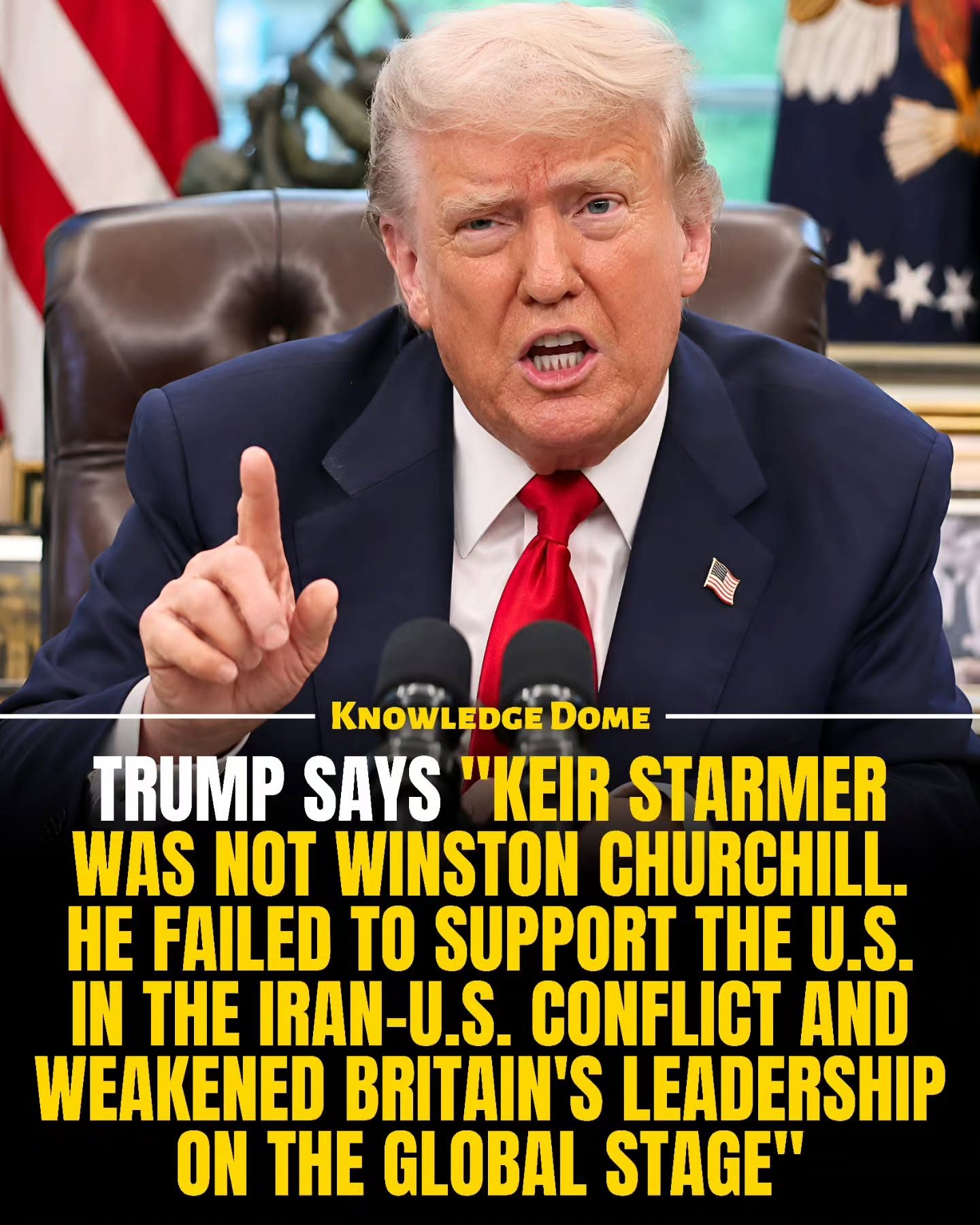
Political Tension Between the U.S. and UK: The Trump vs. Starmer Dispute
The recent criticism from former U.S. President Donald Trump directed at UK Prime Minister Keir Starmer has brought attention to the complexities of international alliances, particularly when dealing with military conflicts. The core of the dispute centers around the UK's refusal to allow U.S. aircraft to use British bases for military strikes against Iran. This incident highlights the delicate balance between national sovereignty and international cooperation, especially in high-stakes military operations.
Why This Matters
The tension between the U.S. and UK over military support underscores the broader issues of global leadership, strategic alliances, and the legalities of modern warfare. The dispute is not merely about military logistics but also about the expectations and objections of close allies in times of crisis. It raises questions about how nations navigate their roles in international conflicts and the potential consequences of disagreements among allies.
Main Discussion
The Diego Garcia Base Controversy
A focal point of the dispute is the Diego Garcia base in the Chagos Islands, a strategically important military site. Trump's criticism included claims that the delay in allowing U.S. aircraft to use this base hindered U.S. military plans. This base is crucial for U.S. military operations in the Middle East due to its location and the resources it provides.
The Role of Allies in Military Conflicts
The broader argument is about the extent to which allies should support each other in military conflicts. Trump argued that the UK's hesitation could weaken Britain's position on the global stage. This is a significant point in international relations, as it questions the obligations and boundaries of support between allies. Alliances are built on trust and shared strategic goals, and when one ally hesitates, it can strain the relationship.
The Legal and Ethical Considerations
Starmer's defense in Parliament emphasized the importance of careful and lawful decision-making. He pointed out that while the UK did not fully support the U.S. in offensive military actions, it still provided limited defensive help, such as allowing British jets to assist in stopping drones and missiles. This approach reflects a more cautious and legally grounded stance, which is essential in modern warfare.
According to Starmer, the UK would not engage in "regime change from the skies" without a clear legal reason and a proper plan. This underscores the ethical and legal considerations that guide military interventions. The legality of military actions is a critical factor, and nations must ensure that their actions are justifiable under international law.
Practical Tips
For those involved in international relations or military strategy, understanding the delicate balance between allied support and national sovereignty is crucial. Here are some practical tips:
1. Clear Communication
Clear and open communication between allies is essential. Misunderstandings and misperceptions can lead to strained relationships and unwilling cooperation. Regular diplomatic dialogues and clear communication channels can help mitigate these issues.
2. Legal and Ethical Standards
Adhering to international legal and ethical standards is non-negotiable. All military actions should be justifiable under international law, and nations should ensure that their actions are transparent and ethical.
3. Strategic Planning
Proper strategic planning is critical in military operations. This includes considering the potential consequences of actions, including the impact on allies and the global community. Strategic planning should also involve risk assessment and contingency planning.
4. Balancing National Sovereignty and Allied Support
Nations must balance their national sovereignty with their obligations to allies. This requires a nuanced approach, considering both the immediate needs of the conflict and the long-term impact on international relations.
Important Takeaways
The Trump vs. Starmer dispute highlights several important takeaways:
- Alliances are built on trust and shared strategic goals.
- Legal and ethical considerations are critical in military interventions.
- Communication between allies must be clear and transparent.
- Balancing national sovereignty and allied support is a complex but essential task.
Conclusion
The dispute between Trump and Starmer over the UK's refusal to allow U.S. aircraft to use British bases for military strikes against Iran sheds light on the intricate dynamics of international alliances and military cooperation. It underscores the importance of clear communication, legal and ethical considerations, and strategic planning in managing military conflicts and maintaining strong alliances. As nations continue to navigate the complexities of global leadership and strategic alliances, these lessons will be invaluable in fostering cooperation and resolving disputes.
Watch the Reel
Questions readers ask
What prompted Trump's criticism of Keir Starmer?
Former President Donald Trump criticized UK Prime Minister Keir Starmer for the UK's refusal to allow U.S. aircraft to use British bases for military strikes against Iran. Trump's comments have sparked a diplomatic controversy, highlighting the complexities of military alliances and national sovereignty.
What does the dispute say about the US-UK military alliance?
The dispute showcases the delicate balance between national sovereignty and international cooperation. The UK’s decision to deny the U.S. use of its bases for military operations against Iran demonstrates the challenges that can arise in maintaining close military ties while respecting each country's autonomy.
How has the UK responded to Trump's criticism?
Keir Starmer, the UK Prime Minister, has not officially responded to Trump's criticism directly, but the UK's stance on the matter indicates a commitment to its own sovereignty and strategic interests, even if it means diverging from U.S. policies.
What role do UK military bases play in US-UK diplomatic tensions?
UK military bases are a critical component in U.S. military operations and presence in Europe. The UK's refusal to allow their use for specific operations has become a focal point in the diplomatic tensions, illustrating the importance of these bases in maintaining a strong military alliance and the potential for friction when interests diverge.
What are the broader implications of the Trump vs. Starmer dispute?
The dispute underscores broader issues of global leadership and strategic alliances. It raises questions about the legality of modern warfare, the limits of international cooperation, and the potential for future conflicts if similar disagreements arise.
How does this dispute compare to past diplomatic tensions between the U.S. and UK?
Historically, the U.S. and UK have shared a strong alliance, often referred to in the context of Winston Churchill and his close relationship with U.S. presidents. However, this dispute shows that even long-standing allies can face significant diplomatic tensions, especially when national interests conflict with military cooperation.
What steps should both countries take to resolve this dispute?
Resolving this dispute requires open dialogue and a mutual understanding of each country's strategic interests. Both nations should engage in diplomatic efforts to address their differences while maintaining the integrity of their alliance. This might involve finding alternative solutions for military operations or re-evaluating the terms of cooperation to better align with both countries' objectives.
Recent articles
Fresh deep dives from the latest Reels we unpacked.




Comments
Be the first to comment.