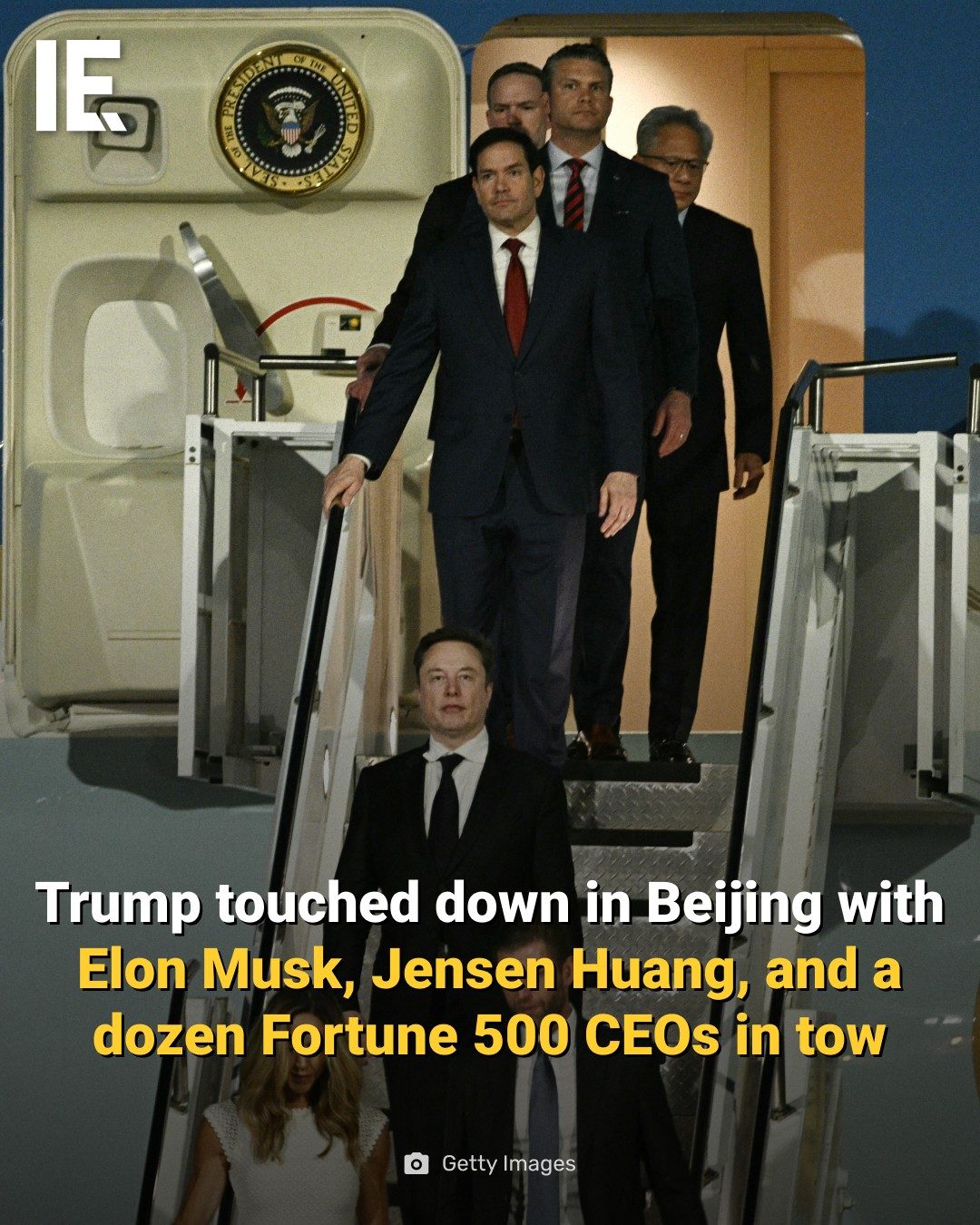
President Trump Arrives in Beijing with Top Business Executives for Historic Summit
The political summit between President Donald Trump and Xi Jinping in Beijing is not just a meeting of two world leaders — it’s a strategic move backed by some of the most influential business leaders from the United States. The significance of this visit lies in the unprecedented corporate delegation accompanying Trump. The presence of high-profile CEOs from Fortune 500 companies underscores the importance of economic relations between the two nations. Here’s a closer look at the key players, the agenda, and the implications of this historic summit.
Why This Matters
The summit is set against the backdrop of escalating trade tensions between the United States and China. For President Trump, this trip is a critical opportunity to open China’s markets to American businesses. These business leaders, directly impacted by US-China tensions, are expected to play a pivotal role in negotiations, each with specific interests to advance.
Key Players and Their Agendas
Donald Trump
President Trump’s visit is a significant diplomatic move, aimed at fostering stronger economic ties. He hopes to persuade Xi Jinping to ease restrictions on American businesses, thereby opening new avenues for trade and investment. The meeting is part of a broader strategy to mitigate trade conflicts that have been a source of economic friction for years.
Elite Business Delegation
Elon Musk
The world’s richest man, Elon Musk, is among the high-profile CEOs joining the summit. Musk’s presence highlights the tech sector’s interest in the US-China relationship. His companies, Tesla and SpaceX, have significant investments in China, and his attendance underscores the importance of this market for tech innovation and growth.
Jensen Huang
Jensen Huang, CEO of Nvidia, is particularly interested in gaining a foothold in China’s AI chip market. The H200 chip, a critical component in AI and high-performance computing, has seen stalled sales in China. Huang’s participation aims to restart these sales and expand Nvidia’s market presence.
Boeing and Apple
Boeing, represented by CEO Kelly Ortberg, is seeking to secure a major aircraft order from China. The aviation industry is a significant economic driver, and Boeing’s interests reflect the broader aviation sector's dependence on the Chinese market.
Apple, led by CEO Tim Cook, is navigating the complexities of tariffs on products manufactured in China. Cook’s participation indicates Apple’s efforts to balance manufacturing costs and trade regulations, ensuring a stable supply chain and market access.
Blackstone
Stephen Schwarzman, CEO of Blackstone, has long been an intermediary between Trump and China. His presence at the meeting suggests that Blackstone, one of the world’s largest alternative investment firms, has a vested interest in the outcomes of the summit. Schwarzman’s expertise in managing cross-border investments and his connections in China could prove invaluable in negotiation.
Summit Agenda
Trade and Economic Tensions
The agenda includes a broad range of topics, with trade and economic matters taking center stage. The US hopes to address issues such as market access, tariffs, and intellectual property rights, all of which have been contentious points in US-China trade relations. The presence of high-profile business leaders signals a focus on resolving these issues to facilitate better economic relations.
Artificial Intelligence
AI is another key area of discussion. Both countries recognize the strategic importance of AI in shaping future technologies. The summit aims to address collaboration and competition in AI, potentially setting the stage for future technological advancements and innovation.
Taiwan and the Iran War
The summit also covers geopolitical issues, including Taiwan and the Iran war. These discussions reflect the broader strategic interests of both the US and China, highlighting the complex interplay of politics and economics in international relations.
Practical Tips for Business Leaders
Navigating Cross-Border Trade
For business leaders looking to expand into the Chinese market, it’s crucial to understand the regulatory landscape. Engaging with local intermediaries and building strong relationships can help navigate the complexities of trade regulations and market access.
Leveraging Technology
Tech companies, in particular, should focus on innovation and collaboration. Partnerships with Chinese firms can provide valuable insights and access to the local market, facilitating growth and technological advancement.
Engaging Policymakers
The presence of high-profile CEOs at the summit underscores the importance of engaging with policymakers. Building strong relationships and advocating for favorable trade policies can create a more conducive environment for business expansion.
Important Takeaways
Strategic Diplomatic Moves
The summit demonstrates the strategic importance of diplomatic efforts in resolving trade tensions. Engaging high-level business leaders in such negotiations can provide a tangible impact on economic policies.
Intersection of Politics and Business
The US-China relationship is a prime example of how politics and business are deeply intertwined. Understanding this dynamic is crucial for businesses aiming to operate in both markets.
Global Impact
The outcomes of this summit have global implications. The decisions made during this meeting could set the tone for future trade policies, technology collaborations, and geopolitical strategies. Businesses worldwide should stay informed and adapt their strategies to align with the evolving trade landscape.
Conclusion
President Donald Trump’s visit to Beijing, accompanied by a delegation of top business leaders, marks a significant moment in US-China relations. The summit’s agenda, covering a wide array of economic, technological, and geopolitical issues, highlights the importance of this meeting. For businesses, this summit serves as a reminder of the interconnected nature of politics and economics, and the need to stay informed and adaptable in a rapidly changing global landscape.
Watch the Reel
Questions readers ask
Which notable CEOs were part of the corporate delegation that accompanied President Trump to Beijing in 2017?
The delegation included high-profile figures such as Elon Musk, CEO of SpaceX and Tesla, and Jensen Huang, CEO of NVIDIA. Their presence underscored the importance of the economic relations between the U.S. and China.
What was the primary goal of the Trump's summit with Xi Jinping in Beijing?
The primary goal was to enhance economic ties and mitigate growing trade tensions between the two nations. This strategic summit aimed to foster cooperation and dialogue between the U.S. and China.
How did the presence of top CEOs influence the significance of the Beijing summit?
The inclusion of top CEOs from leading U.S. companies highlighted the economic stakes and the potential for mutually beneficial business opportunities. It sent a strong signal about the importance of the U.S.-China economic relationship.
What were the implications of the Trump Xi Jinping meeting for US China trade?
The meeting was a crucial step in addressing the escalating trade tensions between the two countries. It provided a platform for discussions aimed at reducing barriers and promoting fair trade practices, which could have significant impacts on global commerce.
Why was Elon Musk's participation in the Beijing summit notable?
Elon Musk's presence was notable due to his influence in the tech and automotive sectors. His visit to China with President Trump underscored the potential for collaboration in emerging technologies and innovation between the U.S. and China.
What role did Jensen Huang play in the Trump's 2017 visit to Beijing?
Jensen Huang, as the CEO of NVIDIA, represented the technology sector. His participation highlighted the importance of innovation and technological collaboration in the evolving economic relationship between the U.S. and China.
Recent articles
Fresh deep dives from the latest Reels we unpacked.




Comments
Be the first to comment.