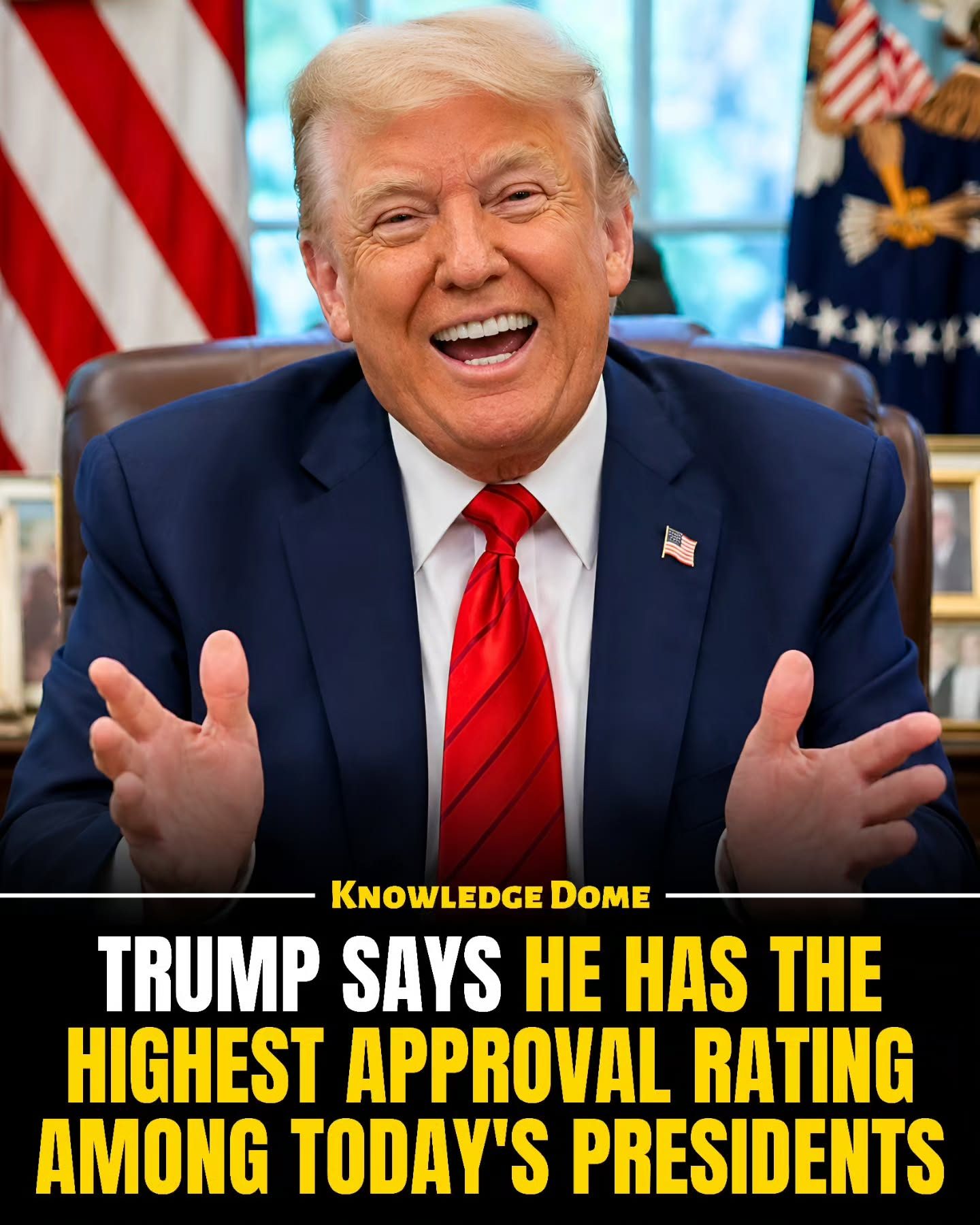
Donald Trump's Approval Ratings: A Comparative Analysis
Donald Trump's claim of having the highest approval rating among current U.S. presidents has sparked significant interest and debate. To understand this claim better, it's essential to delve into the polling data and compare his ratings with those of other presidents. This analysis will explore the context, historical comparisons, and the nuances of presidential approval ratings.
Context / Why This Matters
Public opinion polls serve as a critical barometer for assessing a president's performance and popularity. These ratings can influence policy decisions, political strategies, and even the trajectory of a president's term. Understanding these ratings provides valuable insights into the public's perception and the political landscape.
The Current Landscape of Trump's Approval Ratings
Major polling trackers consistently place Donald Trump's approval rating in the mid to high 30s. This means that more people disapprove of his performance than approve. This discrepancy is significant, as it indicates a divided public opinion. It is also worth noting that Trump's approval ratings have been relatively stable over time, showing only minor fluctuations.
Historical Comparison: How Trump Stacks Up
To put Trump's approval ratings into perspective, it's helpful to look at the historical data. Gallup's long-term records provide a comprehensive view of presidential approval ratings over the years.
John F. Kennedy: The Highest Average Job Approval
John F. Kennedy holds the distinction of having the highest average job approval rating among U.S. presidents. His charismatic leadership and the optimistic mood of the early 1960s contributed to his high approval ratings. Kennedy's average approval rating stood at around 70%, making him a benchmark for presidential popularity.
George W. Bush: A Single-Day High
George W. Bush reached one of the highest single-day approval marks ever seen during his presidency. This spike occurred in the aftermath of the September 11, 2001, attacks, when the nation rallied behind the president in a show of unity and support. Bush's approval rating soared to 90% in the wake of this national tragedy, highlighting the significant impact of external events on a president's popularity.
Barack Obama: Stronger Favorability Numbers
Comparatively, Barack Obama has shown stronger favorability numbers in recent surveys. Obama's approval ratings have consistently been higher than Trump's, reflecting a more favorable public perception of his performance. This comparison underscores the varying levels of support and approval that different presidents have received.
The Dynamics of Presidential Approval Ratings
Presidential approval ratings are dynamic and can change rapidly due to a variety of factors, including economic conditions, international events, and domestic policies. Trump's approval ratings have remained relatively stable, but they have not reached the heights seen by some of his predecessors. This stability suggests a consistent level of support, but it also indicates a significant portion of the population that remains dissatisfied with his performance.
Practical Tips for Understanding Polling Data
Recognize the Limits of Polling
It's essential to recognize the limitations of polling data. Polls provide a snapshot of public opinion at a specific point in time and can be influenced by a variety of factors, including the wording of questions, the sample size, and the timing of the poll. Understanding these limitations can help put the data into context and provide a more nuanced view of presidential approval.
Look at Trends Over Time
Rather than focusing on a single poll, it's more informative to look at trends over time. Tracking a president's approval ratings over the course of their term can provide insights into how public opinion has evolved and what factors have influenced those changes. This historical perspective can help identify patterns and trends that might not be apparent from a single data point.
Consider the Context
Context is crucial when interpreting presidential approval ratings. External events, such as natural disasters, international crises, or economic downturns, can significantly impact a president's popularity. Understanding the context in which the polling data was collected can provide valuable insights into the factors driving public opinion.
Important Takeaways
The claim that Donald Trump has the highest approval rating among current U.S. presidents is not supported by public polling data. Major polling trackers consistently place his approval rating in the mid to high 30s, with more people disapproving than approving. Historical comparisons show that Trump's ratings are far from the top, with other presidents like John F. Kennedy and Barack Obama having stronger favorability numbers.
Presidential approval ratings are dynamic and can be influenced by a variety of factors, including economic conditions, international events, and domestic policies. Understanding the context, limitations, and trends of polling data can provide valuable insights into public opinion and the political landscape. While Trump's approval ratings have remained relatively stable, they have not reached the heights seen by some of his predecessors, indicating a divided public opinion.
Conclusion
The debate surrounding Donald Trump's approval ratings highlights the importance of understanding polling data and its implications. By comparing Trump's ratings with those of other presidents, we gain a clearer picture of public opinion and the factors that influence it. This analysis underscores the need for a nuanced understanding of presidential approval ratings, recognizing the limitations of polling data and the dynamic nature of public opinion.
Watch the Reel
Questions readers ask
How do Trump's approval ratings compare to other U.S. presidents in recent history?
Trump's approval ratings, typically ranging in the mid to high 30s, are among the lowest when compared to recent presidents. For instance, Barack Obama's approval ratings were generally higher, often reaching into the 60s and 70s at certain points in his presidency.
What factors influence a president's approval ratings?
Several factors can influence a president's approval ratings, including economic performance, foreign policy decisions, and public perception of the president's character. Additionally, significant events such as natural disasters, pandemics, or international crises can cause fluctuations in public opinion.
How reliable are public opinion polls in measuring a president's approval ratings?
Public opinion polls are generally reliable, but they are not infallible. Factors such as sample size, methodology, and timing can affect their accuracy. It's common to see slight variations in ratings from different polling organizations, so it's often helpful to look at trends over time rather than individual data points.
Which president holds the highest approval rating in U.S. history?
George W. Bush held the highest approval rating in U.S. history, reaching 90% following the 9/11 terrorist attacks. However, it's worth noting that such spikes are often temporary and tied to specific events. For a more consistent high rating, Franklin D. Roosevelt's approval rating is notable, often hovering in the 60s to 70s during his terms in office.
How do Trump's approval ratings compare to those of other presidents at the same point in their terms?
Trump's approval ratings have been consistently lower than those of most other presidents at comparable points in their terms. For example, at the start of his fourth year in office, Trump's approval rating was lower than that of Barack Obama, George W. Bush, Bill Clinton, and Ronald Reagan.
How do approval ratings impact a president's ability to govern?
Approval ratings can significantly impact a president's ability to govern by influencing congressional support, public backing for policies, and the overall political climate. Lower approval ratings may make it harder for a president to pass legislation or gain support for initiatives, as they may face more resistance from both Congress and the public.
Recent articles
Fresh deep dives from the latest Reels we unpacked.




Comments
Be the first to comment.