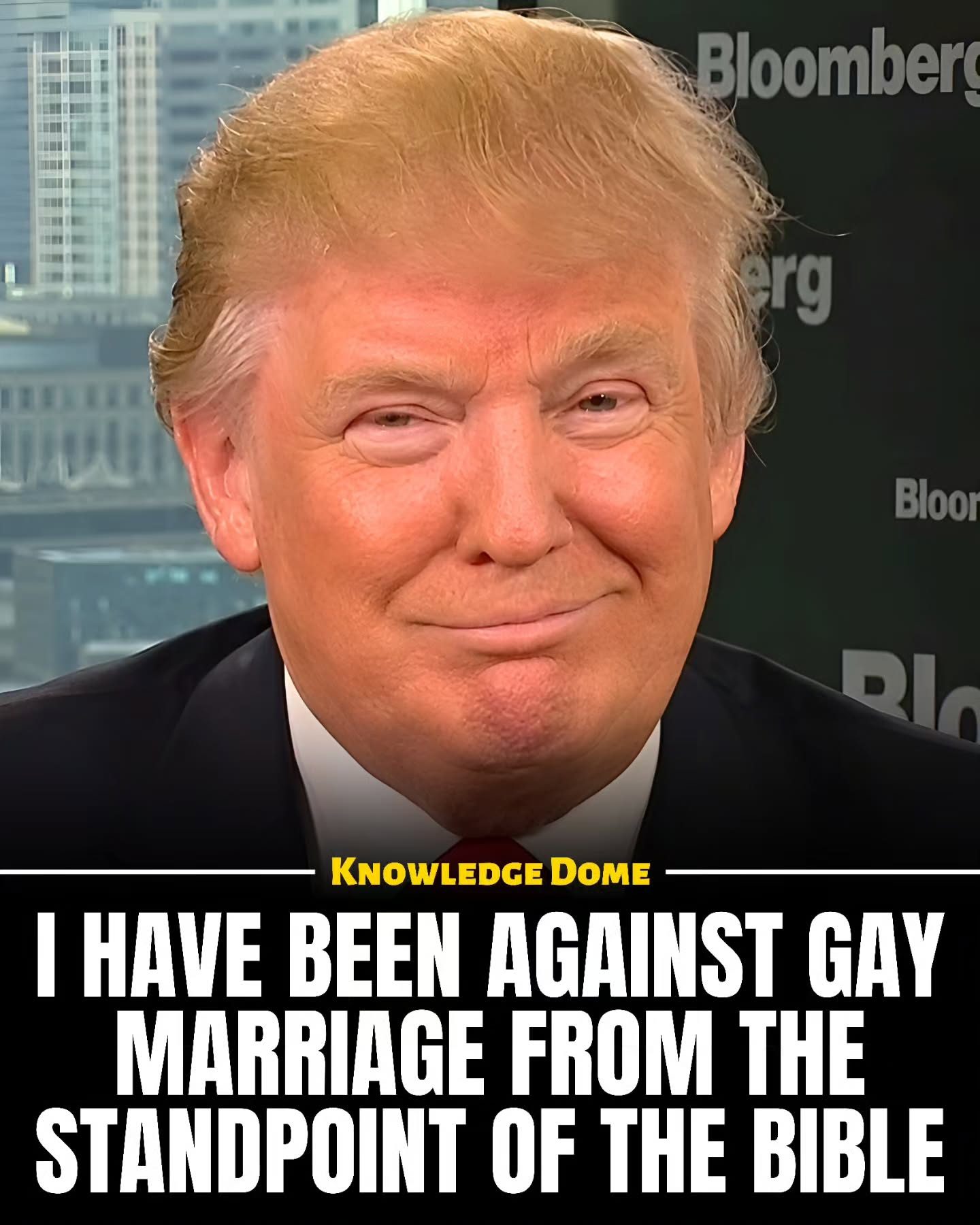
Donald Trump's Stance on Same-Sex Marriage
In a 2016 interview with Bloomberg’s With All Due Respect, Donald Trump publicly articulated his opposition to same-sex marriage. His reasoning was grounded in his religious beliefs, stating that he was against it "from the standpoint of the Bible." This stance ignited significant debate, as the issue of same-sex marriage has long been a contentious topic, particularly in the United States.
Why This Matters
For many, marriage equality is seen as a fundamental civil right. Proponents argue that all individuals, regardless of their sexual orientation, should have the same legal rights and protections when it comes to marriage. Conversely, opponents often cite religious beliefs as a basis for their opposition. Trump’s comments added fuel to this ongoing debate, as his statements were seen by some as both a reflection of his personal beliefs and a potential policy direction for his presidency.
Later, after the 2016 election, Trump shifted his stance, acknowledging that the Supreme Court had already settled the issue. However, the topic remains a hot-button issue, with strong reactions on both sides. This is because it touches on deeply held beliefs about both faith and human rights.
The Debate on Same-Sex Marriage
Civil Rights and Equality
Marriage is more than just a social institution; for many, it is a fundamental civil right. Advocates for marriage equality argue that denying same-sex couples the right to marry is a form of discrimination. They point to the Fourteenth Amendment of the United States Constitution, which guarantees equal protection under the law. This argument has been a cornerstone of the legal battles over same-sex marriage.
Religious Beliefs and Freedom
For those opposed to same-sex marriage, religious beliefs often play a significant role. Many religious traditions view marriage as a union between a man and a woman, and adherents to these beliefs may see same-sex marriage as contradicting their faith. Some argue that protecting religious freedom is as important as protecting the rights of individuals to marry.
The Role of the Supreme Court
In 2015, the Supreme Court ruled in Obergefell v. Hodges that same-sex couples have the right to marry. This landmark decision has been a pivotal moment in the debate, effectively legalizing same-sex marriage nationwide. However, the ruling has also been a source of controversy, with opponents arguing that it infringes on religious freedoms and state rights.
Political Implications
Trump’s stance on same-sex marriage has had significant political implications. During his presidential campaign, he sought to appeal to both conservative and religious voters, many of whom opposed same-sex marriage. His comments during the 2016 interview with Bloomberg were seen as a way to solidify support from this demographic.
Practical Tips for Understanding the Debate
Navigating a debate as complex as same-sex marriage requires understanding the various perspectives and arguments involved. Here are some practical tips for engaging with this issue:
- Listen to Both Sides: Understand the arguments from both supporters and opponents of same-sex marriage. This includes listening to personal stories and the legal and religious arguments.
- Acknowledge Complexity: Recognize that this issue is multifaceted and involves deeply held beliefs, legal rights, and constitutional principles.
- Seek Common Ground: Look for areas of agreement, such as the importance of civil rights and religious freedom, and use these as starting points for dialogue.
- Stay Informed: Keep up-to-date with the latest developments in the legal and political spheres, as the debate continues to evolve.
Important Takeaways
The debate over same-sex marriage is far from settled, despite the Supreme Court’s ruling. It remains a contentious issue that touches on fundamental questions of civil rights, religious freedom, and the role of the government. Understanding this debate requires a nuanced approach that acknowledges the complexity of the issue and the deeply held beliefs on both sides.
Conclusion
Donald Trump’s stance on same-sex marriage, as articulated in his 2016 interview, highlighted the ongoing debate surrounding this issue. It underscored the tension between civil rights and religious beliefs, and the legal and political dimensions of the topic. As the conversation continues, it is essential to approach the issue with empathy, understanding, and a willingness to engage with all perspectives.
Watch the Reel
Questions readers ask
What specific religious grounds did Trump cite for his opposition to same-sex marriage in the 2016 interview?
During the 2016 Bloomberg interview, Trump stated that his opposition to same-sex marriage was based on his interpretation of the Bible. He did not specify particular passages or doctrines, but rather broadly referenced the Bible as the basis for his stance.
How did Trump's views on same-sex marriage impact the broader debate on civil rights and religious freedom?
Trump's views reignited discussions on balancing civil rights and religious freedom. His stance highlighted the tension between those advocating for marriage equality as a fundamental right and those who oppose it based on religious convictions.
What was the immediate reaction to Trump's comments on same-sex marriage in the 2016 Bloomberg interview?
Trump's comments sparked significant debate and controversy. Supporters of LGBTQ+ rights criticized his stance, while some religious conservatives applauded his commitment to religious beliefs. The interview became a focal point for discussions on the intersection of politics, religion, and civil rights in the United States.
Did Trump's views on same-sex marriage evolve after the 2016 Bloomberg interview?
Trump's views on same-sex marriage were consistent throughout his presidency and did not evolve from his stance that marriage is between a man and a woman. However, his administration did take some steps to support LGBTQ+ rights, such as appointing openly gay officials and advocating for global decriminalization of homosexuality, which seemed to contradict his personal beliefs.
How did Trump's religious beliefs influence his political stance on same-sex marriage?
Trump's religious beliefs played a significant role in shaping his political stance on same-sex marriage. He openly acknowledged the Bible as a key influence on his views, which led him to oppose same-sex marriage. This stance aligns with certain interpretations of religious doctrine that define marriage as a union between one man and one woman.
What were the key points of contention in the debate sparked by Trump's 2016 interview on same-sex marriage?
The key points of contention included the extent to which religious beliefs should influence policy, the definition of marriage, and the balance between individual rights and religious freedom. Proponents of same-sex marriage argued for equal rights, while opponents cited religious and traditional values in their arguments.
Related deep dives
Similar reads based on topic and creator.



Recent articles
Fresh deep dives from the latest Reels we unpacked.




Comments
Be the first to comment.