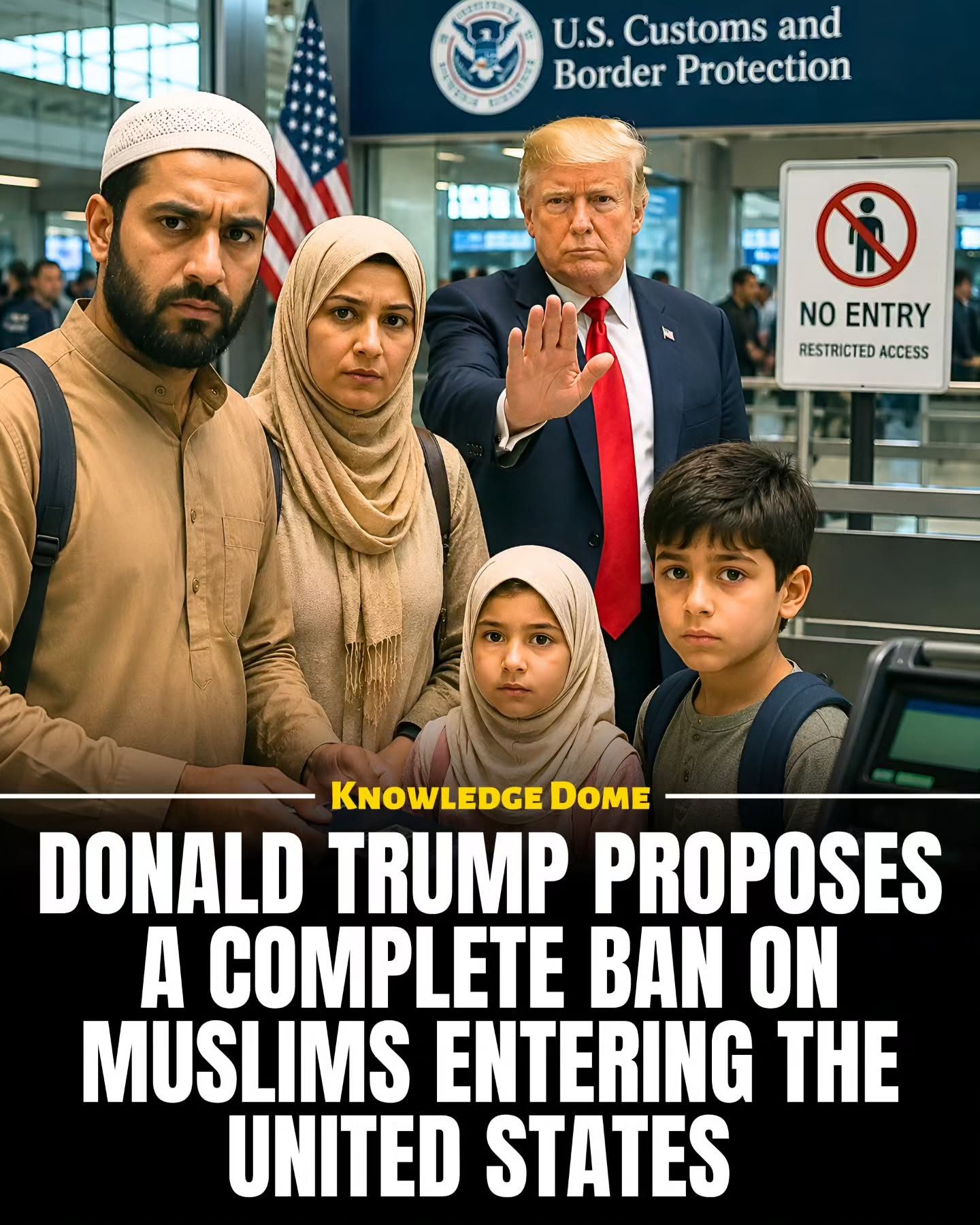
Political Meme and its historical context: Trump's 2015 Proposal on Muslim Immigration
In December 2015, Donald Trump, then a presidential candidate, proposed a "total and complete shutdown of Muslims entering the United States." This controversial statement was made during his campaign, shortly after the mass shooting in San Bernardino, California. Trump framed the proposal as a measure to enhance national security and protect the country. The idea immediately sparked significant backlash from various quarters, including Democratic and Republican leaders, civil rights groups, and international figures. Critics argued that the proposal was unfair and deeply hurtful, as it singled out Muslims as a group.
Why This Matters
This controversial proposal has had lasting implications for U.S. immigration policy and political discourse. Understanding the context and evolution of this policy provides valuable insights into the political landscape and the debates surrounding immigration, national security, and civil liberties.
The Proposal and Its Evolution
The Initial Announcement
Trump's initial announcement on December 7, 2015, was met with a storm of criticism. Many leaders, both Democratic and Republican, spoke out against it. Civil rights groups and international leaders also voiced their opposition, highlighting the discriminatory nature of the proposal. The idea of banning an entire religious group from entering the country was seen as a violation of fundamental human rights and a departure from the principles of religious freedom and equality.
From Campaign Promise to Executive Orders
After Trump's inauguration in 2017, the campaign promise began to take shape in the form of executive orders. These orders did not explicitly name Islam, but they effectively limited travel and immigration from several countries, most of which had Muslim-majority populations. The policy went through multiple iterations, each facing legal challenges and modifications. The evolving nature of these orders reflected the complex interplay between executive power, judicial review, and public opinion.
Legal Battles and Judicial Rulings
One of the most significant legal battles over these travel bans occurred in June 2018. The U.S. Supreme Court allowed the third version of the travel restrictions to stand, marking a pivotal moment in the legal debate. This ruling came after years of court challenges and revisions, underscoring the constitutional and legal complexities involved in implementing such policies.
The End of the Travel Ban
The travel restrictions were officially ended by President Joe Biden in January 2021. This move signaled a shift in immigration policy and a return to a more inclusive approach to travel and immigration. The end of the travel ban also reflected a broader political and social context, where issues of immigration, national security, and civil rights continue to be hotly debated.
Practical Tips on Understanding Political Controversies
When navigating through political controversies, especially those as contentious as immigration bans, it is essential to stay informed and discerning. Here are some practical tips:
Stay Informed
Political debates can be complex and emotionally charged. Keeping up with reliable news sources can provide a balanced perspective. Engage with diverse viewpoints to gain a comprehensive understanding of the issues at hand.
Seek Multiple Perspectives
Listening to a variety of voices, including those from different political affiliations and backgrounds, can offer a more nuanced view of the situation. This approach can help dispel misconceptions and foster a more informed dialogue.
Recognize the Impact
Understanding the real-world impact of such policies is crucial. Consider how these measures affect individuals and communities, and how they align with values such as justice, equality, and human rights.
Engage in Constructive Dialogue
Participating in constructive conversations can help bridge divides and promote understanding. Approach discussions with an open mind and a willingness to listen and learn from others.
Important Takeaways
Immigration policies, particularly those that target specific religious or ethnic groups, are fraught with legal, ethical, and social challenges. The evolution of Trump's proposal from a campaign promise to legal policy and its eventual reversal offers valuable lessons in the complexity of governance and the importance of public discourse.
Conclusion
The journey of Trump's 2015 proposal to ban Muslims from entering the United States highlights the intricacies of political decision-making and the significant impact of such policies. By understanding the context, evolution, and repercussions of this proposal, one can gain deeper insights into the broader issues of immigration, national security, and civil liberties. The ongoing debate surrounding immigration policies underscores the need for informed, inclusive, and thoughtful engagement in the political process.
Watch the Reel
Questions readers ask
What was the purpose of Trump's 2015 Muslim ban proposal?
Trump's 2015 proposal aimed to temporarily halt Muslims from entering the United States, framed as a national security measure in response to the San Bernardino shooting. He suggested that this measure would protect the country from potential threats posed by Muslim immigrants.
How did political leaders and the public react to the 2015 Muslim ban proposal?
The proposal received immediate and widespread criticism from both Democratic and Republican leaders. Many viewed it as discriminatory and unfairly targeting an entire religious group. Civil rights groups and international figures also condemned the proposal.
What was the historical context surrounding Trump's 2015 Muslim ban proposal?
The 2015 Muslim ban proposal was announced shortly after the mass shooting in San Bernardino, California, which was carried out by a Muslim couple. This context influenced Trump's framing of the proposal as a necessary security measure, despite the criticism it received.
How did the 2015 travel ban proposal impact Trump's presidential campaign?
The proposal became a defining moment in Trump's presidential campaign, sparking intense debates and shaping public perception of his policies. It highlighted his stance on immigration and national security, contributing to his image as a strong anti-immigration advocate.
What was the controversy surrounding the 2015 Muslim ban proposal?
The controversy centered around the perceived discrimination against Muslims. Critics argued that the proposal unfairly targeted a religious group, rather than addressing specific security threats. This led to significant backlash and fueled debates about religious tolerance and national security.
What was the immediate impact of Trump's 2015 proposal on Muslim immigration?
The immediate impact was largely symbolic, as the proposal was not implemented in 2015. However, it set the stage for future policies, including the travel ban implemented after Trump's presidency. The proposal also influenced public discourse and policy debates on immigration and national security.
What specific actions did Trump take after the 2015 Muslim Ban?
After the 2015 proposal, Trump continued to advocate for similar policies, eventually implementing a travel ban in 2017 that temporarily restricted entry from several Muslim-majority countries. This ban faced legal challenges and was revised multiple times before being upheld by the Supreme Court.
Recent articles
Fresh deep dives from the latest Reels we unpacked.




Comments
Be the first to comment.